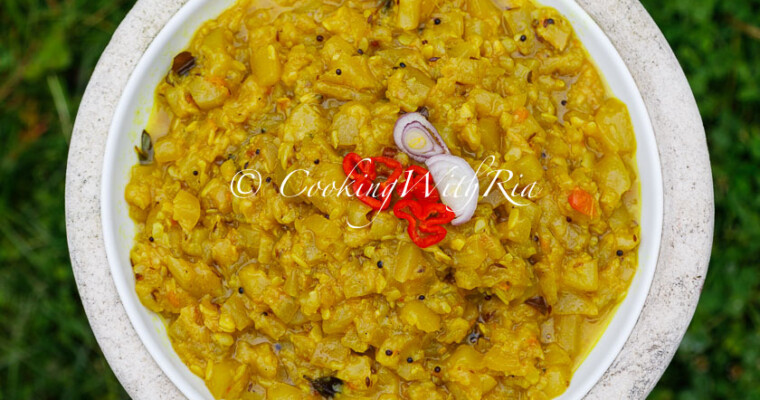
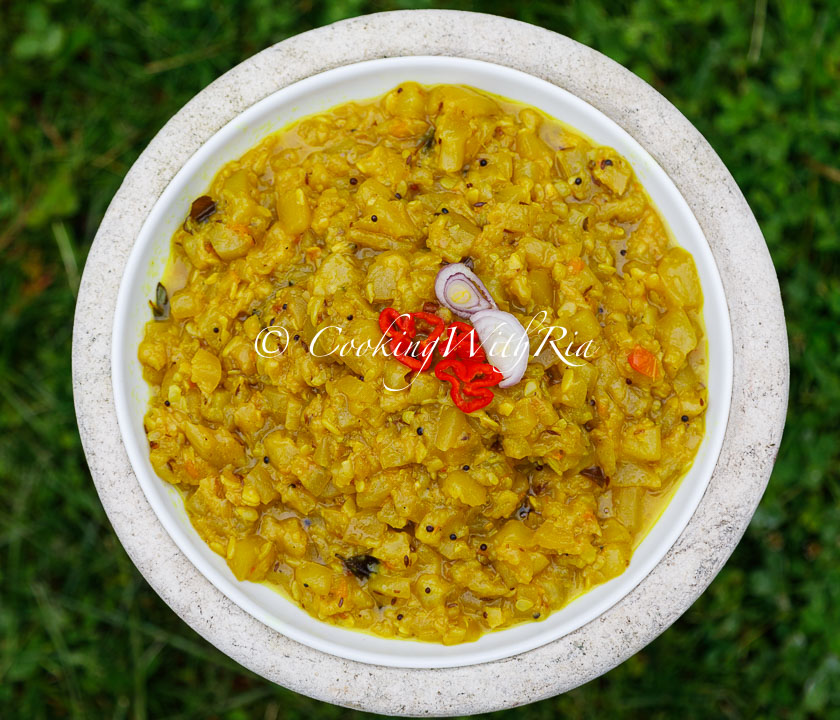
Curry lauki is a light, gently spiced dish made with tender bottle gourd simmered slowly until soft and delicate in its own natural juices. This is the kind of everyday cooking our grandmothers relied on—simple ingredients, minimal seasoning, and patience. As the lauki cooks, it releases its liquid and gradually softens, creating a naturally light curry without the need for added water or heavy sauces.
Table of Contents
Growing up in Trinidad, this was one of the dishes my mom made often, usually served with sada roti or dosti roti. It was one of my favorites—not because it was elaborate, but because it was satisfying in a way that stayed with you. It filled you up without feeling heavy, and it was always a meal I looked forward to.
Now, as an adult, I find myself returning to these same vegetable dishes I loved as a child, but with a deeper understanding of what they offer. These meals weren’t just part of our routine—they were naturally balanced, rich in fiber, and deeply nourishing.
So many people today think of “diet food” as bland or restrictive. But this—this is what I consider real, sustainable eating. This curry lauki is light, plant-based, and simple, yet it carries the kind of flavor and comfort that only comes from home cooking.
It supports vegans, vegetarians, plant-based lifestyles, and anyone looking to add more vegetables to their meals without sacrificing satisfaction. This is one of the reasons I’m still very healthy in my 50s—because I’ve stayed connected to the foods that nourished me from the beginning.
What Is Lauki? (Bottle Gourd Around the World)
Lauki is a widely used vegetable across Caribbean, Indian, and Asian cuisines, and it goes by many different names depending on where you are:
- Lauki
- Bottle gourd
- Opo squash
- Calabash
- Desi Doodhi / Dudhi
- Long melon
- Long squash (as labeled at my local Chinese grocer)
Despite the different names, it is the same pale green vegetable with a soft white interior that becomes tender when cooked. Its flavor is very mild, which makes it perfect for absorbing whatever it is cooked with.
If you are shopping in New York or similar areas, you will most likely find it in Caribbean, Indian, or Asian markets. In my experience, Chinese groceries often label it as “long squash,” so keep that in mind when looking for it.
Cooking Lauki for the First Time – What You Need to Know
Since this is the first lauki recipe on my blog, it is important to understand how this vegetable behaves during cooking.
The most important factor is freshness.
Fresh lauki cooks down easily, softening into a delicate, almost silky texture as it releases its natural liquid. This is what creates the light sauce in this dish.
Older lauki, however, does not break down the same way. Even after extended cooking, it can remain firm and slightly dry. This can affect both the texture and overall experience of the dish.
When choosing lauki:
- Look for smooth skin with no soft spots
- It should feel firm but not hard
- Avoid overly large or overly mature gourds if possible
- Cook within days of buying it
Understanding this will help you get the best results every time.
A Simple Curry, Just the Way It Was Made
This curry is intentionally simple.
It is not meant to be heavy, rich, or overly spiced. Instead, it follows the kind of cooking that was done daily in Caribbean homes—using just enough seasoning to enhance the ingredient without masking it.
There is no heavy curry base here. No thick gravy. No layering of spices. Just oil, onion, curry leaves, and light seasoning, allowing the lauki to soften slowly and develop its own flavor.
Turmeric or curry powder can be added for color and a mild earthy note, or it can be left out entirely for an even simpler, more neutral version.
This is the kind of dish that relies on technique and patience rather than complexity.
I will also be sharing a curry lauki with shrimp recipe soon for those who want a more developed variation.
Why You’ll Love This Recipe
- Light yet satisfying: This dish is gentle on the stomach but still filling, making it perfect for everyday meals
- Naturally saucy: No added water is needed—the lauki creates its own liquid as it cooks
- Simple ingredients: Everything used here is accessible and straightforward
- Traditional cooking: This is how lauki was commonly prepared at home
- Flexible: The recipe can easily be halved without affecting the results
At every meal, I include at least one cup of a traditional, plant-based dish like this—simple foods that support digestion, nourish the body, and keep me satisfied and content.
Ingredients You Will Need
This curry lauki is light, gently spiced, and naturally aromatic, with a soft, delicate texture that develops as it cooks in its own juices. The ingredients are simple, but each one plays an important role in building flavor, balance, and depth—without overpowering the natural taste of the lauki.
- Lauki (bottle gourd) – The main ingredient. You’ll find both a long variety and a shorter, more stubby one—either works well here. Mild in flavor, it absorbs the seasonings while releasing its own liquid as it cooks, creating a light, delicate sauce. Fresh lauki softens and breaks down more easily, while older lauki may remain firmer.
- Extra virgin olive oil (or any oil) – Used to gently cook the base and bring everything together. It helps carry the subtle flavors throughout the dish without making it heavy.
- Onion – Adds a natural sweetness and depth, forming the base of the dish and balancing the mildness of the lauki.
- Hot pepper – Sliced and added with the onion to bring gentle heat and brightness. It lifts the overall flavor without overpowering the dish.
- Garlic – Essential for building flavor. Adds depth, aroma, and additional health benefits, making the dish more satisfying while still keeping it light.
- Turmeric or curry powder (optional) – Adds a soft golden color and a mild earthy warmth. Can be omitted for a simpler, more neutral version.
- Panch phoron / poran / puran (pinch) – Adds a light aromatic complexity with subtle nutty and earthy notes, used sparingly to keep the dish balanced. Can’t find it in your supermarket? Click on the ingredient/name in the recipe card below for the Amazon Affiliate link.
- Curry leaves – Provide a distinct fragrance that defines the dish, adding warmth and a subtle herbal depth.
- Culantro (bandhania/shado beni) or scallions – Brings freshness and a clean herbal note that rounds out the flavor and keeps the dish tasting vibrant.
- Salt – Essential for seasoning and for helping the lauki release its liquid and soften properly during cooking.
- Tomatoes (optional) – Adds a slight acidity and softness, giving a gentle contrast to the otherwise mellow and delicate flavor of the dish.
How to Clean / Prep Lauki
- Start by peeling the outer skin of the lauki.
- Rinse it well after peeling to remove any residue, then cut it open. If the seeds are large or tough, remove them before chopping. Younger lauki will have soft, barely noticeable seeds that do not need to be removed.
- Chop the lauki finely or into small pieces. Smaller pieces cook faster and allow the vegetable to break down more evenly.
- Once prepped, it is ready to cook immediately.
Serving Suggestions
Curry lauki is best served with simple sides that allow its delicate flavor to shine.
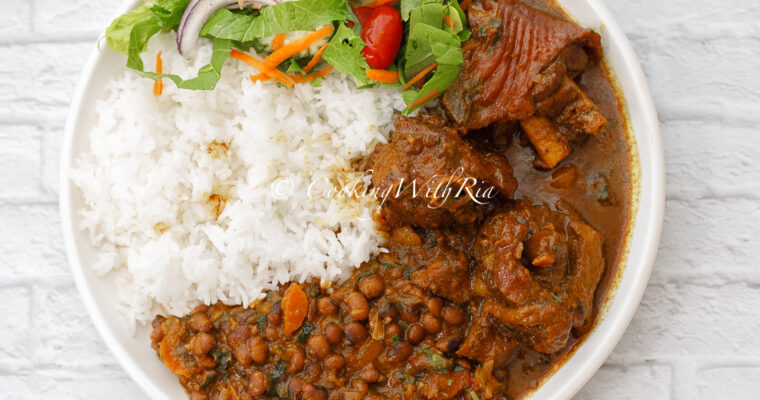
Serve it with sada roti, dosti roti, aloo roti, dhalpuri, or paratha (buss-up-shut) for a traditional meal.
It also pairs well with steamed rice for a lighter option.
Weekdays, I enjoy my curry lauki with chapati, and occasionally a fish side dish, for a simple and healthy dinner.
In many Caribbean homes, a dish like this would be part of a larger meal, served alongside other vegetables or a protein, with roti used to scoop everything together.
Tips for Success
- Use fresh lauki whenever possible, as it will give the best texture and flavor.
- Cook on medium-low heat and allow the lauki to soften gradually. Rushing the process can affect the final texture.
- Do not add water at the start. Lauki releases enough liquid on its own.
- Pour the liquid from the lid back into the pot to maintain moisture and encourage even cooking.
- Keep the seasoning light to allow the natural flavor of the lauki to come through.
Variations
- Turmeric can be omitted for a simpler sautéed-style version.
- 1 – 2 tablespoons curry powder can be used instead of turmeric for a slightly deeper flavor. Just add 1/4 cup water (garlic can be added here) and cook for 1-3 minutes until grainy and fragrant–before adding lauki.
- Tomatoes can be added for a softer, slightly tangy finish.
- Hot pepper can be added if you prefer a bit of heat.
Health & Nutrition
This dish is naturally light and made with minimal ingredients.
It is:
- Dairy-free
- Gluten-free
- Plant-based
Because it is not heavily spiced or rich, it is easy to digest and works well as part of a balanced meal.
Storage & Reheating
- Store leftovers in the refrigerator for up to 3 days.
- Reheat gently on low heat, adding a small amount of water if needed to loosen the texture.
- Freezing is not recommended, as the texture of the lauki will change.
Frequently Asked Questions
What does lauki taste like?
Lauki has a very mild flavor and absorbs whatever it is cooked with. It becomes soft and delicate when properly cooked.
Why is my lauki still firm after cooking?
This usually means the lauki is older. Fresh lauki softens easily, while older ones remain firm even after extended cooking.
Do I need to add water while cooking?
No. Lauki releases its own liquid as it cooks, which is enough to create a natural sauce.
Can I make this dish more flavorful?
Yes, you can add curry powder or hot pepper, but this version is meant to be simple and lightly seasoned.
Recipe Card: Curry Lauki (Bottle Gourd)
Equipment
- Medium pot or saucepan Used to cook the lauki evenly and allow it to soften gradually as it releases its natural liquid.
- Cutting board For safely preparing and chopping the lauki and other ingredients.
- Sharp knife Makes it easier to peel and finely chop the lauki for even cooking.
- Spoon For stirring occasionally and preventing the lauki from sticking as it cooks.
Ingredients
- 2 lbs lauki about 2 small, peeled and finely chopped
- 6 tablespoons extra virgin olive oil or any oil
- Pinch panch phoron optional
- ½ onion finely chopped
- 1 hot pepper sliced (adjust to taste)
- 6 curry leaves
- ½ teaspoon turmeric or curry powder, optional
- 1 whole head garlic peeled and pounded or minced
- 1 tomato chopped, optional
- 2 culantro leaves bandhania, shado beni, optional
- 1 teaspoon salt or to taste–1 – 2 tsp
Instructions
- Prepare the lauki: Rinse the lauki thoroughly, peel the skin lightly (do not peel too deep), then cut it in half lengthwise. Slice each half into ½-inch strips, then cut into small cubes or pieces. Smaller pieces cook more evenly and help the lauki soften and break down properly.
- Heat oil (medium heat): Add the oil to a pot and heat until warm but not smoking.
- Add panch phoron (medium heat): Sprinkle in the panch phoron first and cook for about 30 seconds, allowing the seeds to toast and release their aroma.
- Cook aromatics (medium heat): Add the chopped onion, sliced hot pepper, and curry leaves. Cook for 3–5 minutes until the onion softens and the edges of the onion and hot pepper begin to brown. This step builds the base flavor of the dish.
- Add turmeric and garlic: Add the turmeric (if using) and the pounded or minced garlic. Stir and cook for about 30 seconds, just until fragrant, being careful not to let the garlic burn.
- Add lauki and season: Add the chopped lauki, chopped tomatoes (if using), culantro (or scallions), and salt. Stir well to combine and coat the lauki with the seasonings.
- Cover and cook (medium-low heat): Cover the pot and cook for 20–30 minutes, stirring occasionally to prevent sticking.
- Use lid moisture: Each time you remove the lid, pour the liquid collected on the underside of the lid back into the pot to support the steaming process.
- Cook until tender: Allow the lauki to release its natural liquid and soften until tender. It should be soft and delicate; note that some lauki may remain slightly firm depending on freshness.
- Finish and adjust: Taste and adjust salt if needed. Serve warm.
Nutrition
Did You Make This Recipe?
If you tried this recipe, please leave a ⭐⭐⭐⭐⭐ rating on the recipe card — ratings help more readers discover my recipes and support the work I put into creating them.
You can also leave a review or any questions or recipe requests in the comments below. I love hearing from you and I’m always happy to help!
And if there’s a dish you’ve been searching for and would love to see me make, let me know—I’m always taking requests!
And when you share your photos, don’t forget to tag me @cookingwithria on Instagram or @trinicookingwithria on Facebook so I can celebrate your beautiful creations!
Other Recipes You Will Love
- Curry Shrimp and Aloo
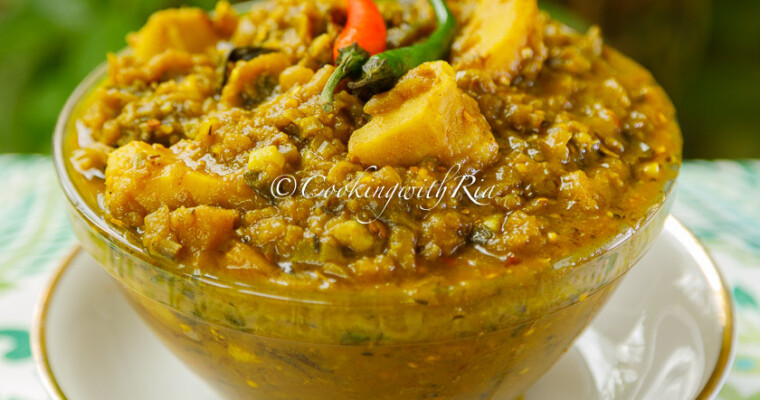
- Curry Goat with Potato
- Curry Channa and Aloo-Instant Pot Version
- Fry Seim
- Curry Bodi and Aloo
Recent Posts
- Trinidad Salad – How I Make it at Home
- How to Build a Caribbean Pantry
- How to Make Salmon Pie using Canned Salmon | Salmon Stuffed Fried Bake
- Caribbean Sweet Potato Salad Recipe – Surprisingly Delicious
- How to Make Trinidad Dasheen Bush Bhagi
Explore More Traditional Breakfast Ideas
-

How to Make Trinidad Dasheen Bush Bhagi
-
Curry Lauki (Bottle Gourd) – Simple Caribbean-Style Lauki Recipe
-
Curry Baigan with Eddoes (Curry Eggplant with Eddoes)
-
Sunday Lunch Week 52: The Final Week — Reporting from Trinidad & Tobago
-

The Softest Chapati Recipe (Whole Wheat Flatbread)
-
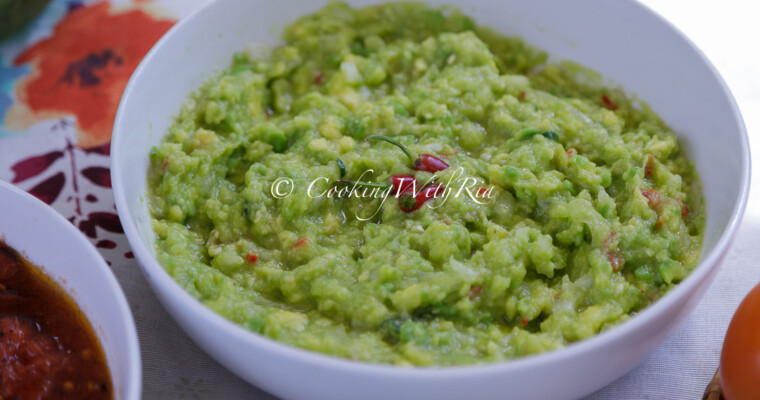
Avocado Choka | Zaboca Choka