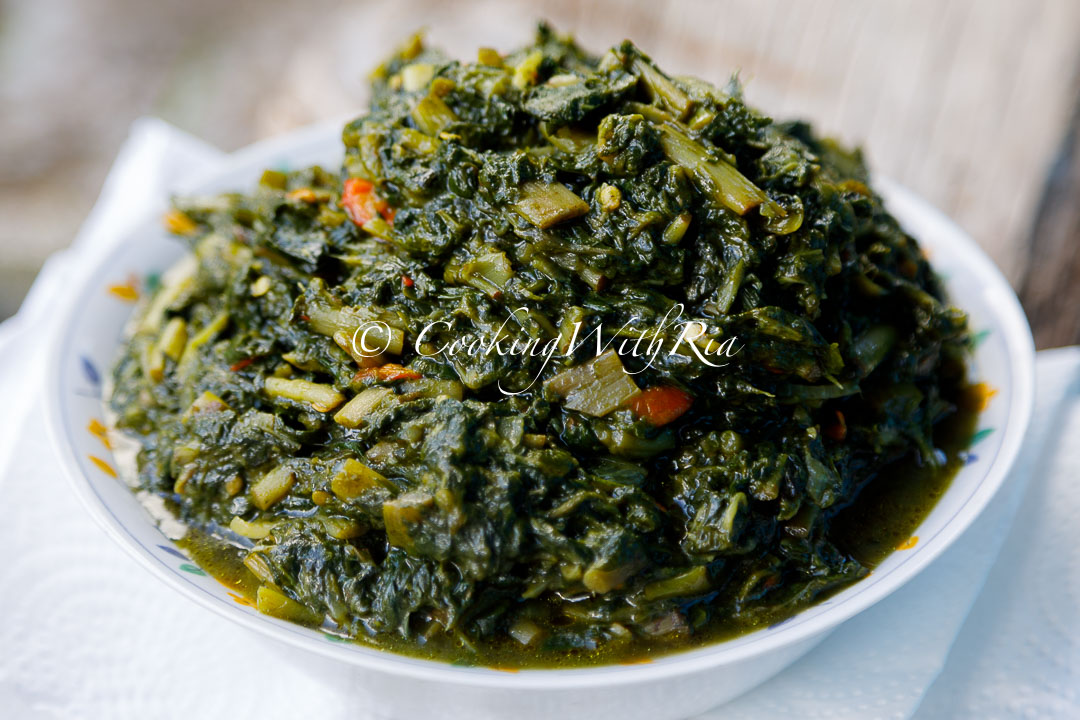
Recipe Card: Dasheen Bush Bhagi
Dasheen Bush Bhagi is a traditional Trinidadian dish made from taro leaves cooked with onion, garlic, hot pepper, tomatoes, oil, and salt until tender. It can be left slightly chunky or swizzled smooth with water for a callaloo-style texture. Serve with dhal and rice, sada roti, paratha roti, or as part of a vegetarian pooja meal.
Print
Pin
Servings: 4 servings
Calories: 142kcal
Equipment
- large pot
- knife
- Cutting board
- Large bowl for washing
- Swizzle stick, optional
Ingredients
- 1 bundle dasheen bush / taro leaves stem and leaves, about 1 pound, peeled and chopped or cut into 1-inch pieces
- 4 tbsp Oil for cooking
- 1 onion chopped
- hot pepper and/or pimento pepper to taste
- 6 cloves garlic peeled and finely chopped or minced
- tomatoes chopped
- Salt to taste
- 1 to 2 cups water optional, for a smoother callaloo-style texture
Instructions
- Prep the dasheen bush: Pinch or cut off the tips of the leaves to help remove the part that can cause itching in the mouth. Separate the leaves from the stems.
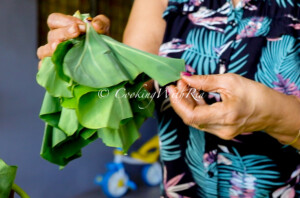
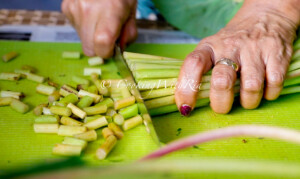
- Cut the stems: Peel the stems if desired, then cut them into small pieces, or cut them into about 1-inch pieces without peeling.
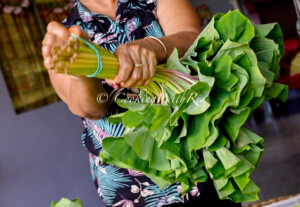
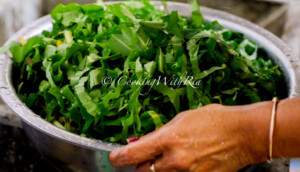
- Slice the leaves: Bundle the leaves together and slice them very thinly. The thinner the leaves are sliced, the easier they will cook down and melt.
- Wash the bhagi: Rinse the sliced leaves and stems several times until there is no dirt or sediment at the bottom of the bowl or pot.
- Heat the oil: Place a pot over high heat and add oil.
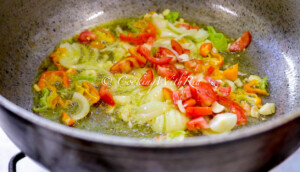
- Cook the onion, pepper, pimento pepper, if using, and garlic: Add the chopped onion, hot pepper, and minced garlic. Cook until the edges of the onion begin to brown.
- Add the tomatoes: Stir in the chopped tomatoes and sauté for 1 to 2 minutes.
- Add the bhagi: Add the prepared dasheen bush and salt. Mix well so the leaves are coated with the aromatics.
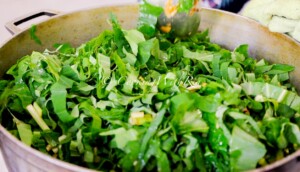
- Cover and steam: Cover the pot and cook for 20 to 30 minutes, stirring every 5 minutes to prevent sticking.
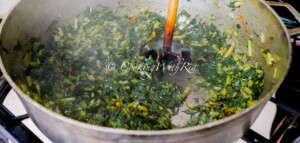
- Finish chunky or smooth: For chunky bhagi, cook until the leaves are soft and somewhat melted. For smooth bhagi, add 1 to 2 cups water and use a swizzle stick to break it down until it reaches a smooth, callaloo-style consistency.
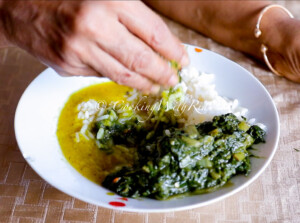
- Taste and adjust: Taste at the end and add more salt if needed.
Video
Notes
Important Cooking Notes
- Dasheen bush must be cooked thoroughly.
- Slice the leaves very thinly so they soften and melt more easily.
- Add water only if you want a smoother texture.
- Stir often so the bhagi does not stick to the pot.
- The stems may be peeled or left unpeeled, depending on preference.
- If you are sensitive to taro leaves, handle carefully and make sure the dish is fully cooked before serving.
Nutrition
Calories: 142kcal | Carbohydrates: 4g | Protein: 1g | Fat: 14g | Saturated Fat: 1g | Polyunsaturated Fat: 4g | Monounsaturated Fat: 9g | Trans Fat: 0.1g | Sodium: 5mg | Potassium: 60mg | Fiber: 1g | Sugar: 1g | Vitamin A: 13IU | Vitamin C: 4mg | Calcium: 17mg | Iron: 0.1mg