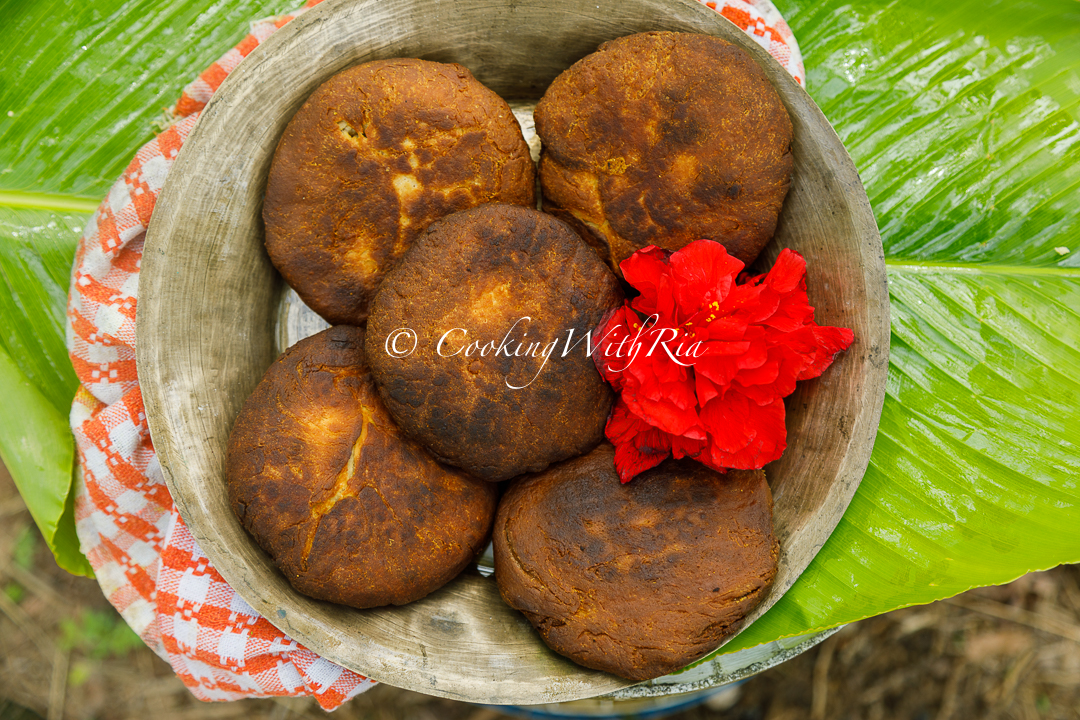
Roat: A Simple, Crispy Delight in Trinidadian Tradition
Roat, a classic Trinidadian sweet, plays an integral role in Hindu religious ceremonies. This treat, found in the parsad bags distributed to participants, embodies both spiritual meaning and delicious simplicity.
Straightforward Ingredients:
Roat is made from basic pantry staples – flour, honey, sugar, warm spices, and milk. These come together to form a dough, crafted into balls, and then deep-fried in ghee until they reach a deep brown, crispy perfection. It's this sweet crunchiness that sets Roat apart, resembling a well-baked biscuit or cookie, but with a rich, flavorful, yet softer center.
Print
Pin
Servings: 20
Calories: 262kcal
Ingredients
- 2 cups all-purpose flour 10 oz
- 1 tbs honey
- 10 tbs granulated sugar or more to taste (1/2 cup plus 2 tbs), can also use brown
- 1 tsp ground cardamom
- 1 tsp ginger fresh, grated
- 3 tbs ghee for kneading the dough
- 3/4 cup evaporated milk cold
- 2 cups ghee for frying
Instructions
- In a bowl, combine flour, sugar, honey, cardamom, ghee and ginger
- Add evaporated milk and gradually knead to form a smooth stiff dough, process takes about 5 mins. Rub with 1 tsp ghee, cover and allow it to rest for 30 minutes.
- Divide the dough into 5 pieces and form into smooth balls or loyahs, You can also choose to make them smaller. The ends should be thinner than the middle to ensure nice, crisp edges.
- Heat ghee in small, narrow-heavy-bottomed fying ppan (narrow to use less ghee). Flatten balls to form a disc, about 1/4 inch thick and fry (1-2) at a time until dark brown, full cooked and crisp. Once done frying, you can pour some ghee on the roat for added flavor and to keep it moist.
- To maintain freshmess, once cool, wrap in a clean cloth (not washed with detergent, especially scented) or napkin and place in a resealable bag. Best used and/or eaten within 2-3 days.
Video
Notes
Nutrition Calculation may not be correct for fried foods since it takes into consideration all the fat used for frying.
Nutrition
Calories: 262kcal | Carbohydrates: 17g | Protein: 2g | Fat: 21g | Saturated Fat: 13g | Polyunsaturated Fat: 1g | Monounsaturated Fat: 6g | Cholesterol: 55mg | Sodium: 11mg | Potassium: 44mg | Fiber: 0.4g | Sugar: 8g | Vitamin A: 23IU | Vitamin C: 0.2mg | Calcium: 27mg | Iron: 1mg