
Kitchri, or kitcherie as we call it in Trinidad, is the Caribbean cousin of Kitchari—a simple rice and lentil dish known for its nourishing, restorative qualities. It came to the island with Indian indentured laborers in the 1800s, and like so many dishes in our kitchens, it didn’t stay exactly the same. It adapted. It settled into the rhythm of local cooking.
Table of Contents
Here, moong dal is replaced with split peas. Spinach is added for body and nutrition. Fresh herbs, coconut, and seasoning build a deeper, more layered flavor. What began as something meant to heal and restore has become, in our homes, a meal that is just as much about comfort as it is about nourishment.
This version is tied to my mother’s kitchen.
My sister and I have tried, more than once, to recreate her kitchri and never quite got it right. There’s always something about a mother’s hand that’s hard to measure—how long she stirs, when she adjusts the heat, how she knows when it’s done without looking at a clock.
This recipe, and the video that comes with it, came out of that effort. It’s for us as much as it is for you—a way of learning, remembering, and getting just a little closer to the way she makes it.
In the end, this kitchri is simple: a one-pot, protein-packed meal that is nourishing, hearty, and full of flavor—but more than that, it’s the kind of dish that stays with you.
I urge you to only use good quality olive oil in this recipe which is not traditional but much healthier than canola and vegetable oil.
Why You’ll Love This Kitchri Recipe
- Hearty and filling: Rice and split peas come together to create a complete, protein-rich meal.
- One-pot simplicity: Everything cooks in one pot, making cleanup easy and cooking efficient.
- Deep Caribbean flavor: Culantro, thyme, garlic, and coconut bring warmth and depth.
- Nourishing and balanced: Packed with fiber, plant protein, and essential nutrients.
- Comfort in every bite: Soft, spoonable texture that feels warm and satisfying.
Where to Buy Ingredients
You can find most ingredients at Caribbean, Indian, or international grocery stores.
- Split peas: widely available in most supermarkets
- Culantro (bandhania): Caribbean or Latin markets (substitute cilantro if needed)
- Coconut milk block: Caribbean groceries or online
- Fresh thyme, scallions, and aromatics: any grocery store
How to Buy the Best Ingredients
Choose ingredients that are fresh, simple, and free from unnecessary additives:
- Olive oil: Use high-quality extra virgin olive oil with no blends or fillers
- Coconut products: Look for pure coconut milk or block without preservatives
- Herbs: Fresh culantro, thyme, and scallions give the best flavor
- Rice: Jasmine rice should be fragrant and clean, not dusty
Ingredients You Will Need
- Olive oil or ghee: Forms the base and carries the flavor
- Whole cumin: Adds warmth and depth
- Turmeric: Gives color and earthy flavor
- Onion & garlic: Build the aromatic base
- Hot pepper: Brings subtle heat (adjust to taste)
- Jasmine rice: The main body of the dish
- Split peas: Adds protein and texture
- Spinach: Adds nutrition and softens into the dish
- Culantro: Brings authentic Caribbean flavor
- Scallions & thyme: Layer fresh herbal notes
- Coconut milk block: Adds richness and depth
- Water: Helps cook and bind everything together
Equipment
- Large heavy-bottom pot
- Medium saucepan (for split peas)
- Wooden spoon (for continuous stirring)
How to Clean / Prep
- Rinse split peas thoroughly until water runs clear
- Wash rice until water is no longer cloudy
- Chop all herbs and aromatics before starting
- Keep hot water ready for cooking
Flavor Profile
This kitchri is warm, earthy, and deeply layered.
The cumin and turmeric create a fragrant base, while coconut adds subtle richness. The herbs—culantro, thyme, and scallions—bring freshness that lifts the dish. The texture is soft and almost creamy, with split peas adding gentle bite throughout.
Tips for the Best Kitchri
- Stir often to prevent sticking and to create a creamy texture
- Do not let it dry out completely—it should be soft and slightly loose
- Cook split peas until just tender, not mushy
- Adjust liquid as needed during cooking for the right consistency
Variations
- Use ghee instead of oil: For a richer, more traditional flavor
- Add vegetables: Pumpkin or carrots can be added for variation
- Make it vegan: Use olive oil instead of ghee
- Adjust spice: Add more or less pepper based on preference
Serving Suggestions
Serve kitchri on its own or alongside:
- Stewed chicken
- Fried fish
- Simple salad or cucumber slices
- Pepper sauce for added heat
Health & Nutrition
Kitchri is naturally nourishing and balanced:
- High in plant protein: From split peas
- Rich in fiber: Supports digestion
- Packed with vitamins: Spinach provides vitamins A, C, and K
- Energy sustaining: Rice and peas provide long-lasting energy
This dish fits well into vegetarian and plant-forward diets.
As always, adjust ingredients based on your dietary needs.
Storage & Reheating
- Refrigerate: Store in an airtight container for up to 4 days
- Do not freeze (recommended): The texture may change due to the rice and peas
- Reheat: Add water when reheating, bring to a gentle boil, and stir to restore texture
- Adjust seasoning: Taste and add salt and fresh herbs if needed
Frequently Asked Questions
What are other names for kitchri around the world?
Kitchri is known by many names depending on where it’s made. In India, it’s called khichdi or khichuri, and in South India, a similar dish is known as pongal. In the Caribbean, especially Trinidad and Guyana, it’s called kitchri, kitcherie, or kichri. While the names vary, the idea stays the same—rice and legumes cooked together into a soft, nourishing one-pot meal.
What is the best rice to use for kitchri?
Jasmine rice works very well for Trini kitchri because it cooks soft and slightly fragrant without becoming overly sticky. You can also use basmati rice if you prefer a lighter texture, but it will be less creamy. Short-grain rice will give a softer, more traditional porridge-like texture, though it’s not commonly used in Trinidad.
Should I use white rice or brown rice?
White rice is traditionally used because it cooks faster and gives the soft, cohesive texture kitchri is known for. Brown rice can be used, but it will take longer to cook and will not break down as easily, resulting in a firmer texture.
What is the ideal texture of kitchri?
Kitchri should be soft, slightly loose, and spoonable—not dry or grainy. The rice should break down just enough to create a creamy consistency, similar to a loose risotto. As it cools, it will naturally thicken.
Why is my kitchri dry or grainy?
This usually happens when there isn’t enough liquid or the pot wasn’t stirred often enough. Kitchri needs moisture and regular stirring to develop that soft, cohesive texture. If it becomes too dry, simply add hot water and continue cooking until it loosens.
Do I really need to stir it like risotto?
Yes. Stirring helps release starch from the rice, which creates the creamy texture kitchri is known for. It also prevents sticking and ensures even cooking.
Can I use moong dal instead of split peas?
Yes. Moong dal is the traditional choice in Kitchari, and it will give a softer, lighter result. Split peas, however, are what make this Trinidad version heartier and more textured.
Can I use canned coconut milk instead of a coconut block?
Yes. Add it when adding the liquid and adjust the water slightly if needed. Coconut milk gives richness, while the block provides a deeper coconut flavor.
Can I make kitchri ahead of time?
Yes, but it will thicken as it cools. When reheating, add water, bring to a gentle boil, and stir until it returns to the desired consistency.
Can I freeze kitchri?
It’s not recommended. The texture of the rice and split peas can become dense and uneven after freezing. For best results, store in the refrigerator and reheat with added liquid.
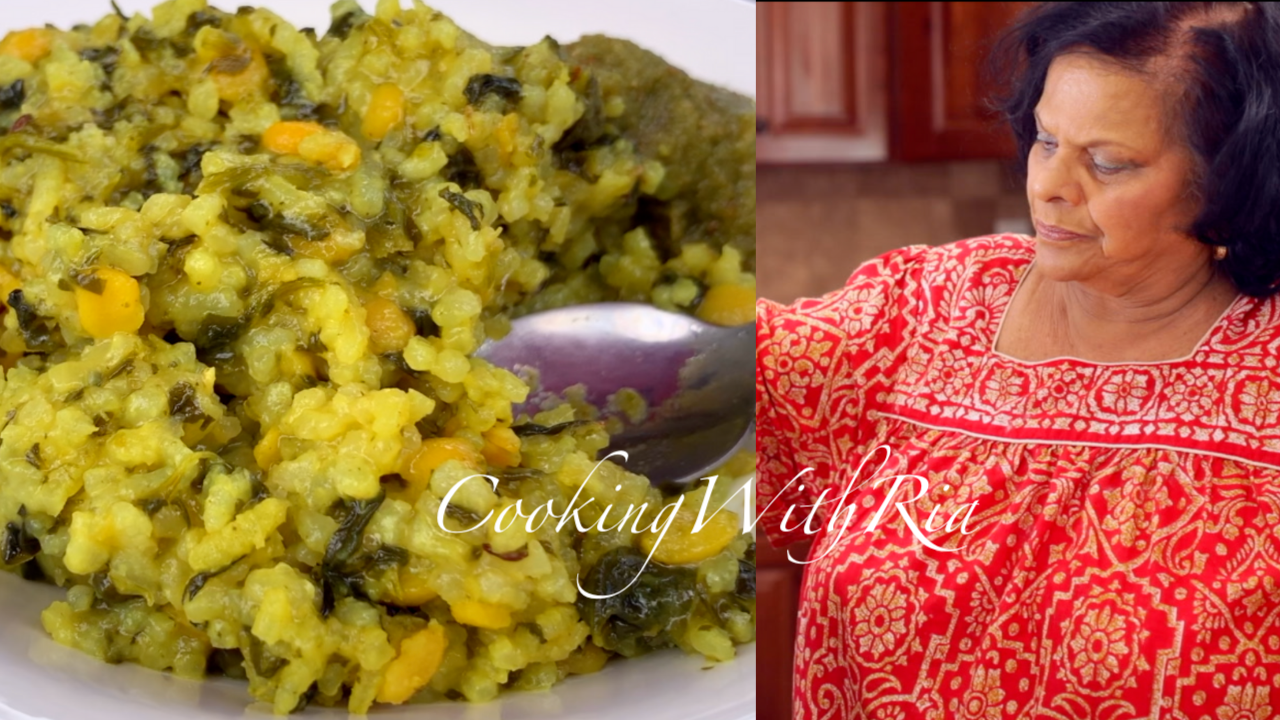
Trini Kitcherie / Kichadi / Kitchri
Equipment
- Large heavy-bottom pot
- Medium saucepan (for split peas)
- Wooden spoon (for continuous stirring)
Ingredients
- 1/2 cup extra virgin olive oil or ghee
- 1 tsp whole cumin
- 1/2 tsp turmeric
- 1 onion chopped
- 9 cloves garlic 3 tbs minced
- Hot pepper to taste
- 2 cups jasmine rice washed and drained
- 1/2 pound split peas 1 cup
- 1 lb spinach frozen chopped
- 8 leaves culantro
- 4 scallions
- 6 thyme
- 1/2 coconut milk block
- 6 cups hot water
Instructions
- Cook Split Peas: Rinse the split peas under running water. Place them in a saucepan with 4 cups of water. Bring to a boil and cook for about 15 minutes, until they are cooked but still firm. Drain and set aside, reserving the cooking liquid.
- Build the Flavor Base: Heat the oil in a large pot over medium heat. Add the whole cumin and turmeric and sauté for about 3 minutes, allowing the spices to release their aroma.
- Cook Aromatics: Add the chopped onion and hot pepper. Cook until the edges begin to brown. Stir in the garlic and cook for 2 minutes.
- Add Rice and Seasonings: Add the washed rice, spinach, chopped culantro, scallions, thyme, and salt. Stir well to combine everything evenly.
- Add Split Peas and Coconut: Add the cooked split peas and the coconut milk block. Continue cooking for about 5 minutes, stirring continuously to begin building the base.
- Add Liquid: Pour in the reserved liquid from the split peas along with 6 cups of hot water (or add coconut milk here if using milk instead of the coconut block). Stir well for 2–3 minutes.
- Cook Until Soft: Reduce the heat to low and cook for about 20 minutes, stirring frequently—similar to making risotto—until the rice is fully cooked, soft, and slightly mushy.
- Finish and Rest: Taste and adjust salt if needed. Remove the pot from the heat while there is still a little liquid remaining, as it will continue to absorb as it cools. The final texture should be soft and cohesive, not grainy.
Video
Notes
Nutrition
Did You Make This Recipe?
If you tried this recipe, please leave a ⭐⭐⭐⭐⭐ rating on the recipe card — ratings help more readers discover my recipes and support the work I put into creating them.
You can also leave a review or any questions or recipe requests in the comments below. I love hearing from you and I’m always happy to help!
And when you share your photos, don’t forget to tag me @cookingwithria on Instagram or @trinicookingwithria on Facebook so I can celebrate your beautiful creations!
Questions, Concerns, or Recipe Requests—Write Me!
If you have any questions, or if there’s a dish you’ve been searching for and would love to see me make—please don’t hesitate to leave a comment below or reach out via email at [email protected]. I’d love to hear from you!
📩 Subscribe & Get My Free Green Seasoning Booklet
If you enjoy recipes like this Caribbean Green Seasoning and want more Caribbean-inspired dishes, practical cooking tips, and Sunday Lunch stories delivered straight to your inbox, be sure to subscribe.
When you join, you’ll receive my free Green Seasoning Booklet — a true Caribbean kitchen essential that adds depth, flavor and confidence to so many of our traditional dishes. It’s the base of countless meals in my kitchen, and once you start using it, you’ll understand why.
Shop My Kitchen Favorites on Amazon
These are the trusted tools and pantry staples I use in my own kitchen — the ones that make Caribbean cooking easier and more enjoyable.
From my go-to seasonings to the heavy-bottom pots and pans I cook Sunday Lunch in every week, these essentials help bring Caribbean meals together with confidence and consistency.
Explore More Trinidad Cooking
➡ What Is Trinidad Food – Understanding the Flavors and Essential Ingredients in Trinidad Cooking
➡ Top 25 Must-Try Foods in Trinidad and Tobago
Recent Posts
- Easy Caribbean Curry Chicken for Beginners (Small-Batch Recipe)
- What to Eat and Do in Sint Maarten and Saint Martin: Our Week in Paradise
- Caribbean Stewed Cannellini Beans
- Easy Spicy Chow Mein Recipe for Two (Ready in 20 Minutes)
- How to Cook Pumpkin with Mixed Seafood Recipe (Trinidad Pumpkin Talkarie)


Hi, when do I add the coconut milk block?
Hi! Thank you for catching that — it was missing from the original recipe card, but it’s now been updated.
Just to clarify:
Add the coconut milk when you’re adding the liquid to the pot, just before the dish begins to simmer.
If using a coconut milk block, add it when you add the split peas (drained from the soaking liquid) so it has time to dissolve and cook into the dish.
Stir well and allow everything to simmer so the flavors come together and develop that rich, creamy finish.
You can also watch the video in the post to see exactly when it’s added and how it should look.
If anything is still unclear, feel free to ask — I’m happy to help!
Thank you so much! I made this and it was soo delicious. I also made the stewed curry chicken, also delicious.