

Summer has quietly bid us farewell, and the school bells are ringing once again. Truth be told, I can’t vividly recall much of what happened between the start of summer and the return of the school session. I only know that I worked—perhaps a little too much—and am still adjusting to my new daily commute into Midtown.
Table of Contents
It has always been a dream of mine to hike the Great Wall of China. However, after just two weeks of commuting through the New York City subways—squeezing into sardine-packed cars, waiting for delayed trains, and climbing what feels like endless stairs—I no longer feel the need to fulfill that dream. The Great Wall and its countless steps have been replaced by something much closer to home: the Fulton Street subway station, a wonder of the world in its own right.
If you’ve ever dashed up those steep staircases, late for work, you’ll understand the sheer athleticism it requires. It’s not unusual to see fellow commuters—especially the older ones—gripping the handrails and gasping for breath. I won’t say whether I belong to that group or not. Let’s just say I now have a newfound respect for anyone who calls this their daily workout.
I am, without question, in desperate need of a vacation. With Diwali approaching later this month, I’m tempted to hop on a plane and experience once again the magic of the Festival of Lights, after two decades away. And when I do, I plan to break every law of moderation and indulge—shamelessly—in excessive parsad consumption to soothe my weary soul. Amen.
About Parsad
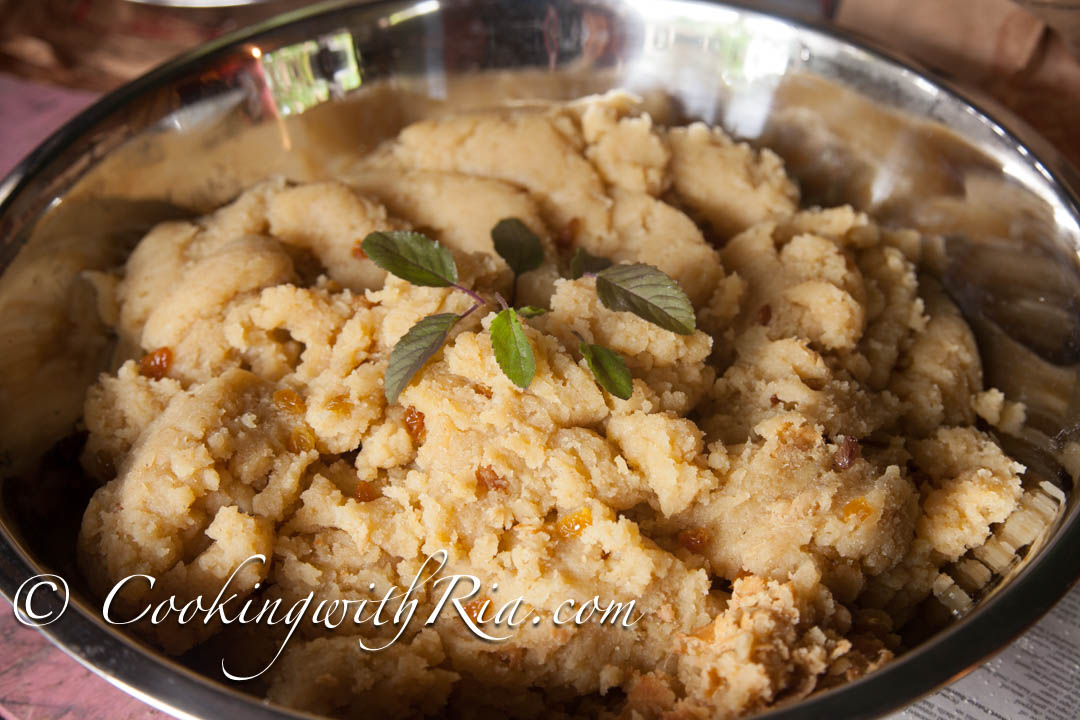
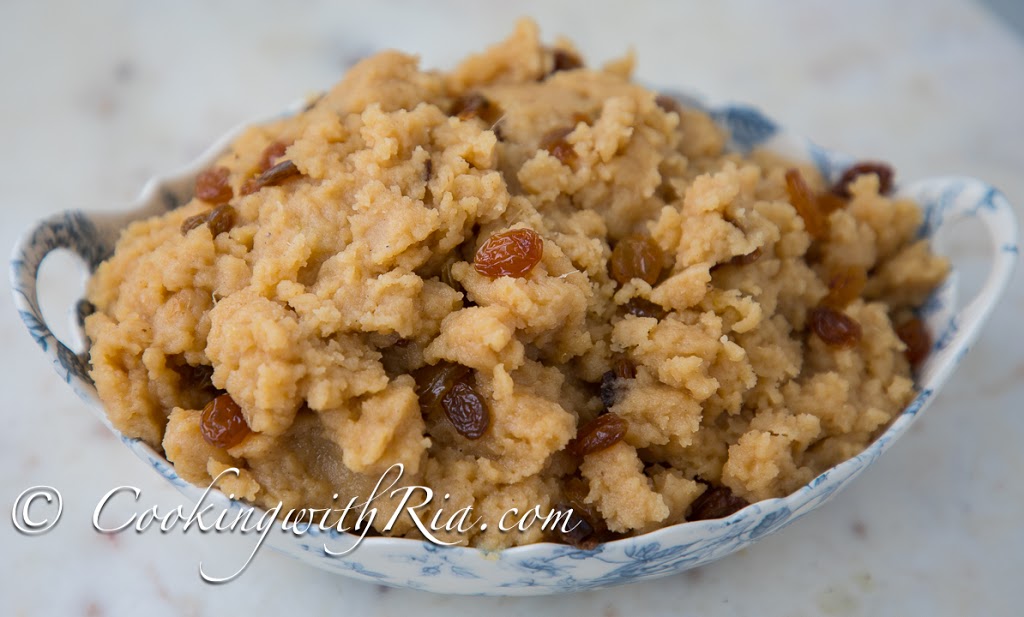
Parsad, also known as mohanbhog or mohanboug, is a traditional sweet served at Hindu religious ceremonies throughout Trinidad and across the Caribbean.
There are several variations of this beloved treat. One version is made solely with flour, another with cream of wheat, and yet another combines both—a hybrid that offers the best of both worlds. (Below, I’ve also included a full recipe for the flour-only version.)
The color of parsad varies depending on personal preference and regional tradition. My cousin prefers hers light and pale, while our Guyanese neighbors cook theirs to a deeper, darker shade. I make mine somewhere in the middle—just like my great-grandmother, or so my mother tells me.
The hue depends on how long the flour is cooked—or parched—in ghee, while the softness and richness are influenced by the amount of fat used. In this recipe, flour and/or cream of wheat are gently toasted in ghee until golden brown, then flavored with raisins, grated ginger, and ground cardamom (elaichi). A warm syrup, or phaag, made with milk, sugar, and water, brings everything together, creating a fluffy, pillowy, and indulgent dessert that feels like a blessing in every bite.
Parsad vs. Mohanbhog (Mohanburg)
You’ll often hear both names—Parsad and Mohanbhog (also called Mohanburg)—used interchangeably in Trinidad and other Indo-Caribbean communities. Though they refer to the same sweet dish, the difference lies in timing and terminology rather than ingredients.
| Feature | Mohanbhog (or Mohanburg) | Parsad (or Prasad) |
|---|---|---|
| Meaning | Refers to the sweet dish while it is still an offering to the deity during the prayer service. The name means “offering for the Lord,” with Mohan referring to Lord Krishna and bhog meaning food. | Refers to the same dish after it has been offered and blessed, when it is distributed to devotees. The term comes from the Sanskrit prasada, meaning grace or blessing. |
| Timing | Prepared and presented before or during the pooja. | Shared and consumed after the offering has been made. |
| Regional Usage | The term mohanbhog (or mohanburg) is used in some Indo-Caribbean families and certain regions of India. | Parsad is more commonly used in Trinidad, Guyana, and Suriname, while prasadam is the term used in South India. |
| Ingredients | Identical in both cases—usually a mix of flour or cream of wheat, ghee, milk, sugar, and spices like cardamom, sometimes with raisins and ginger. | The same ingredients, representing the same dish in a later stage of the ritual. |
In Summary
Both mohanbhog and parsad are two names for the same sacred sweet—one before the offering, one after. Over time, especially in Caribbean households, the distinction has faded, and both terms are used to describe the same beloved dessert. You might even hear it lovingly called “parsad (mohanburg)”—a reminder of our ancestral roots and how language, like recipes, evolves across generations and oceans.
How Parsad Differs from Prasad (Prasadam)
While the words Parsad, Mohanbhog (Mohanburg), and Prasad (or Prasadam) all share the same spiritual foundation—representing food offered to the divine—their usage and preparation reflect regional, linguistic, and cultural evolution.
Shared Essence
All three refer to offerings made during Hindu religious ceremonies that are later shared among devotees as a symbol of divine blessing and gratitude. The concept is the same: food prepared with love, offered with devotion, and accepted as grace.
Regional and Cultural Differences
- In India, the general term used is Prasad or Prasadam, and it can refer to any food offered to the deity—not only sweets. It might be fruits, coconut, cooked rice, or temple-specific specialties such as Pongal, Kesari, or Laddu.
- In Trinidad and the wider Caribbean, the offering evolved into Parsad—a specific sweet dish made with flour or cream of wheat, ghee, milk, sugar, and spices. This adaptation reflects both local taste and the resourceful creativity of the Indian indentured laborers who brought their faith and traditions to the region in the 19th century.
- The term Mohanbhog (or Mohanburg), often used interchangeably with Parsad, preserves the older North Indian linguistic roots. Mohan refers to Lord Krishna, and bhog means “food offering.”
In Summary
- Prasad/Prasadam is a broad Sanskrit term for any blessed food offering in Hindu worship across India.
- Parsad is the Caribbean-specific adaptation—a particular sweet dish that became synonymous with Hindu ceremonies in Trinidad, Guyana, and Suriname.
- Mohanbhog represents the same sweet before the offering is made; Parsad is what it’s called after it’s been blessed and shared.
In essence, Parsad is our Caribbean version of Prasadam—a sweet born from devotion, adaptation, and memory, carrying the same spiritual meaning with a distinct Trini soul.
Growing Up in a Hindu Household
I grew up in a Hindu household, where prayers (pooja) often stretched on for nearly three hours. For a child with an impatient sweet tooth, those hours felt eternal. The greatest test of discipline wasn’t sitting quietly or listening attentively—it was resisting the aroma of parsad and other sweets waiting to be distributed after the ceremony.
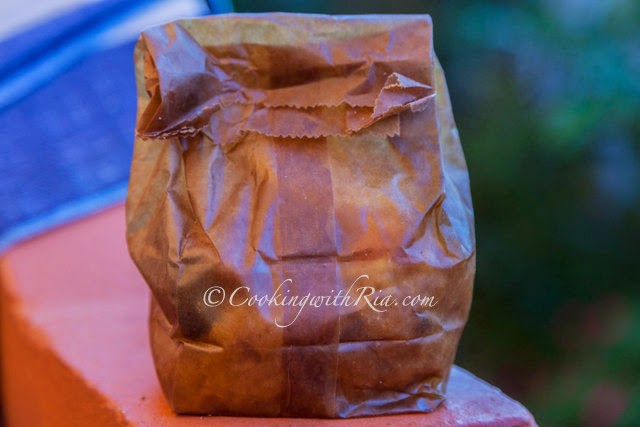
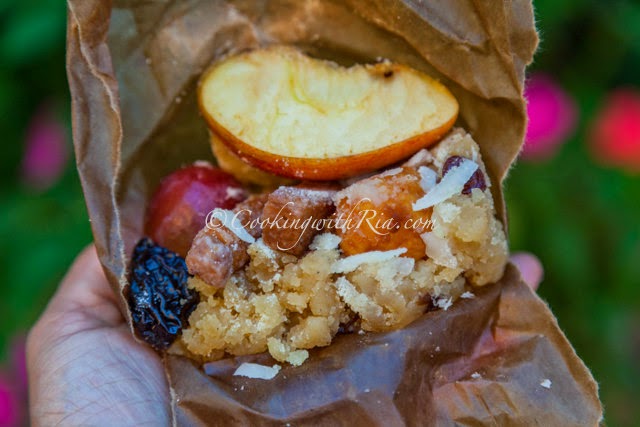
At the end of every pooja came the moment we all anticipated: the handing out of little brown paper or plastic bags filled with sweet treasures—parsad, kurma, ladoo, roat, barfi, pera, lapsi, and suhari. The rule was clear and nonnegotiable: no tasting until after prayers were completed. Torture for a young foodie. Absolute torture.
From Impatient Child to Kitchen Helper
Unable to endure the waiting, my younger self found an escape. I’d slip away to the backyard or outdoor kitchen where the real magic was happening—huge iron pots bubbling with vegetarian dishes and paratha roti, cooked to feed dozens of devotees (and a few who came mostly for the food).
There, I happily volunteered as the dishwasher, bell girl, and unofficial sous chef, tasks that were far more thrilling than sitting cross-legged through long chants. Those afternoons became my classroom, and the cooks—often aunties, grandmothers, and neighbors—were my first teachers.
Lessons That Lasted a Lifetime
Looking back, those early kitchen experiences shaped everything about how I cook today. I learned to season by instinct, feed with love, and cook for a crowd without fear. It’s no wonder I can now prepare a feast for a hundred people without breaking a sweat. Every stir of those massive pots taught me something invaluable about flavor, patience, and community.

Because of the length of these devotions, the young rebel in me opted to hang out and chat with the cooks who were busy preparing huge iron pots of vegetarian dishes and paratha roti, which were to be served at the end of the pooja to the prayer devotees and non (those who came only for the food and sweets). This meant that I had to perform dishwashing, bell girl, and sous chef duties, but those responsibilities were so much more bearable and exciting than sitting still and waiting for the prayers to end.

Some folks enjoy their parsad warm and soft, others like it cold and hard straight out of the refrigerator. I don’t discriminate. I eat it any way I get it, except if it’s too white, which means that the flour was not parched sufficiently in the ghee, which results in a bland, raw flour taste.
History and Cultural Importance of Parsad
Parsad holds a sacred place in Hindu culture, especially in Trinidad and throughout the Caribbean diaspora. It’s not just a dessert—it’s a symbol of devotion, gratitude, and community. Traditionally prepared during Hindu prayer services (pooja), parsad (called mohanburg at this stage) is first offered to the deities before being distributed to all attendees as a blessed food, or prasad—a tangible form of divine grace.
In Trinidad, the making of parsad is a cherished ritual. The scent of ghee and cardamom fills the air as families stir heavy pots over open flames or stovetops. Elders share stories, children peek curiously into the pot, and everyone waits for that first brown paper bag once the prayers conclude. It represents the sweetness of life and the triumph of light over darkness—fittingly aligned with the message of Diwali, the Festival of Lights.
While its roots trace back to India, parsad evolved beautifully in the Caribbean, adapting to local ingredients and tastes. Each island and household has its own version—some lighter in color, others darker and deeply caramelized. Whether it’s made with flour, cream of wheat, or a combination of both, one truth remains universal: parsad brings people together. It’s a taste of faith, family, and heritage passed lovingly from generation to generation.
Diwali in Trinidad
Around Diwali time, when all my family and friends in Trinidad are enjoying an abundance of parsad (and prayer’s food), because of the frequency of pooja’s everywhere, I usually prepare a small batch to satisfy my craving, console myself and reminisce about my childhood. That is all I seem to do these days: cook, eat, and reminisce. Repeat. Hopefully, this year will be different.
Read my post on Diwali: Diwali and what it means to me–Here you will also find all the Diwali Recipes on this blog.

Cook’s “managing my weight” Tip—If you plan to make parsad as often as I do for your own personal satisfaction, you may decrease the ghee and sugar to half cup each. Just a suggestion. Calm down.
An Authentic Taste & Recipe
Use this recipe if you want consistent, foolproof results every single time! No more calling Aunties, Tanties, or Grandmas to ask, “How exactly do you make parsad again?” — I’ve done all the work for you.
After many years (updated 2025) of investigating, interrogating, and testing—tweaking proportions, perfecting texture, and comparing family techniques—I’ve brought together the best of my mom’s recipe and the invaluable lessons I’ve learned from my mother-in-law to create what I truly believe is the most authentic, perfectly balanced Trinidad Parsad.
Every bite is soft, fluffy, and delicately spiced—filled with the warmth of tradition and the love of two generations of remarkable cooks. I hope this recipe brings the same comfort and nostalgia to your kitchen as it does to mine.
💛 Why You’ll Love This Recipe
This is more than just a sweet—it’s a piece of Trinidadian heritage. You’ll love this parsad recipe for its warmth, nostalgia, and balanced flavor that brings comfort with every bite.
- Authentic & Tested: After years of perfecting and tasting, this recipe guarantees consistent, reliable results every single time.
- Two Generations of Wisdom: It beautifully blends the techniques and traditions of both my mother and mother-in-law, preserving the authentic flavor of classic Trinidad parsad.
- Soft, Fluffy & Fragrant: Every bite is rich with ghee, gently spiced with cardamom, and rounded with the sweet, gingery aroma that defines true Caribbean pooja sweets.
- Perfect for Celebrations: Whether you’re preparing for Diwali, a pooja, or simply craving comfort, this recipe captures that feeling of togetherness and joy.
- Make It Your Own: With options for both flour and cream of wheat (or a mix of the two), you can customize the texture and depth to your liking.
Each spoonful feels like home—sweet, soulful, and blessed.
Ingredients You Will Need
Whether you’re making the traditional Flour Parsad or the beloved Cream of Wheat Parsad, both versions share the same comforting sweetness and rich, buttery flavor that fill homes with warmth and nostalgia. Here’s what you’ll need and why each ingredient matters:
🌾 Base
All-Purpose Flour or Instant Cream of Wheat (Farina) – The foundation of the dish.
Flour Parsad delivers the classic soft, melt-in-your-mouth texture that Trinidadians know and love.
Cream of Wheat Parsad adds more texture and depth — a lovely variation with gentle grain and body that makes each spoonful satisfying.When combined with the warm milk mixture, the base becomes fluffy, soft, and fully cooked, eliminating any raw flavor while creating that smooth, pudding-like consistency we crave.
🧈 Fat
Ghee (Clarified Butter) – The soul of parsad. It provides a rich aroma, nutty flavor, and luxurious mouthfeel. Cow Brand Ghee is my favorite for its authentic taste and quality.
🥛 Dairy
Full-Fat Evaporated Milk, Whole Milk & Water – This trio is key to creating a creamy, luscious base. The full-fat evaporated milk adds richness and body, while the whole milk and water help soften the flour or cream of wheat mixture, cooking it to a light, fluffy texture and removing any rawness.
🍬 Sweetener
Granulated Sugar – Adds sweetness and balance to the ghee and spice notes.
For a sweeter parsad, use 1½ cups sugar or a mix of 1 cup sugar and ½ can condensed milk (updated 5-8-25).
🌿 Flavor & Aroma
Freshly Grated Ginger – Brings a gentle warmth and freshness that brightens the sweetness.
Ground Elaichi (Cardamom) – Adds that signature, soothing spice aroma that makes every pooja or celebration feel special.
🍇 Optional Add-Ins
Golden Raisins – Lend a sweet, chewy burst in every bite, complementing the soft texture perfectly.
Step by Step Instructions
Peel and grate ginger (I always give this task to my husband) and measure ingredients.

Step 1: Make Phaag(Sugar Syrup):
In a small saucepan with a long handle, add evaporated milk, whole milk, water and sugar and place over a low flame. Stir until sugar has melted. Keep on low flame.

Step 2: Cook – Step by Step Instructions With Photos
Meanwhile, in a large heavy bottomed pot over medium low heat(my wide all clad pan worked wonders and cooked the flour in record time), add ghee.

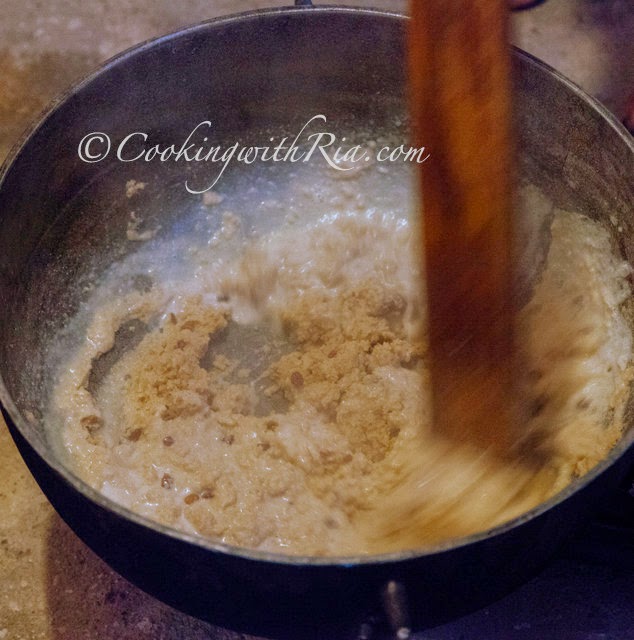
When it melts, gradually sprinkle in flour (or sift flour into pot) and stir, using a wooden spoon in a rapid back and forth motion, scraping the flour from the bottom of the pot so it doesn’t burn. You sprinkle in flour to prevent lumps in the parsad.
[If the flour is becoming brown too quickly, lower the heat.]

Cook (parch), stirring continuously, scraping the bottom of the pot, until the flour is golden brown, like the color of tea with milk(or a little lighter if that’s your preference), and light in weight, about 5-7 minutes(may take longer on your stove).

Add raisins, grated ginger and elaichi and cook 3 more minutes…
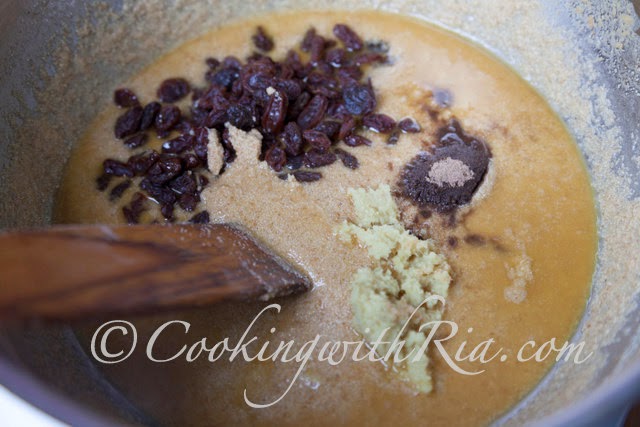
…until raisins are plump…

Start pouring the hot milk mixture gradually (one cup or ladle at a time) into the pot, (and carefully since the syrup will splatter).
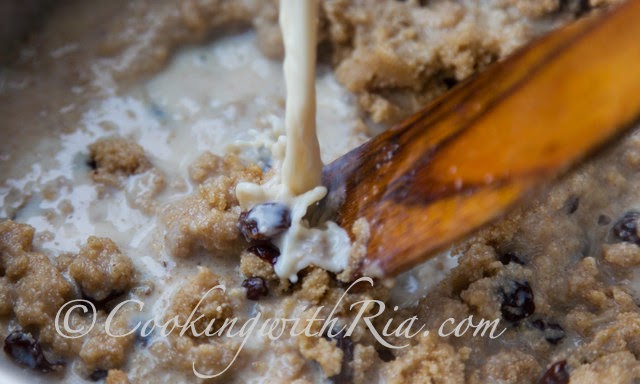
Turn vigorously and rapidly in a back and forth motion, until the cream of wheat is cooked and all the liquid is absorbed, about 5-7 minutes–depending on your pot or the heat. It may look “pasty” for a little while, don’t lose courage or confidence, success is just around the corner–just keep those arms moving.
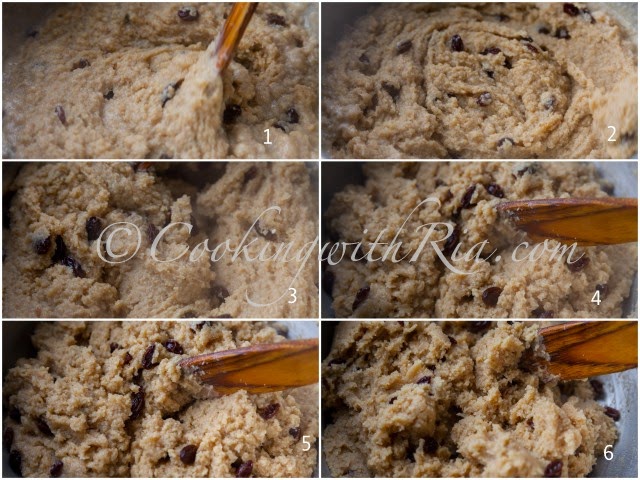
The parsad is finished when it starts to clump together, your arms are dead tired and sweat is pouring from your forehead. No exaggeration…..and most importantly, the parsad is fluffy, pillowy soft, light…the aroma heavenly…
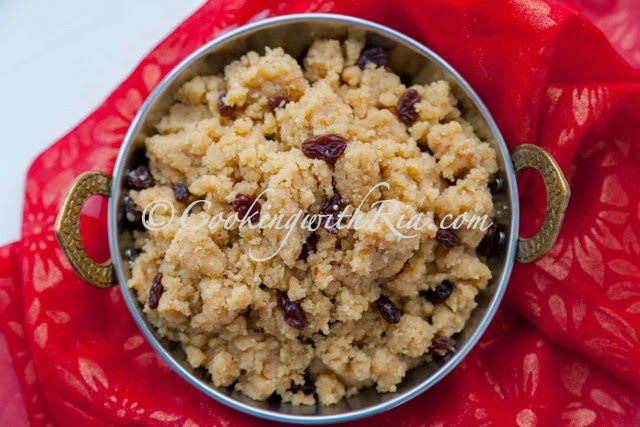
With love,
Ria
Parsad Recipe Card- Two Versions
Ingredients
Flour Parsad Serves 8-10
- 1 can evaporated milk 12 oz
- 1 cup whole milk
- 2 cups water
- 1 cup granulated sugar (8 oz)
- 1/2 can condensed milk optional (for a sweeter parsad)
- 1 cup ghee clarified butter ( I prefer Cow Brand Ghee), (8 oz )
- 2 cups all-purpose flour approx. .532 lb or 8.5 oz
- 1 cup raisins golden, Optional (5 oz)
- 2 tablespoons grated fresh ginger grated fresh, or more to your liking
- 1 – 2 teaspoons cardamom elaichi, ground
Cream of Wheat Parsad Serves 8-10
- 1 can evaporated milk 12 oz
- 1 cup whole milk
- 2 cups water
- 1 cup granulated sugar or more for a sweeter result
- 3/4 cup ghee clarified butter ( I prefer Cow Brand Ghee)
- 1 cup all purpose flour
- 1 cup instant cream of wheat farina, instant
- ½ cup golden raisins Optional
- 2 tablespoons grated fresh ginger or more for a more gingery flavor
- 1 teaspoon cardamom elaichi, ground, or more to taste
- For a sweeter parsad add 1.5 cups sugar.
Instructions
- Peel, grate ginger and measure ingredients.
- Make Syrup: In a small saucepan with a long handle, add evaporated milk, whole milk, water, and sugar (and condensed milk if using), and place over a low flame. Stir until sugar has melted. Keep on low flame. [A few times I added the ginger to the milk and it curdled, so I no longer bother. You may continue to use the milk if it curdcurdled;idn't notice a difference to the final product]
To cook:
- Meanwhile, in a large heavy bottomed pot over medium low heat(my wide all clad dutch oven worked wonders and cooked the flour in record time), add ghee.
- When it melts, gradually sprinkle in flour (or sift flour into pot) and stir, using a wooden spoon in a rapid back and forth motion, scraping the flour from the bottom of the pot so it doesn’t burn. You sprinkle in flour to prevent lumps in the parsad. [If the flour is becoming brown too quickly, lower the heat.] Cook (parch), stirring continuously, scraping the bottom of the pot, until the flour is golden brown, like the color of tea with milk(or a little lighter if that’s your preference), and light in weight, about 5-7 minutes(may take longer on your stove). If you prefer a lighter color, cook on the lowest heat for a longer period 17-25 minutes.
- If you are making the cream of wheat version, add cream of wheat and continue to stir continuously, about 3 minutes. If not, skip this step.
- Add raisins, grated ginger and elaichi and cook 3 more minutes until raisins are plump.
- Start pouring the hot milk mixture gradually (one cup or ladle at a time) into the pot, (and carefully since the syrup will splatter). Feel free to ask your significant other or other trustworthy person to assist you in pouring the hot milk mixture into the pot. I pour one cup at a time–but quickly–because I find that it’s easier to turn that way. Turn vigorously and rapidly in a back and forth motion, until the cream of wheat is cooked and all the liquid is absorbed, about 5-7 minutes–depending on your pot or the heat. It may look “pasty” for a little while, don’t lose courage or confidence, success is just around the corner–just keep those arms moving.
- The parsad is finished when it starts to clump together, your arms are dead tired and sweat is pouring from your forehead. No exaggeration and most importantly, the parsad is fluffy, pillowy soft, light and the aroma heavenly. [It may seem a little greasy, but as it cools the grease will be absorbed to keep it at the right “parsad” texture.]
Video
Sample Traditional Diwali Menu (Vegetarian)
Diwali Appetizers
Doubles, Pholourie or Aloo Pie , Mango Chutney, Saheena, Kachori, Boiled Mango Chutney, Raw Mango Chutney, Tamarind Chutney
Diwali Main
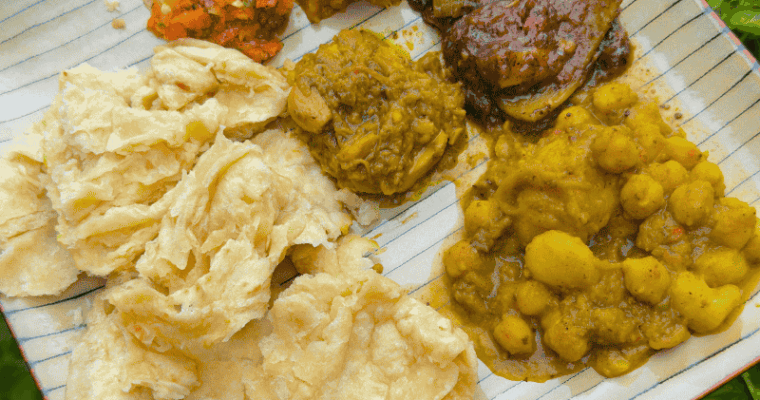
Pumpkin Talkari, Curry Channa and Aloo, Bhagi, Mango Talkari, Curry Chataigne, Carhee or Kurhi, Curry Channa and Aloo with Baigan, Curry Bodi and Aloo, and Paratha Roti or Dhalpuri Roti
Dessert
Kurma(see Kurma recipe on this blog),Sweet Rice, Gulab Jamoon, Ladoo, Barfi, Roat

Recent Posts
- Easy Caribbean Curry Chicken for Beginners (Small-Batch Recipe)
- What to Eat and Do in Sint Maarten and Saint Martin: Our Week in Paradise
- Caribbean Stewed Cannellini Beans
- Easy Spicy Chow Mein Recipe for Two (Ready in 20 Minutes)
- How to Cook Pumpkin with Mixed Seafood Recipe (Trinidad Pumpkin Talkarie)
More Traditional Vegetarian Recipes to Explore
-

How to Make Trinidad Dasheen Bush Bhagi
-
Curry Lauki (Bottle Gourd) – Simple Caribbean-Style Lauki Recipe
-
Curry Baigan with Eddoes (Curry Eggplant with Eddoes)
-
Spicy Pickled Red Onion (Quick Lime-Cured Condiment)
-
Avocado Choka | Zaboca Choka
-
Soft & Silky Guyanese Oil Roti (Clap Roti)
-
Sunday Lunch Week 42: Preparing for Diwali — Our Feast & Traditions
-
Sunday Lunch Week 41 – Vegan Curry Channa with Eggplant and Curry Bodi and Aloo
-
Trinidad Curry Channa with Eggplant (No Pre-Boiling Method) — Perfect for Diwali





Thanks for taking the time … to sharing your recipes and love of Trini food.