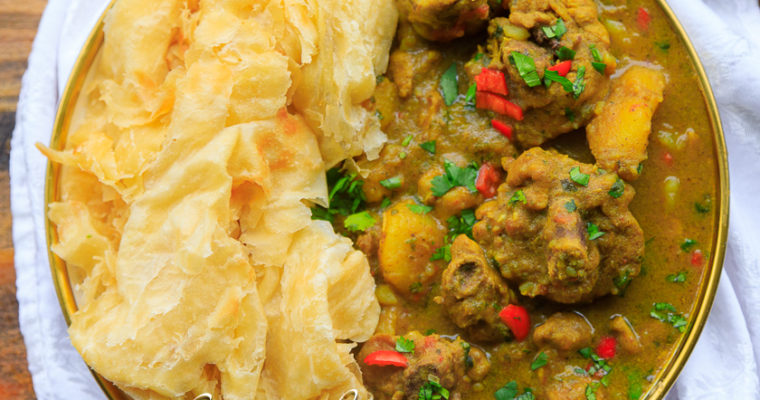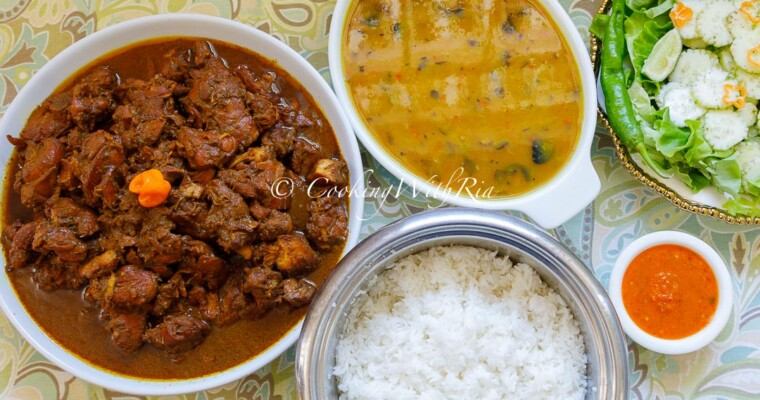
Trinidad cooking is built on a handful of essential ingredients that give the cuisine its bold, distinctive flavor. From the fresh herbs blended into green seasoning to the fragrant spices used in curries and stews, these ingredients appear again and again in Trinidad kitchens.
Table of Contents
The food of Trinidad and Tobago reflects centuries of cultural exchange. African, Indian, Chinese, European, and Indigenous traditions all contributed ingredients, spices, and cooking techniques that now shape the way Trinidadians cook.
Although the dishes themselves vary—from curries and stews to soups, rice dishes, and street foods—many recipes rely on a familiar group of ingredients that form the backbone of everyday cooking. Learning these ingredients is one of the best ways to begin understanding the essential ingredients in Trinidad cooking and how traditional Trinidad food is prepared.
The Essential Ingredients That Define Trinidad Cooking
Below are ten ingredients you will frequently find in Trinidad kitchens. These staples appear in many traditional dishes and help create the layered flavors that define the cuisine.
Green Seasoning
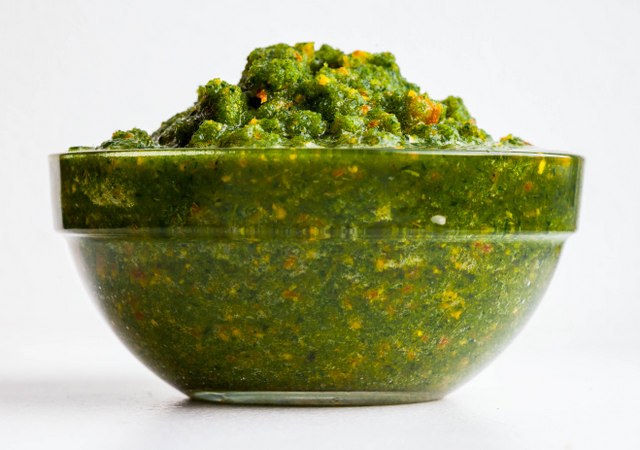
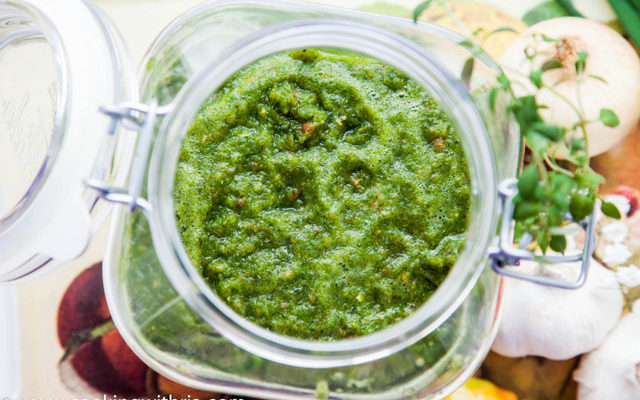
Green seasoning is one of the most important flavor bases in Trinidad cooking. It is used to marinate meats, season seafood, and add depth to soups, stews, and rice dishes. Most Trinidad kitchens keep a jar of green seasoning in the refrigerator because it forms the base of many everyday meals.
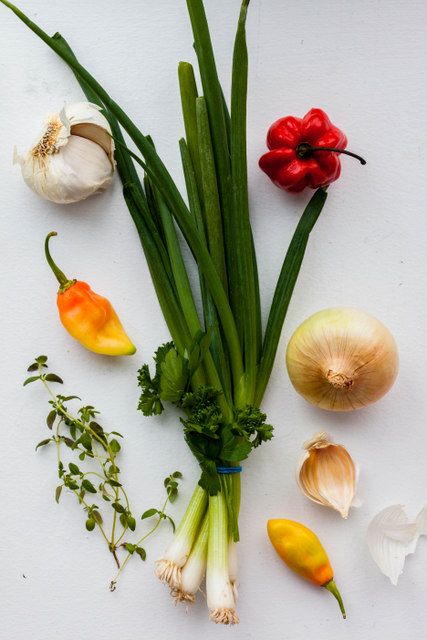
A typical green seasoning blend includes:
- scallions (called chive in Trinidad)
- parsley
- cilantro
- chadon beni (bandhania / culantro / shado beni / chadon beni / shadon beni / recao)
- garlic
- thyme (fine leaf thyme or broad leaf thyme(spanish thyme))
- pimento and or hot peppers
These ingredients may be blended into a smooth seasoning or chopped and added directly to dishes during cooking. Many cooks use a combination of both methods depending on the recipe.
Garlic may be blended into the seasoning or added separately while cooking to build additional flavor. Herbs and peppers are also sometimes layered throughout the cooking process rather than relying only on the blended seasoning.
This flexibility is part of what makes Trinidad cooking so personal—each cook develops their own preferred balance of herbs and spices.
If you’d like to make it at home, see my full recipe here: Green Seasoning Recipe
Chadon Beni (Culantro / Bandhania / Shadow Beni / Recao)
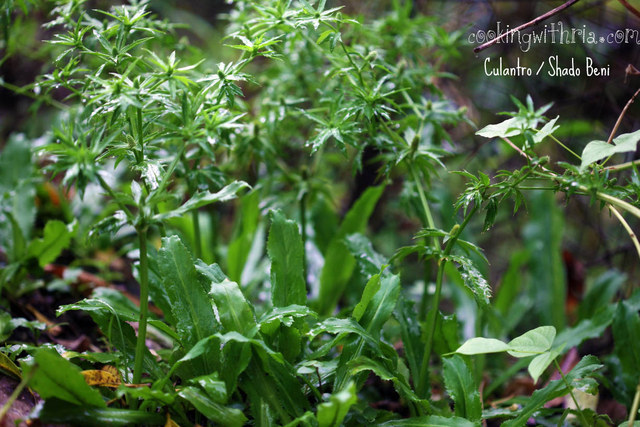
Chadon beni is one of the defining herbs of Trinidad cooking. It is known by several names across the Caribbean and Latin America, including bandhania(my word of choice), culantro, chadon beni, shadon beni, shado(w) beni, and recao.
The herb has long serrated leaves and a bold aroma. Its flavor is deeper and more intense than cilantro.
Chadon beni is commonly used in:
- green seasoning
- curries
- chutneys
- chow
- souse
- soups and stews
- side dishes
- seafood dishes
For those of us who have migrated and/ or do not have easy access to bandhania, cilantro is often used as a substitute because it belongs to the same plant family. Parsley is also commonly included when making green seasoning outside the Caribbean.
Cooking this way reflects an important tradition: adapting to the environment and using what is available.
Hot Peppers
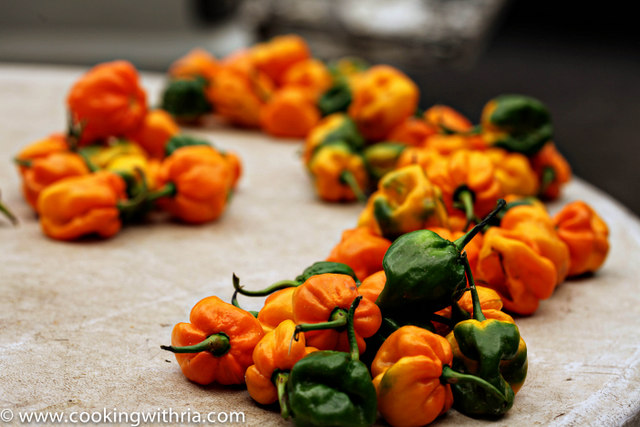
Pepper heat is an important element of Trinidad cooking. Fresh peppers add both spice and depth of flavor to many dishes.
Common varieties include:
- Scotch bonnet
- Habanero
- Wiri wiri pepper
- Bird pepper
These peppers appear in marinades, stews, sauces, and chutneys. Many cooks adjust the quantity depending on their preference for heat.
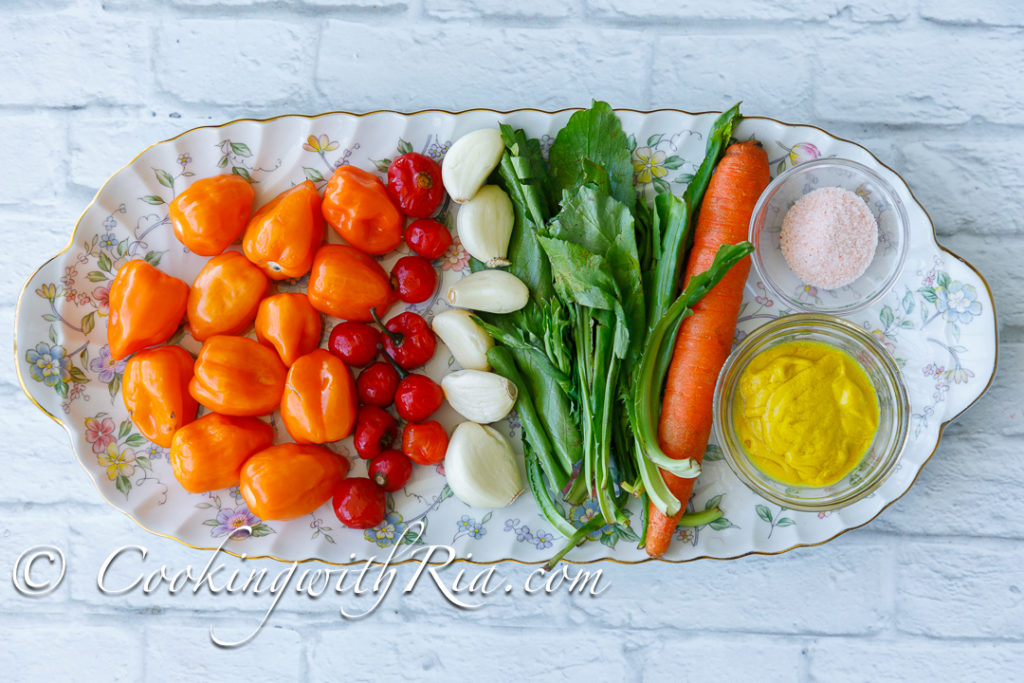
Another pepper associated with Trinidad is the Trinidad Scorpion pepper, particularly the Trinidad Scorpion “Butch T” (Capsicum chinense). This pepper cultivar is believed to originate in Trinidad and Tobago and was once recognized as one of the hottest peppers in the world.
Because of its intense heat, it is not widely used in everyday cooking. It is typically reserved for extremely hot pepper sauces or for those brave enough to enjoy very spicy food.
Curry Powder
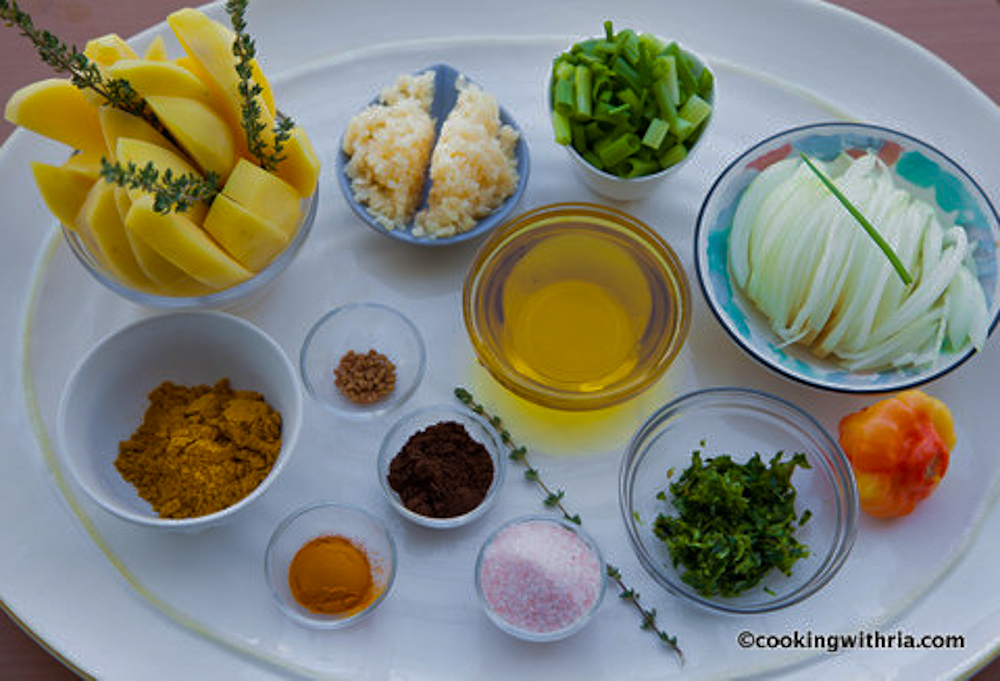
Curry is central to Trinidad cuisine because of the strong influence of Indian cooking traditions. Trinidad curry powders are often unique blends that vary by region and family.
Many cooks use specific blends designed for particular meats, such as:
- duck curry powder
- goat curry powder
A key technique in Trinidad curries is cooking the curry powder in oil first. This step allows the spices to bloom and release their full aroma before other ingredients are added.
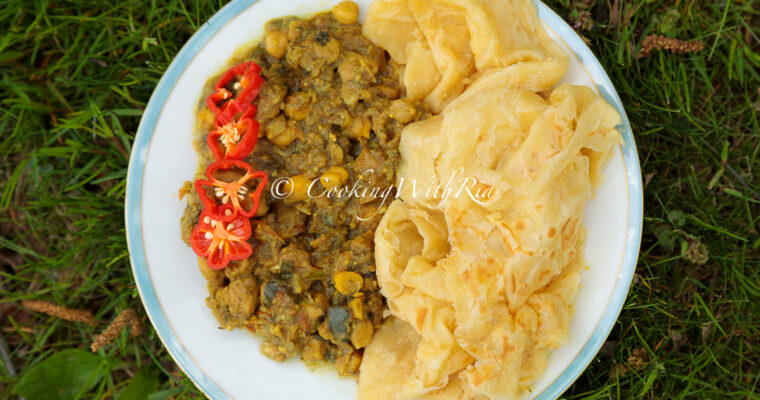
Popular curry dishes include curry chicken, curry goat, curry duck, curry shrimp, and curry channa and aloo.
Roasted Ground Cumin (Geera)
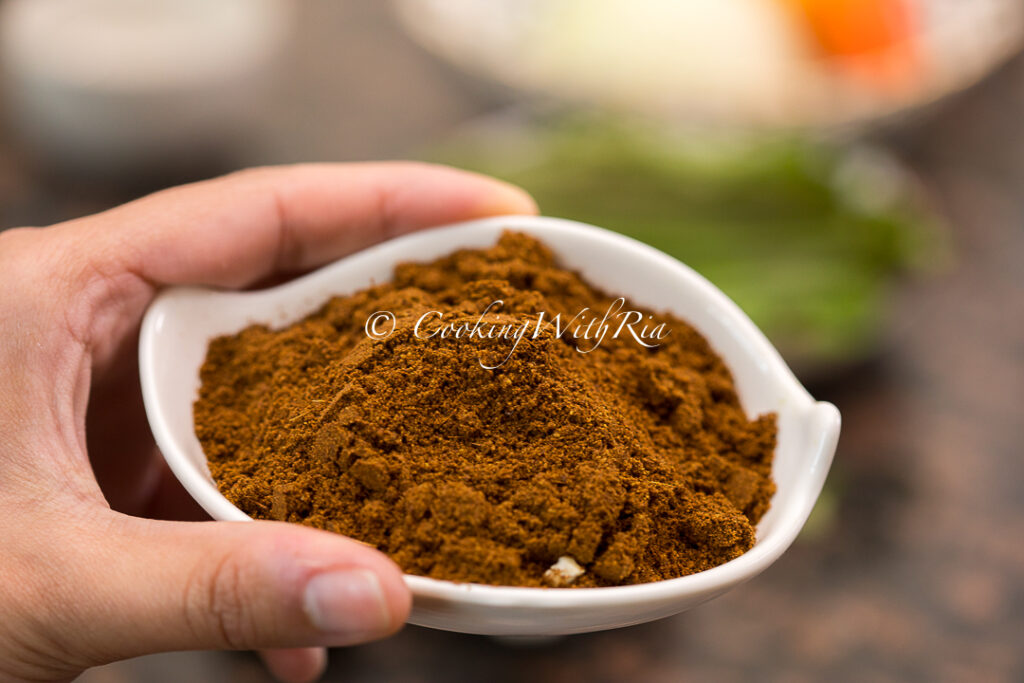
Geera, or cumin, is another essential spice widely used in Trinidad cooking. It is available as whole cumin seeds, ground cumin, or roasted ground cumin, with roasted ground cumin being the most commonly used form in Trinidad kitchens.
To make roasted ground cumin, the cumin seeds are toasted and then ground. This process deepens the flavor and creates the warm, earthy aroma that defines many Trinidad dishes.
Geera is used in a variety of recipes, including:
- geera pork
- geera chicken
- dhal or dhal & dumpling soup
- curries
- marinades
Its distinctive aroma is one of the flavors many Trinidadians instantly recognize in traditional cooking.
Coconut Milk
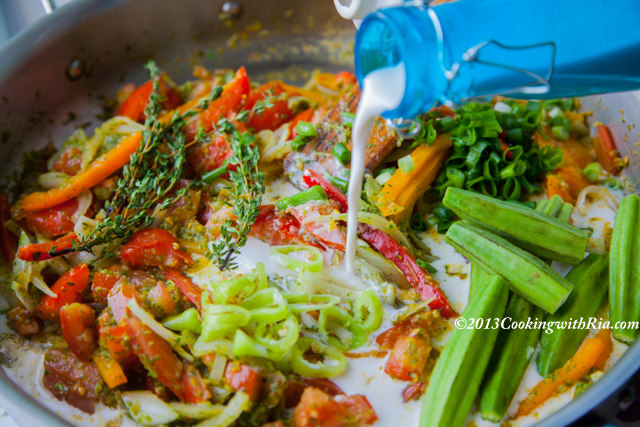
Coconut milk adds richness and subtle sweetness to many Trinidad dishes and is an important ingredient in Caribbean cooking.
It is commonly used in dishes such as:
- pelau
- callaloo or Instant Pot Version here.
- oil down – cassava or breadfruit
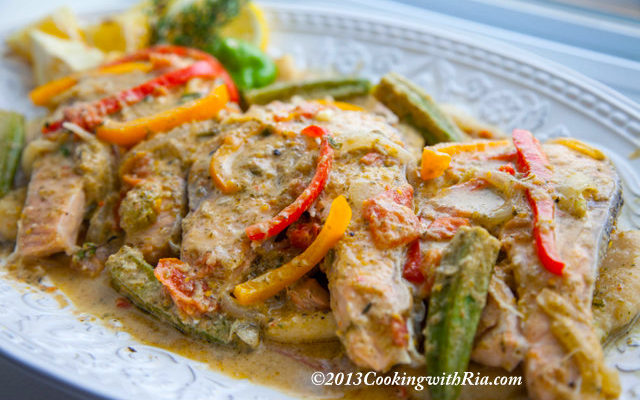
- seafood – see steamed salmon or simple coconut curry fish recipe
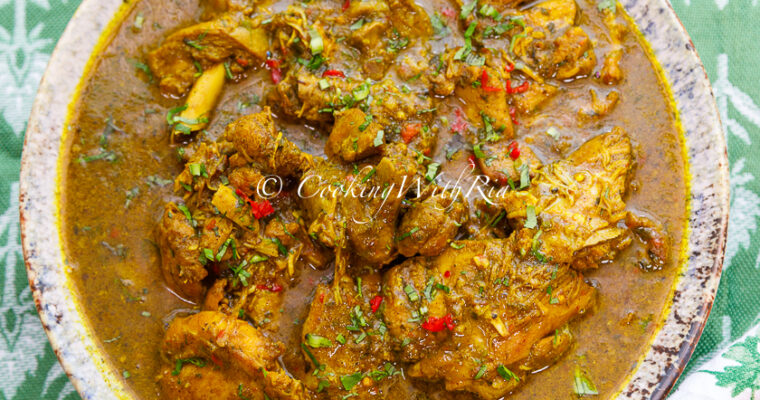
- curries and stews – see curry home fowl or
- stewed beans and peas – see stewed lentils with coconut milk and Mummy’s stewed red beans or stewed canned red beans with coconut milk
Coconut milk is also used in breads and bakes, including coconut bake, where it adds moisture and a delicate coconut flavor.
In Trinidad kitchens, coconut milk may be used in several forms:
- fresh coconut milk, made by grating and squeezing dried coconut
- canned coconut milk
- block coconut
- powdered coconut milk, sold in packets
Fresh coconut milk is traditionally prepared by grating the coconut and squeezing it with water to extract the milk. See How to Make Coconut Milk here. While many cooks now use canned or powdered coconut milk for convenience, fresh coconut milk is still valued for its rich flavor.
Pimento Peppers (Seasoning Peppers)
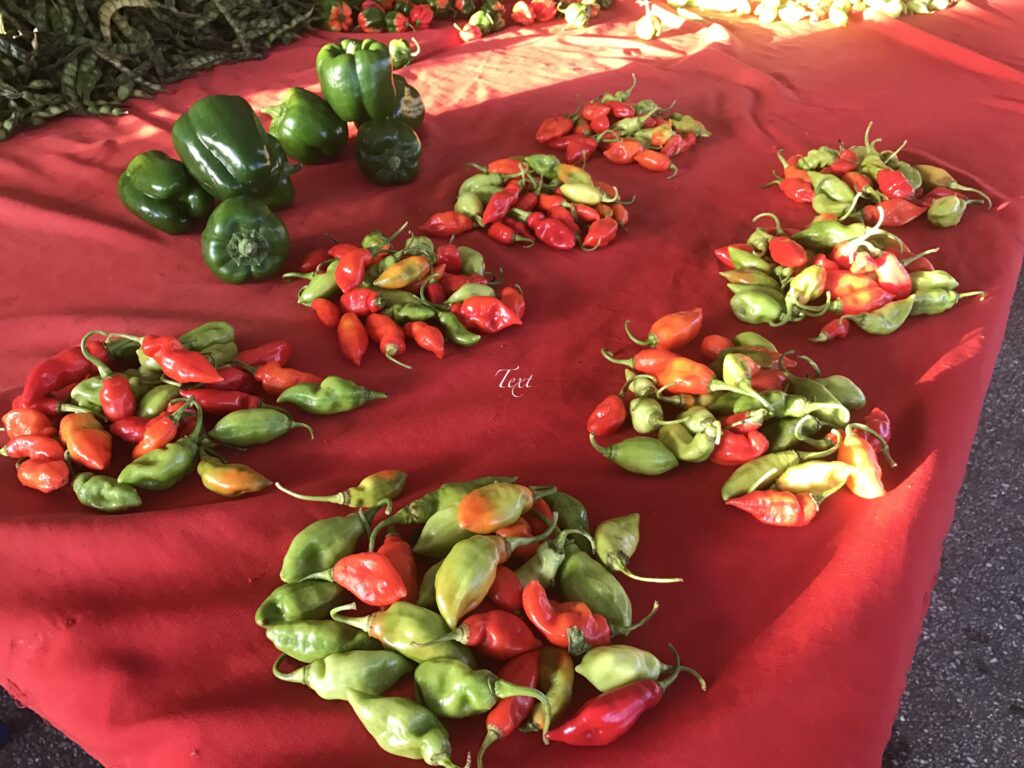
Caribbean pimento peppers, commonly called seasoning peppers, are small peppers that add fragrance and flavor without intense heat. They are an essential ingredient in many Trinidad kitchens and are valued for their ability to bring aroma and depth to a dish without making it overly spicy.
These peppers are widely used in:
- green seasoning
- soups
- stews
- curries
- rice dishes
Seasoning peppers resemble small Scotch bonnet peppers in shape but are much milder. They have a bright, slightly sweet aroma and a distinctive flavor that many Trinidadians instantly recognize in traditional cooking.
They should not be confused with allspice or pimento berries, which are dried spices from an entirely different plant. Pimento berries are used as a spice in Caribbean cooking, while pimento peppers are fresh peppers used as a seasoning.
For those of us living outside the Caribbean, seasoning peppers can sometimes be difficult to find. Living in New York, I always get excited when I come across them in local Caribbean markets. More often than not, I have to make a trip to Queens to buy them.
Fortunately, my mom grows them in her garden during the summer. When they are in season, she shares them with me, and I usually store them in resealable freezer bags so I can use them throughout the year whenever a recipe calls for them.
If you cannot find seasoning peppers, you can sometimes substitute a small amount of sweet pepper, but the flavor is not quite the same. That distinctive aroma is what makes seasoning peppers such a treasured ingredient in Trinidad cooking.
Brown Sugar
Brown sugar plays an important role in Trinidad stews because it is used to create browning, a caramelized base that gives dishes their deep color and rich flavor.
To make browning, the sugar is heated in oil until it bubbles, froths, expands, and darkens. At that point, the seasoned meat or legumes are added to the pot. This step coats the ingredients in the caramelized sugar, which helps develop the characteristic color and flavor of Trinidad stewed dishes.
This technique is used in dishes such as:
- stewed chicken
- stewed pork
- stewed fish
- stewed turkey with pigeon peas or stewed beans
Mastering this step is an important part of Trinidad cooking, as it forms the foundation of many traditional stew-based dishes.
All-Purpose Seasoning
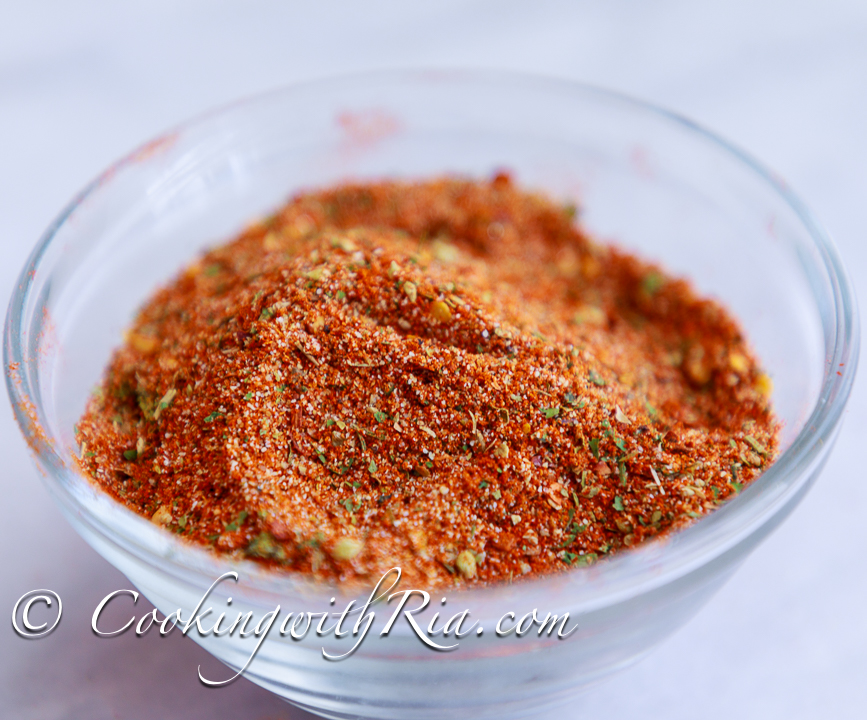
All-purpose seasoning blends are commonly used in Trinidad kitchens to quickly add flavor to meats, seafood, and vegetables. These blends typically contain a combination of spices and herbs such as garlic powder, onion powder, paprika, black pepper, thyme, and sometimes turmeric or cumin, along with salt.
Many households rely on seasoning cubes or packaged blends because they are convenient and readily available. They can quickly boost flavor when preparing everyday meals.
Personally, I prefer to keep my cooking natural and simple, using individual spices and homemade seasoning blends whenever possible. Fresh herbs, whole spices, and homemade green seasoning provide plenty of flavor without relying on additives, chemicals, or preservatives.
Building flavor this way allows each ingredient to shine and reflects the traditional approach many Caribbean cooks grew up with—seasoning food generously with fresh herbs, spices, and homemade blends rather than relying solely on packaged seasonings.
Fresh Lime or Lemon
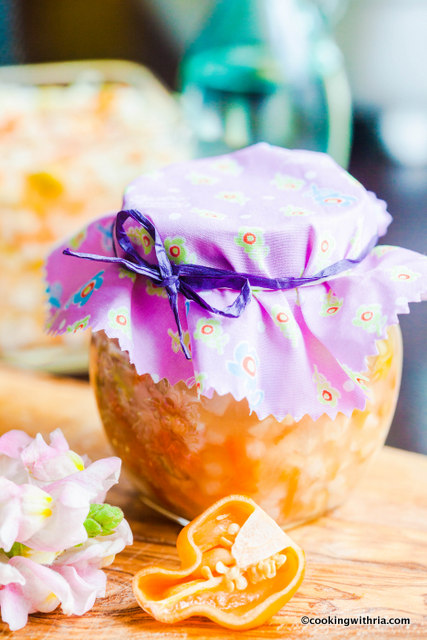
Fresh lime or lemon juice is commonly used when preparing meats and seafood in Trinidad and Caribbean kitchens. For many cooks, this step is considered essential.
Before seasoning meat or seafood, it is traditional to rinse it with lime or lemon juice, sometimes along with salt or vinegar. This practice is widely followed throughout the Caribbean and is an important part of how many families were taught to cook.
Many Caribbean cooks will tell you that the dish simply doesn’t feel properly prepared unless this step is done first.
Lime or lemon is also used in dishes such as chow, lime pepper sauce, fish broth, oyster sauce, and souse, where its bright acidity balances spices and fresh herbs.
Although citrus is not added to many cooked dishes, its role in preparing meat and seafood is taken very seriously. Ask almost any Caribbean cook about washing meat with lime or lemon, and you will quickly discover how strongly people feel about it. For many of us, it is simply part of the cooking tradition we grew up with.
Because this step is so deeply rooted in Caribbean kitchen practice, lime or lemon deserves its place among the essential ingredients mentioned here.
>>See how to cut up and clean a whole chicken
A Note on Basic Kitchen Staples
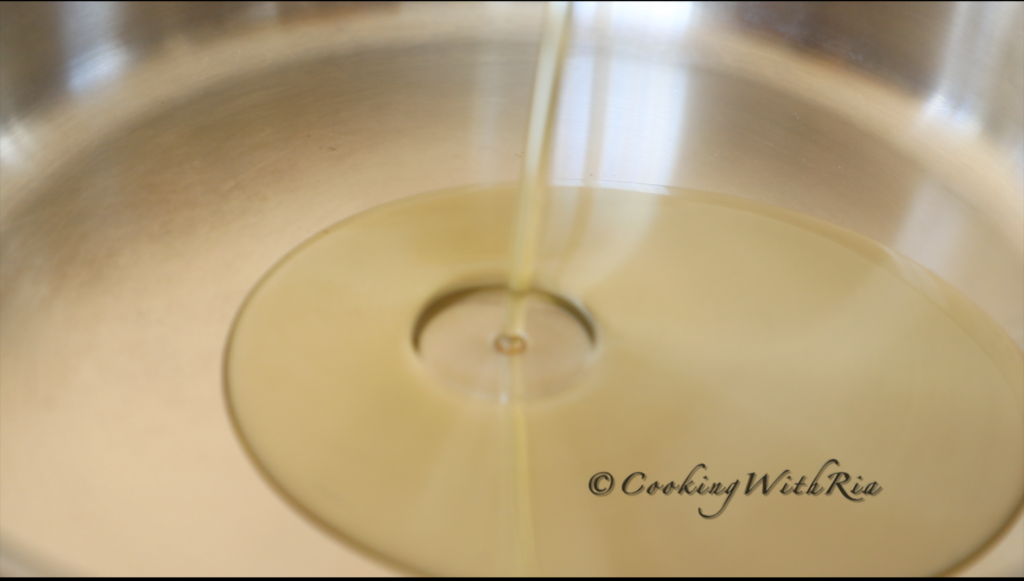
You may notice that a few very common ingredients—such as onion, salt, black pepper, and cooking oil—are not included in this list. These are fundamental staples found in nearly every kitchen around the world, including Trinidad and Tobago.
While they play an important role in everyday cooking, this article focuses on the ingredients that give Trinidad food its distinctive character and flavor. The herbs, spices, and seasonings listed above are the elements that truly define many traditional Trinidad dishes.
In other words, the ingredients highlighted here are not the only ingredients used in Trinidad cooking—they are simply the ones that most clearly represent the unique flavor profile of the cuisine.
Start Cooking Trinidad Recipes
Now that you understand the essential ingredients in Trinidad cooking, you can begin exploring the dishes that bring these flavors together.
- What Is Trinidad Food – Understanding the Flavors and Essential Ingredients in Trinidad Cooking
- Essential Spices in Trinidad Cooking
- What are Ground Provisions
- Top 25 Must-Try Foods in Trinidad and Tobago
- Browse My Trinidad Recipe Collection
- 52 Weeks of Sunday Lunch
Many of these ingredients appear throughout the traditional dishes featured on this site, from curries and stews to soups, rice dishes, and street food favorites.
📩 Subscribe & Get My Free Green Seasoning Booklet
If you enjoy recipes like this Caribbean Fried Shrimp and want more Caribbean-inspired dishes, practical cooking tips, and Sunday Lunch stories delivered straight to your inbox, be sure to subscribe.
When you join, you’ll receive my free Green Seasoning Booklet — a true Caribbean kitchen essential that adds depth, flavor, and confidence to so many of our traditional dishes. It’s the base of countless meals in my kitchen, and once you start using it, you’ll understand why.
❤️ Shop My Kitchen Favorites on Amazon
These are the trusted tools and pantry staples I use in my own kitchen — the ones that make Caribbean cooking easier and more enjoyable.
From my go-to curry to the heavy-bottom pots and pans I cook Sunday Lunch in every week, these essentials help bring Caribbean meals together with confidence and consistency.