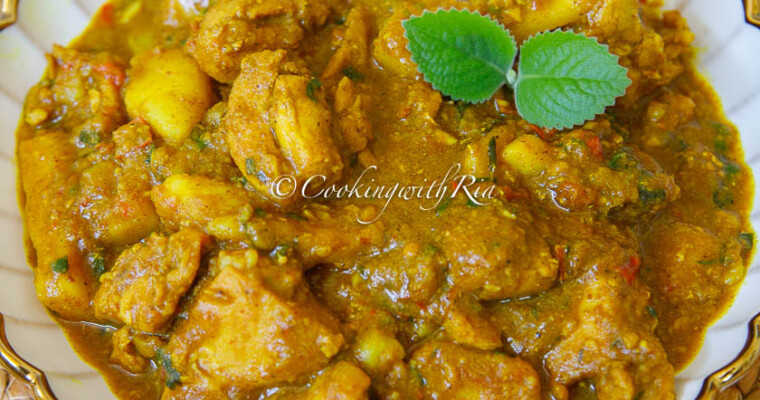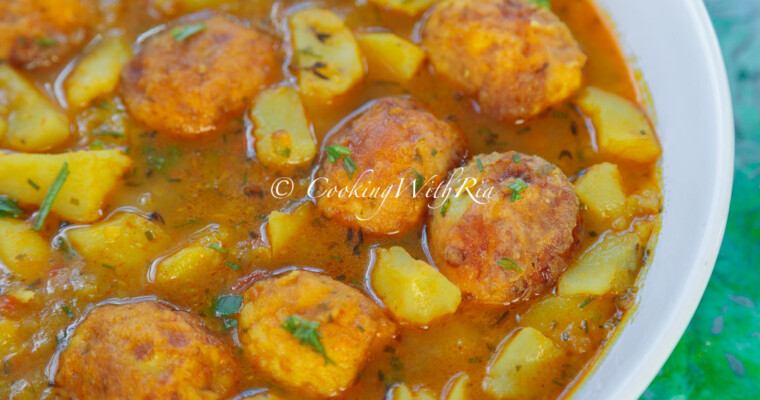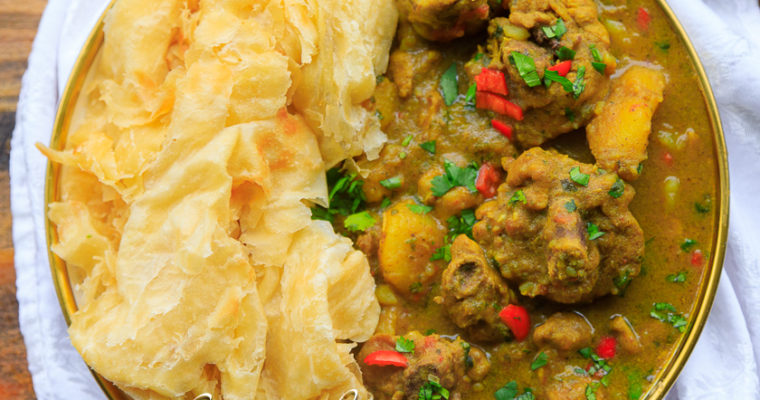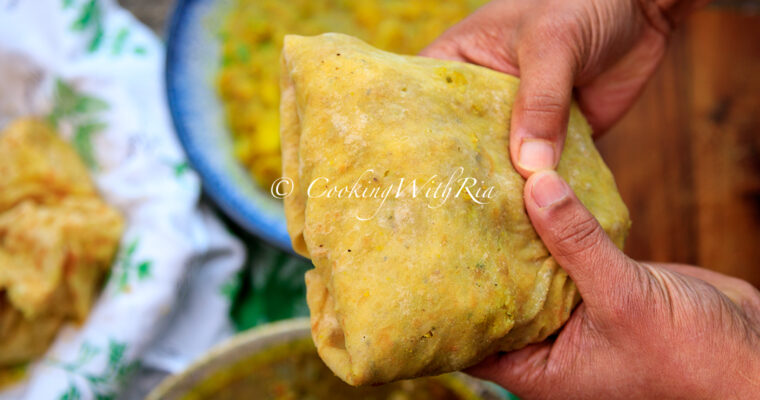
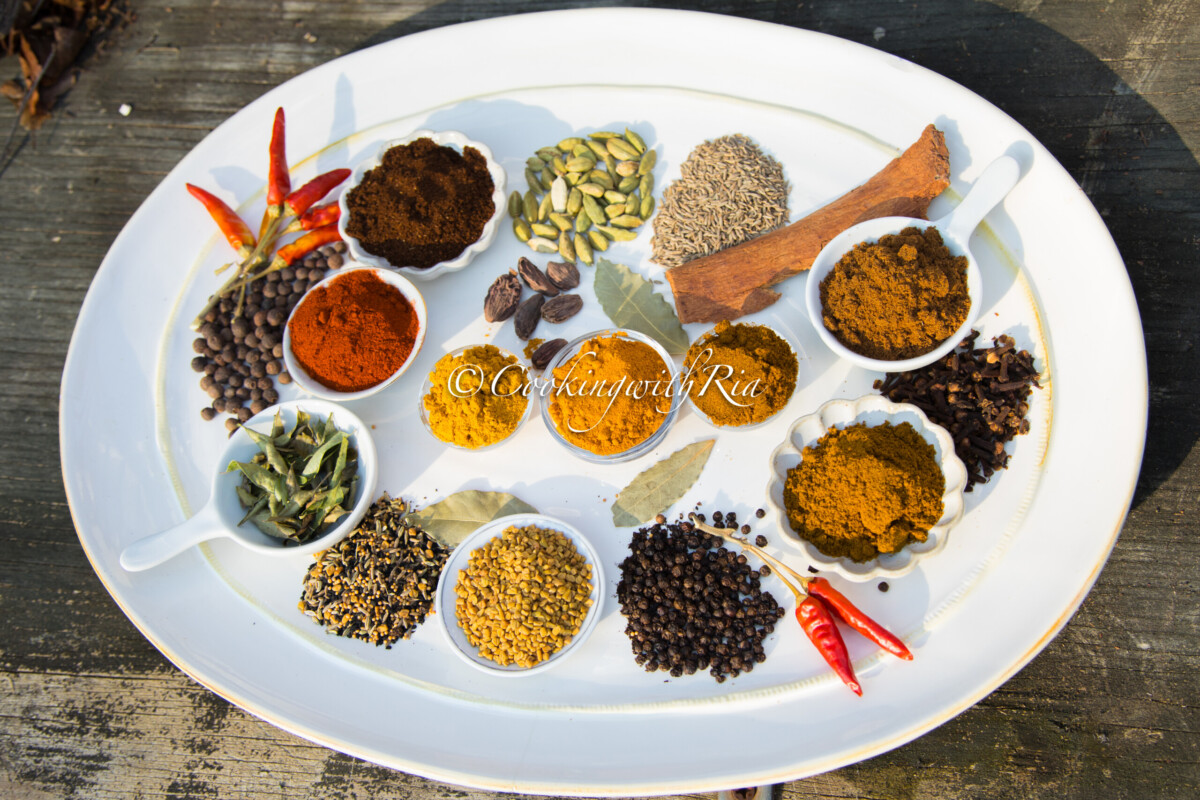
Spices play an important role in Trinidad cooking, but perhaps not in the way people expect. Unlike some cuisines that rely on dozens of spices in a single dish, Trinidad cooking often depends on a smaller group of spices used thoughtfully and intentionally, combined with fresh herbs, peppers, and green seasoning to build flavor layer by layer. In Trinidad kitchens, the skill of the cook is not measured by how many spices are used, but by how well those few spices are balanced to create depth, aroma, and character in the dish.
Table of Contents
Recently, as my daughter prepares to move out on her own, I began thinking about the spices I would buy to help stock her first kitchen. Every cook eventually develops a pantry that reflects the foods they grew up with, the traditions they carry forward, and the cuisines that inspire them. That simple question—what spices should she start with?—led me to reflect on the spices that form the foundation of Trinidad cooking and how our spice pantries have evolved over time.
Trinidad and Tobago is often described as a melting pot of cultures, and nowhere is that more evident than in the kitchen. Culinary traditions from Africa, India, China, Europe, and the Indigenous peoples of the Caribbean blended naturally in our homes over generations. The spices we use today reflect that shared heritage.
If you’re just beginning to explore the flavors of Trinidad cuisine, you may also enjoy my guide to What Is Trinidad Food, which explains the cultural influences that shape our cooking. You can also explore the essential ingredients used in Trinidad cooking, from green seasoning and chadon beni (bandhania / culantro) to coconut milk and hot peppers. Together with the spices in this article, these ingredients form the foundation of many traditional Trinidad dishes.
The Core Spices of Trinidad Cooking
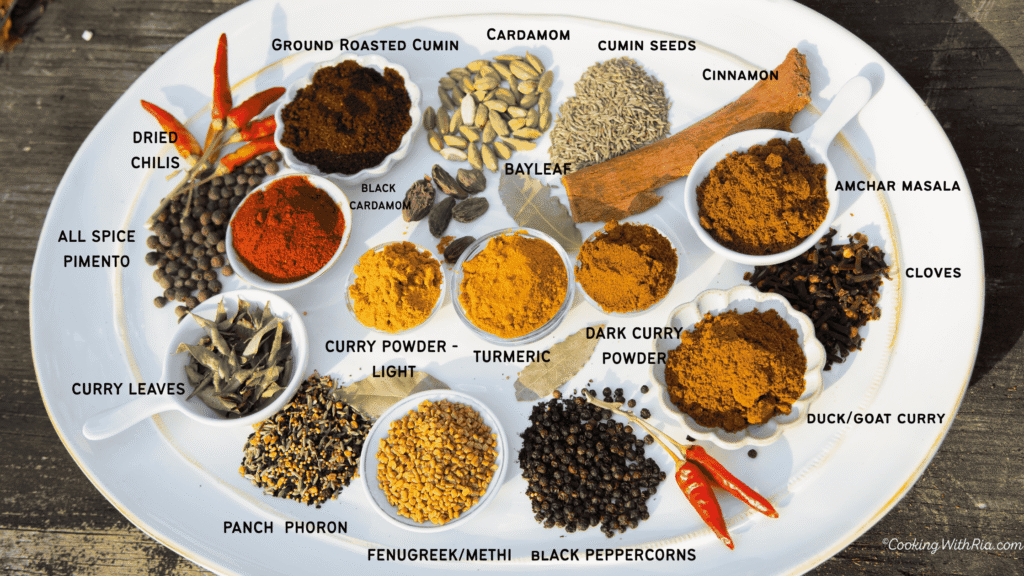
Trinidad cooking may not rely on a large number of spices, but the way we use them—combined with fresh herbs, peppers, and traditional cooking techniques—creates the bold and memorable flavors that define our cuisine.
Although Trinidad cuisine reflects many cultural influences, a relatively small group of spices appears again and again in everyday cooking. These spices are the foundation of many curries, stews, marinades, and traditional dishes.
Curry Powder in Caribbean Cooking
Curry powder is one of the most widely used spices in Trinidad cooking and is the backbone of many traditional dishes. Its presence in Caribbean cuisine reflects the influence of Indian indentured laborers who arrived in Trinidad during the nineteenth century, bringing with them the spices and cooking traditions that would eventually shape the island’s distinctive curry culture.
Over time, Trinidad cooks adapted these traditions to local ingredients and tastes, creating a style of curry that is uniquely Caribbean. Today several variations of curry powder are commonly used in Trinidad kitchens, including standard curry powder, Madras curry powder, and special blends formulated for particular meats such as duck and goat.
Most curry powders are built from a foundation of turmeric, cumin, coriander, fenugreek, and other warming spices. The balance of these spices varies between blends, which means different curry powders can produce noticeably different flavors, aromas, and levels of heat.
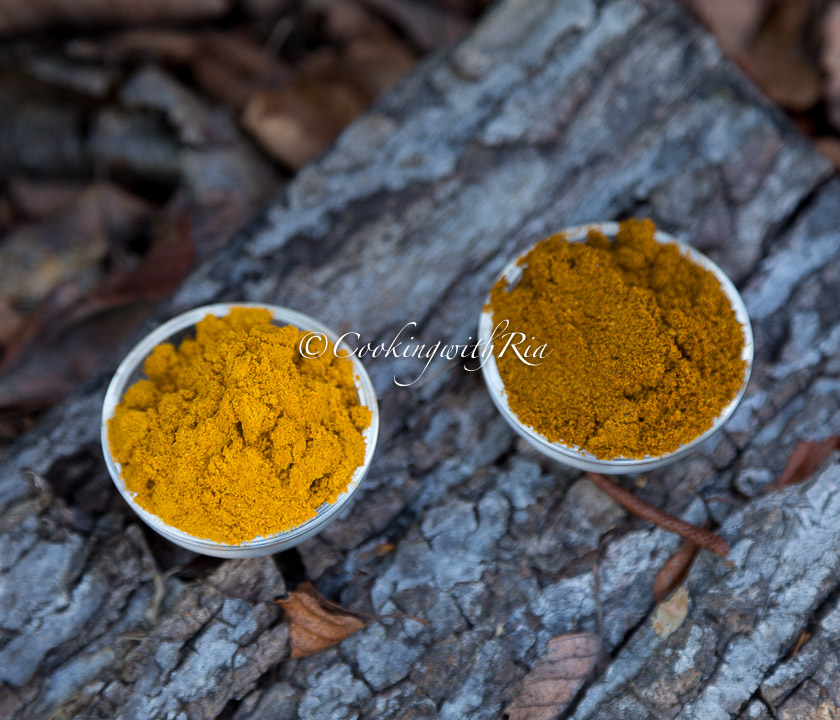
One detail many people do not realize is that curry powder can appear in different shades depending on the spice blend. Some are bright golden yellow, while others are deeper or slightly brown. This variation usually reflects the proportion of turmeric and the combination of other spices used in the mix. I’ve included a photo above showing two brands so you can see how curry powders can differ from one another.
In Trinidad cooking, curry powder is almost always cooked briefly in oil before liquid is added, a process known locally as bounjay. This step deepens the flavor of the spice and removes its raw taste, allowing the curry to develop a richer, more complex aroma.
Different cooks combine curry powder with other spices in slightly different ways, and many quietly guard their preferred combinations. There is often a friendly, unspoken competition among cooks to produce the most flavorful curry, with each household developing its own subtle variations.
While curry powders are produced around the world, Caribbean curry powders are generally preferred for Trinidad-style curries because they are formulated for the cooking techniques used in the region. However, cooks may experiment with different blends depending on personal taste, family tradition, or the dish being prepared.
In Trinidad cooking, curry powder is used in many well-known dishes, including curry chicken, curry goat, curry duck, curry shrimp, curry channa and aloo and curry fish. It is also used in vegetable curries and other everyday meals prepared in Trinidad kitchens.
Curry powder is only one part of the Trinidad spice cabinet. Other spices, such as roasted geera, turmeric, amchar masala, and warming spices used in desserts and drinks, also contribute to the layered flavors that define Trinidad cooking.
Some Trinidad dishes also combine curry techniques with stewing methods, creating what many cooks refer to as curry stew, where both techniques meet to produce rich, layered flavor. See curry stew chicken and curry stew turkey and curry stew pork recipes.
How to Tell if Curry Powder Is Still Good
Curry powder does not spoil in the way fresh food does, but it can lose its strength and aroma over time. When curry powder becomes stale, the flavor of your dish will be noticeably weaker.
Here are a few simple ways to check if your curry powder is still good for cooking:
Smell it. Fresh curry powder should have a strong, warm, fragrant aroma. If the smell is faint or dull, the spices have likely lost their potency.
Look at the color. Good curry powder usually has a vibrant golden or yellow color from turmeric. If it looks pale or faded, it may be old.
Rub a small pinch between your fingers. Fresh spices release oils and fragrance when rubbed. If very little aroma is released, the spice has probably lost its strength.
Taste a tiny pinch. Fresh curry powder should taste warm, earthy, and slightly complex. If it tastes flat or dusty, it is likely time to replace it.
As a general rule, curry powder that has been open for about 6–12 months may start to lose its strength. Replacing it periodically helps ensure that your curries have the bold, fragrant flavor they are known for.
Roasted Ground Cumin (Geera)
Geera, or cumin, is another essential spice in Trinidad kitchens. It is used both as whole cumin seeds, ground cumin, and as roasted ground cumin, the latter being especially popular.
To make roasted geera, cumin seeds are toasted until fragrant and then ground. This process intensifies the flavor and creates the warm, smoky aroma that many Trinidad dishes are known for.
Geera is used in dishes such as geera pork, geera chicken, dhal, chutneys, and everyday curries. It is often added toward the end of cooking to deepen the aroma and provide an earthy finish.
Roasted geera also plays an important role in several beloved foods. It flavors the ground dhal filling used in dhalpuri roti and the seasoned mashed potatoes used in aloo pie, aloo roti and aloo puri.
Turmeric (Hardi)
Turmeric is widely used in Trinidad curries and marinades. Known locally by the older generation as hardi, it contributes the vibrant golden color associated with many Caribbean dieshes and adds a mild earthy flavor.
In Trinidad kitchens turmeric is sometimes mistakenly referred to as saffron, although the two spices are very different.
Popular dishes made with turmeric:
- Dhal & Dumplign Soup
- Dhal
- Dhalpuri
- Curry chicken – original recipe
- Curry lamb
- 15 spice curry chicken
- Simple Healing Kitchari
- Mummy’s Kitchri
- See More Here
Fenugreek (Methi) and Panch Phoron
Fenugreek seeds, known as methi, are sometimes added to hot oil at the beginning of cooking curries. When lightly toasted, the seeds release a nutty aroma that enriches the dish.
Some cooks also use panch phoron, a traditional five-seed spice blend that may include fenugreek, cumin, fennel, mustard, and nigella seeds. These seeds are often allowed to bloom in oil before onions, garlic, and peppers are added. Panch Phoron also known as poran can be used in place of the individual methi seeds.
These techniques reflect the Indo-Caribbean traditions that helped shape Trinidad cuisine.
While optional in many dishes, it is an important part of my own pantry, also influenced by my mother’s cooking.
Amchar Masala
Amchar masala is a distinctive Indo-Trinidadian spice blend most commonly used in pickled condiments and preserves. It should not be confused with amchur, which is dried mango powder used in Indian cooking. Although the names sound similar, the two are completely different ingredients.
In Trinidad, amchar masala is best known for its use in amchar, the spicy pickled fruit condiments traditionally made with green mango, pommecythere, tamarind, caraille, pimento peppers, or other tart fruits and vegetables. The spice blend adds warmth, fragrance, and a slight bitterness that balances the sharp acidity of the pickled fruit.
The blend typically contains toasted and ground spices such as coriander seeds, cumin (geera), fenugreek (methi), mustard seeds, fennel seeds, and black peppercorns. When these spices are toasted and ground together, they produce a bold, aromatic seasoning that defines the flavor of Trinidad-style amchar.
While many cooks can prepare their own version at home, packaged blends are more popular and also widely available in Caribbean markets. As with many spice blends in Trinidad cooking, the exact proportions vary slightly from brand to brand and from cook to cook.
Although amchar masala is most closely associated with pickled fruits, chutneys and condiments, its bold flavor also appears in dishes such as mango talkarie, where the spices create the familiar sweet-sour-spicy balance that Trinidad condiments are known for.
Amchar masala is commonly used in dishes such as:
- mango talkarie
- pommecythere talkari
- mango amchar
- pommecythere amchar
- pepper amchar
- sour plum amchar
- mango and pommecythere kuchela
- chalta
- mango chutney
- tamarind chutney
- doubles channa – my own personal addition
Allspice Berries (Pimento Berries)
Allspice berries, also known as pimento berries, are dried berries from the allspice tree and are widely used throughout Caribbean cooking. Despite the name, allspice is not a mixture of spices but a single spice whose flavor naturally resembles a blend of cinnamon, nutmeg, and cloves.
While allspice plays a central role in Jamaican cuisine, it is used more selectively in Trinidad kitchens. Nevertheless, it still appears in a number of Caribbean-inspired dishes prepared by Trinidad cooks.
Allspice is commonly used in dishes such as jerk chicken, rice and peas, stewed oxtail, Jamaican steamed cabbage, and marinades, where their warm, aromatic flavor helps deepen sauces and slow-cooked dishes.
Chinese Five-Spice Powder
Chinese five-spice powder reflects the long-standing Chinese influence on Trinidad cuisine. Chinese immigrants who settled in Trinidad introduced cooking techniques and flavors that gradually became part of the island’s broader culinary landscape.
The blend typically includes star anise, cloves, cinnamon, fennel seeds, and Sichuan peppercorns, creating a warm, aromatic seasoning with a slightly sweet and savory profile.
Although it is not used as frequently as spices such as curry powder or geera, Chinese five-spice powder appears in a number of Trinidad dishes influenced by Chinese cooking. It may be used in preparations such as Chinese-style fried chicken, Trini vegetable fried rice, and roasted duck, where it adds depth and fragrance.
Its presence in Trinidad kitchens is another reminder of how the country’s cuisine reflects a true melting pot of culinary traditions, with flavors from many cultures sharing the same table.
Chinese five-spice powder is used in dishes such as Chinese-style fried chicken, Trini veggie fried rice, and roasted duck.
Black Pepper
Black pepper is another staple found in nearly every kitchen. While it may seem too basic to include in a list of Caribbean spices, it plays an important role in everyday cooking. A pinch of freshly ground black pepper is often added to marinades, stews, soups, and rice dishes to provide subtle heat and balance. Like salt, onion, and garlic, it is such a universal ingredient that it is sometimes overlooked when discussing the spices that define a cuisine.
Ginger
Ginger is an important ingredient in many Caribbean kitchens and is used in both savory and sweet cooking. Fresh ginger adds warmth, brightness, and depth to curries, stews, soups, marinades, drinks, and Chinese-style Caribbean dishes.
Grated fresh ginger is also commonly added to dishes such as stewed pork, where it helps balance richness while adding warmth and aroma to the finished dish.
In my own kitchen, I sometimes add fresh ginger directly into my green seasoning for an extra layer of freshness and flavor.
Ground ginger or ginger powder is also an important pantry staple, especially in Caribbean baking and desserts. It is commonly used in cakes, spice buns, cookies, punches, teas, and holiday recipes throughout the Caribbean
Roucou (Annatto)
Roucou, also known as annatto, is used in Caribbean cooking to add rich color and subtle earthy flavor to dishes. In Trinidad, roucou is sometimes blended or steeped into a liquid and used to naturally color stews, rice dishes, and other traditional recipes. Powdered roucou is also commonly sold in markets throughout Trinidad, including farmers markets, where cooks purchase it for everyday cooking and seasoning.
It is sometimes used as an alternative to artificial food coloring, Sazón, or even burnt sugar in certain stewed dishes when cooks want color without caramelizing sugar.
Warm Spices Used in Desserts and Drinks
Several warm spices appear frequently in Caribbean desserts and beverages. While they are often associated with sweets, they are not limited to dessert cooking. In Caribbean kitchens the same spice may appear in both savory and sweet dishes depending on the recipe.
Cardamom (Elaichi)
Cardamom, known as elaichi in many Indo-Caribbean kitchens, is most commonly used in traditional sweets and festive dishes. It adds a delicate fragrance and gentle sweetness that defines many beloved desserts.
In Trinidad cooking, cardamom is often used in parsad and sawine, , where its aroma complements the richness of ghee, milk, and toasted flour or vermicelli. It is also an essential ingredient in masala chai, where it is simmered with tea and other warming spices to create a comforting spiced beverage.
Cinnamon and Cloves
Cinnamon and cloves are warming spices that appear frequently in Caribbean desserts, beverages, and festive dishes.
They are commonly used in sawine, masala chai, cakes such as sponge cake, and a variety of holiday drinks including sorrel. Their sweet, aromatic character helps balance richer ingredients such as milk, sugar, and coconut, while adding depth and fragrance to the dish.
These spices are often used whole and simmered in liquids, allowing their flavor to slowly infuse the preparation.
Nutmeg
Nutmeg adds warmth to both sweet and savory dishes. It is often used in Caribbean drinks such as soursop punch and desserts such as cassava pone. Many cooks also grate a small amount into savory dishes like macaroni salad or scalloped potatoes.
Vanilla
Vanilla is technically considered a spice, derived from the cured pods of the vanilla orchid. In most Trinidad kitchens, however, it is commonly used in the form of vanilla essence, mixed essence, or vanilla extract.
Vanilla is frequently added to cakes such as sponge cake, as well as puddings, custards, punches, and other desserts, where it enhances both aroma and sweetness. Many Trinidad bakers traditionally use vanilla essence or mixed essence, while others prefer pure vanilla extract for its deeper and more natural flavor.
Mixed essence is especially popular in Caribbean baking and typically combines vanilla with other flavorings such as almond and sometimes citrus notes, giving baked goods their familiar bakery-style fragrance.
How Trinidad Spice Pantries Have Evolved
Spice pantries in Trinidad have evolved significantly over time. Older generations often relied on a smaller group of traditional spices that formed the foundation of everyday cooking. Today, however, travel, migration, social media, and exposure to global cuisines have expanded what many cooks keep in their kitchens.
Being Trinidadian does not mean cooking only Trinidadian dishes. A pantry often reflects the foods we love, the places we have traveled, and the meals that inspire us. As a result, many home cooks now keep a wider range of spices alongside the traditional ones used in Caribbean cooking.
In addition to staples such as curry powder, geera, turmeric, and amchar masala, many modern Trinidad kitchens also include pantry spices like garlic powder, granulated garlic, onion powder, paprika, and oregano. Some cooks also experiment with spices such as black cardamom, bay leaves, black peppercorns, garam masala, Kashmiri chili, or kasuri methi as their cooking continues to evolve.
These spices may appear in dishes inspired by other cuisines that have become popular in my home and in many Trinidadian kitchens, such as butter chicken, chicken biryani, chickpeas pilaf or lamb pilaf.
The Spice List I Would Use to Stock My Daughter’s Kitchen
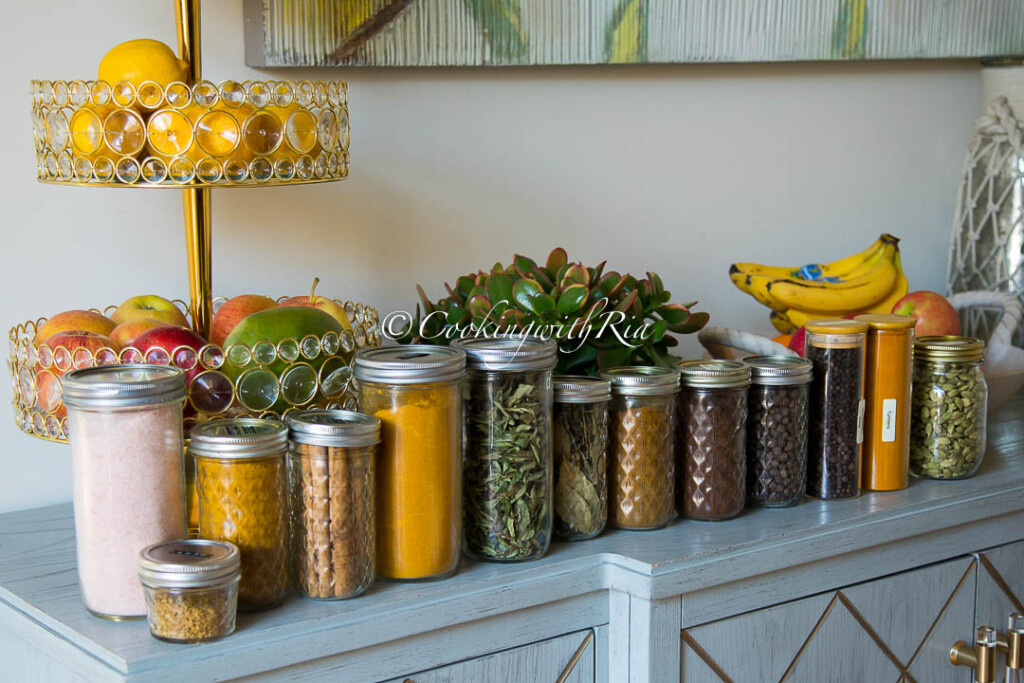
If I were stocking my daughter’s kitchen today, I would begin with the spices that form the foundation of Trinidad cooking. These are the spices that appear again and again in many of the dishes we grew up eating.
To start, I would include:
- curry powder
- Madras curry powder
- duck and goat curry powder
- roasted ground cumin (geera)
- whole cumin seeds
- turmeric (hardi)
- fenugreek seeds (methi)
- panch phoron
- amchar masala
- cardamom (elaichi)
- cinnamon sticks
- cloves
- nutmeg
- vanilla extract
- allspice berries (pimento berries)
- Chinese five-spice powder
Alongside these, I would include practical pantry staples such as garlic powder, granulated garlic, onion powder, paprika, chili powder and oregano. These spices make it easier to cook both Caribbean meals and other cuisines at home.
A spice pantry evolves over time. As cooks gain experience, they often add new ingredients that reflect their interests, travels, and the dishes they enjoy preparing. But starting with a small, thoughtful selection like this provides a strong foundation for cooking confidently.
While spices form an important part of any kitchen, they are only one piece of the puzzle. A well-stocked Caribbean kitchen also relies on pantry staples such as coconut milk, dried beans, rice, preserved ingredients, and a few everyday cooking essentials that make preparing traditional dishes much easier.
In my next guide, I’ll walk through the essential pantry staples used in Caribbean cooking and show you how to build a practical Caribbean pantry step by step. Together with the spices discussed here, those ingredients form the foundation of many of the dishes we cook every day in Trinidad kitchens.
Where to Buy Caribbean Spices
Many of these spices can be found in Caribbean, Indian, or international grocery stores.
If you live in New York, neighborhoods such as Queens and Brooklyn often have Caribbean markets where you can find these spices and other specialty ingredients.
You may also find them in:
- online spice retailers
- Caribbean grocery stores
- Indian supermarkets
- international sections of large supermarkets
- See my Amazon storefront for affiliate links to my favorite brands.
How to Store Spices
To preserve the flavor, aroma, and potency of your spices, store them in airtight containers in a cool, dry place away from heat and direct sunlight. Exposure to air, moisture, and light can cause spices to lose their fragrance and intensity over time.
Whole spices generally retain their flavor longer than ground spices because their essential oils remain protected inside the seed or pod until they are crushed or ground. Whenever possible, buying whole spices and grinding them as needed will give you the freshest flavor. Common examples of whole spices that can be ground at home include cumin seeds (geera), coriander seeds, black peppercorns, cloves, nutmeg, and cardamom pods.
As a general guideline, ground spices should be replaced every six to twelve months, while whole spices can last longer when stored properly. Keeping your spices fresh ensures that the dishes you prepare will have the vibrant aroma and depth of flavor that good cooking depends on.
Frequently Asked Questions
What spices are most commonly used in Trinidad cooking?
The most common spices used in Trinidad cooking include curry powder, roasted ground cumin (geera), turmeric (hardi), fenugreek (methi) and amchar masala. Warm spices such as cinnamon, nutmeg, cloves, and cardamom are also commonly used in desserts and drinks.
Why does Trinidad curry taste different from Indian curry?
Although Trinidad curry was influenced by Indian cooking, it evolved over time using local ingredients and cooking techniques. Trinidad curries typically rely on fewer spices but emphasize the careful balance of curry powder, roasted geera, turmeric, green seasoning, fresh herbs, and hot peppers.
What is geera in Trinidad cooking?
Geera is the Trinidadian name for cumin. It is commonly used in both whole and roasted ground form. Roasted geera has a deeper, smoky aroma and is often added toward the end of cooking to enhance flavor.
What is amchar masala?
Amchar masala is a spice blend used primarily in Indo-Trinidadian condiments such as mango amchar and kuchela. It should not be confused with amchur, which is dried mango powder used in Indian cuisine.
Are Trinidad spices very hot?
Most Trinidad spices themselves are not hot. The heat in Trinidad cooking usually comes from fresh peppers such as Scotch bonnet, habanero, bird pepper, or Trinidad scorpion peppers.
Do Trinidad cooks use a lot of spices?
Many traditional Trinidad dishes rely on a relatively small number of spices used carefully and intentionally. Much of the flavor comes from combining spices with fresh herbs, green seasoning, and slow cooking techniques.
What is the difference between curry powder and geera?
Curry powder is a blend of several spices used to create the base flavor of many Trinidad curries. Geera, or cumin, is a single spice. Roasted ground geera is often added to dishes to deepen aroma and provide a smoky flavor.
Can the spices used in desserts also be used in savory dishes?
Yes. In Caribbean cooking, spices such as cinnamon, cloves, nutmeg, and cardamom are used in both sweet and savory dishes depending on the recipe.
How long do spices last?
Ground spices usually maintain their best flavor for six to twelve months, while whole spices can last longer when stored properly in airtight containers away from heat and sunlight.
What spices should a beginner start with?
A beginner building a Caribbean spice pantry can start with curry powder, roasted geera, turmeric, fenugreek seeds, panch phoron, amchar masala, cinnamon, nutmeg, cloves, and cardamom.
What other ingredients are essential in a Caribbean kitchen besides spices?
A well-stocked Caribbean kitchen also includes pantry staples such as coconut milk, rice, dried beans, lentils, and preserved ingredients like salted fish, along with fresh ingredients such as green seasoning, thyme, and hot peppers.
What is the difference between Caribbean spices and Caribbean seasonings?
Spices usually refer to dried ingredients such as cumin, turmeric, cloves, or cinnamon that add aroma and depth. Seasonings often include fresh ingredients or blends such as green seasoning, garlic, onions, herbs, and peppers that form the base of many Caribbean dishes.
Explore More Trinidad Cooking Guides
If you would like to continue exploring the cuisine, these guides will help you understand how the flavors of Trinidad come together:
➡ What Is Trinidad Food – understanding the cultural influences behind the cuisine
➡ Essential Ingredients in Trinidad Cooking – the herbs, peppers, and pantry staples used in everyday dishes
➡ Top 25 Must-Try Foods in Trinidad and Tobago – a guide to the iconic dishes of the islands
➡ Explore my Sunday Lunch series to see how these flavors appear in real Caribbean dishes.
Together, these resources will help you understand how spices, ingredients, and cooking techniques shape the vibrant cuisine of Trinidad and Tobago.
📩 Subscribe & Get My Free Green Seasoning Booklet
If you enjoy learning about the ingredients and techniques that shape Caribbean cooking, be sure to subscribe so you never miss a new recipe, guide, or Sunday Lunch story from my kitchen.
When you join, you’ll receive my free Green Seasoning Booklet — one of the most important foundations of Caribbean cooking. Green seasoning is used in countless dishes across Trinidad and the Caribbean, adding depth, freshness, and unmistakable flavor to meats, seafood, rice dishes, and stews.
Once you start using it in your kitchen, you’ll quickly understand why every Caribbean cook keeps a batch ready.
❤️ Shop My Kitchen Favorites
These are the trusted tools and pantry staples I use in my own kitchen — the ones that make Caribbean cooking easier and more enjoyable.
From spice grinders and cookware to some of the ingredients I rely on most often, these are items I personally use and recommend.