What Are Ground Provisions?
Ground provisions are a group of Caribbean root vegetables and starchy foods such as yam, cassava, dasheen, eddoes, sweet potato, green fig, and plantain that are used to anchor and complete a meal. They are not a single dish, but a category of ingredients that provide substance, balance, and lasting fullness.
Table of Contents
In Caribbean cooking, ground provisions form the foundation of everyday meals. Across the region, they may also be called hard food (in Jamaica), blue food, roots, or simply “food,” depending on the island. While the names vary, the purpose remains the same: to sustain the body and give structure to the plate.
These foods include root vegetables such as yam, cassava (yuca), dasheen, eddoes, tannia, and sweet potato, as well as firm, starchy fruits like green fig (green banana), plantain, breadfruit, and moko. Some grow underground, others above, but all serve the same role in Caribbean cooking.
Ground provisions are prepared in many ways — boiled, roasted, fried, simmered in coconut milk, added to soups and curries, baked into pies, or even used in breads and desserts. Their versatility allows them to move easily between simple side dishes and more elaborate meals.
One of the most common and recognizable preparations is Boiled Provisions, where these ingredients are peeled, cut, and boiled in salted water until tender, then drained and served alongside dishes like saltfish, stewed meats, curry, beans, callaloo, or fish.
This post explores what ground provisions are, the different types of Caribbean root vegetables, and how they are prepared, cooked, and enjoyed across the region — from everyday meals to traditional dishes that have sustained generations.
Ground Provisions in Our Home
Long before imported rice and flour filled supermarket shelves, ground provisions anchored the Caribbean plate. They were affordable, available, and filling. They could be grown in backyard plots or bought in large bags at the market for very little money. In many households, they were not simply a side dish — they were security.
In our home, ground provisions were never introduced or explained. They were simply there.
On Sundays, the table held rice, callaloo, stewed chicken, pork or beef. Some weeks red beans. Some weeks potato salad. Some weeks all of the above. And always — without discussion — a bowl of yam, dasheen, kush kush, cassava, boil and fry Irish potato, or green fig. The combination differs from family to family.
That habit came from Nana, my mother’s father. Rumor has it he was part Indian and part Carib — connected, in some way, to the aborigines / original people of Trinidad. Whether documented or carried through family memory, that lineage helps explain how he approached food.
In his kitchen, no meal felt complete without ground provisions. No explanation needed—that’s just how a real meal was built.
He prepared them alongside nearly everything because that was how he had been raised. A plate, in his view, needed structure. Rice alone was never enough. There had to be something more substantial — something dense enough to hold the gravy, balance the plate, and carry you through the day without leaving you hungry.
That instinct stayed with him, and through him, it carried into our home.
Boil and Fry Irish Potato: Sometimes he boiled Irish potato, drained it, and fried it in Golden Ray until the edges browned lightly. Today, we reach for good-quality butter instead, but the thinking remains the same — simple food, made to satisfy.
That way of eating did not begin with him. It reaches further back. Indigenous Caribbean diets were built around root crops, meat, corn, and dumplings — foods that sustained, that could be grown, and that did not depend on outside supply. Ground provisions were never decorative, they were necessary.
My mother remembers her mother cooking gub gub peas — tiny white sweet beans stewed until tender — alongside callaloo and a variety of ground provisions. There was always more than one starch: yam, cassava, green fig, sometimes all at once. Those provisions formed the base of the meal, giving it weight and substance. Nana loved to cook and loved to feed people, and the abundance of ground provisions on his table was part of how he showed it.
Later, in our own home, that pattern continued. When my mother cooked for my father ground provisions often accompanied stewed fish or steamed fish — not as an afterthought, but as a necessary part of the plate. They balanced the meal, absorbed the sauce, and made it feel complete.
Types of Ground Provisions (Caribbean Root Vegetables Guide)
Ground provisions — often referred to as root vegetables in a broader sense — are the dense, starchy foods that form the backbone of Caribbean cooking. Across Trinidad and Tobago, Guyana, Jamaica, and the wider Caribbean, these foods are essential not just for flavor, but for structure, nourishment, and satiety.
They include a wide range of root crops, tubers, and firm starchy fruits, many of which grow underground, while others grow above ground but serve the same purpose on the plate.
While botanically complex, in everyday Caribbean life — especially in Trinidad — these foods are understood in practical, experience-based terms: how they look, how they cook, and how they make a meal feel complete.
Ground Provisions (Root Vegetables That Grow Underground)
Yam (True Yam – Dioscorea Family)
Yam is one of the most important ground provisions in the Caribbean — dense, dry, and deeply satisfying, making it ideal for boiling, soups, and stews. In Trinidad, it is commonly simplified into white yam (firm, very starchy) and brown yam (slightly darker with a deeper flavor) and slightly yellow yam.
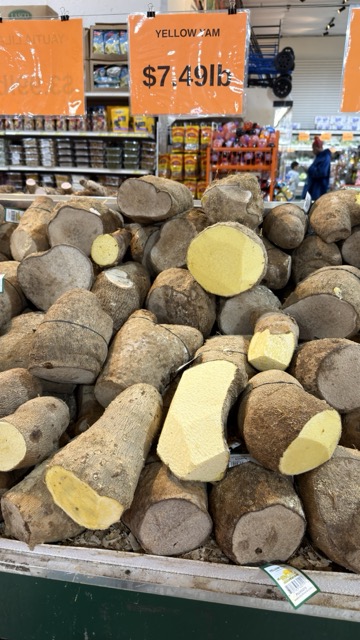
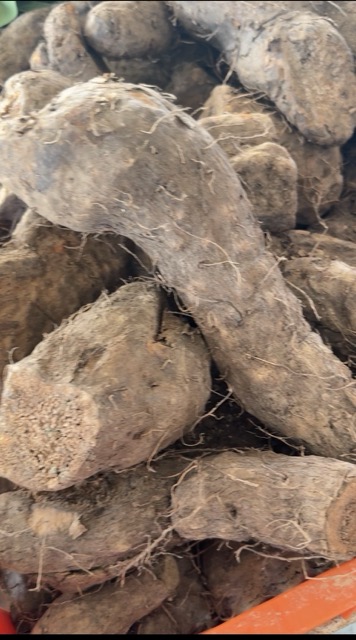
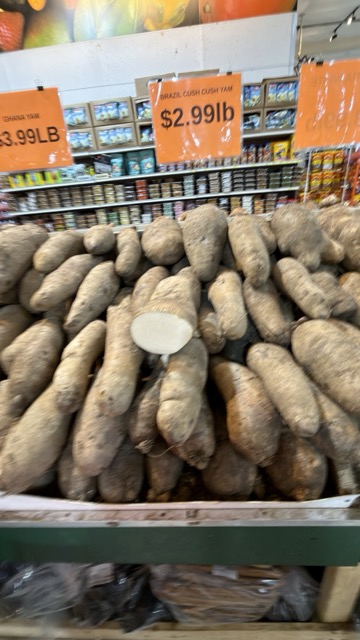
New York Market varieties include yellow yam, white ñame (ñame blanco), negro yam, espino yam (ñame espino), mapuey, yampi, and kush-kush (cush cush) (Dioscorea trifida) — a true yam prized for its fine, dry white flesh, smooth texture, and clean, slightly nutty taste. It is widely regarded as one of the best yams for boiling.
Important: Caribbean yam is not the same as what is labeled “yam” in U.S. supermarkets (which is typically sweet potato).
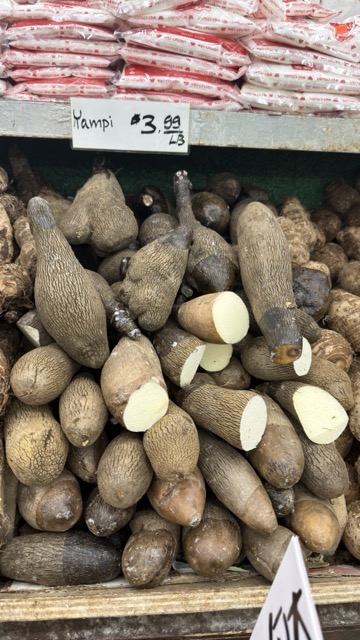
There is quite a large selection of provisions in NY markets
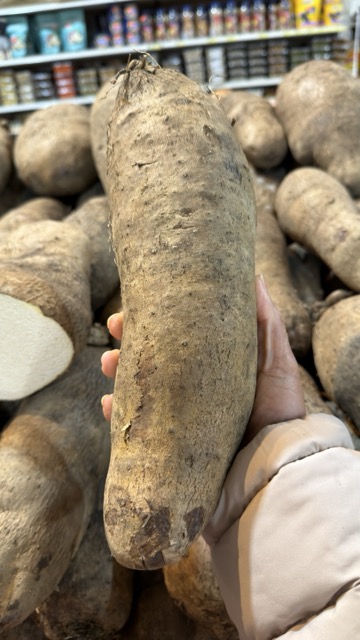
Cassava (Yuca)

A foundational Caribbean root vegetable with deep Indigenous roots, cassava is dense, slightly dry, and neutral in flavor. It is one of the most versatile and widely used ground provisions across the region.
Cassava must be properly prepared before cooking. The thick brown outer skin and the inner pinkish-white layer must both be removed, and the fibrous core discarded. It should always be cooked thoroughly before eating.
In the kitchen, cassava moves easily across a wide range of dishes. It is commonly used in boiled provisions, soups, stews, and oil down, where it absorbs flavor while holding its structure. It can also be fried — either sautéed in a simple boil-and-fry or deep-fried into cassava fries or chips.
Beyond savory dishes, cassava is essential in traditional preparations such as cassava pone and cassava pie. It is also used to make cassava bread — a flatbread rooted in Indigenous Caribbean cooking — as well as cassava flour for dumplings and other gluten-free uses.
Because of its versatility, cassava is not just a side ingredient — it is a central part of Caribbean cooking, moving easily between everyday meals and traditional dishes.
Cassava Recipes: Cassava Pone, Cassava Pie, Scalloped Cassava, Boil and Fry Cassava, Cassava Oil Down, Cassava Dumplings
Dasheen (Taro Types)
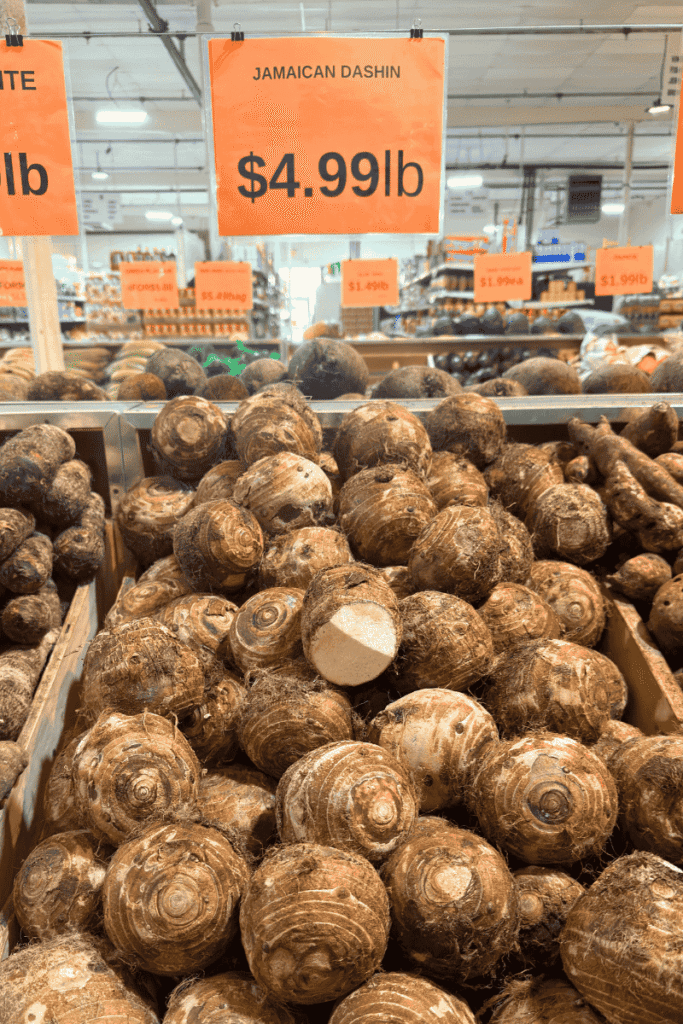
Dasheen is known for its creamy texture and ability to absorb flavor. In Trinidad, the two most common types are white dasheen (smooth and creamy) and “blue” dasheen (white flesh with purple-blue streaks). It also includes Jamaican dasheen. The dasheen bush is equally important — its leaves are used to make callaloo, bhagi, and saheena, and must always be properly cooked before eating.
Eddoes (Head & Seed — Colocasia antiquorum)

Eddoes are firm, slightly nutty, and excellent for boiling. In Trinidad, they are described as head (the large central corm) and seed (the smaller cormels). These are parts of the same plant, not different varieties. The head is larger and sometimes coarser, while the seeds are smaller and more commonly eaten. Though called “seeds,” they are used for planting, not true seeds. Eddoes can feel slightly slimy when raw but become firm and tender when fully cooked.
Recipes: Sada Eddoes, Eddoes Choka, Chicken Soup, Fish Broth
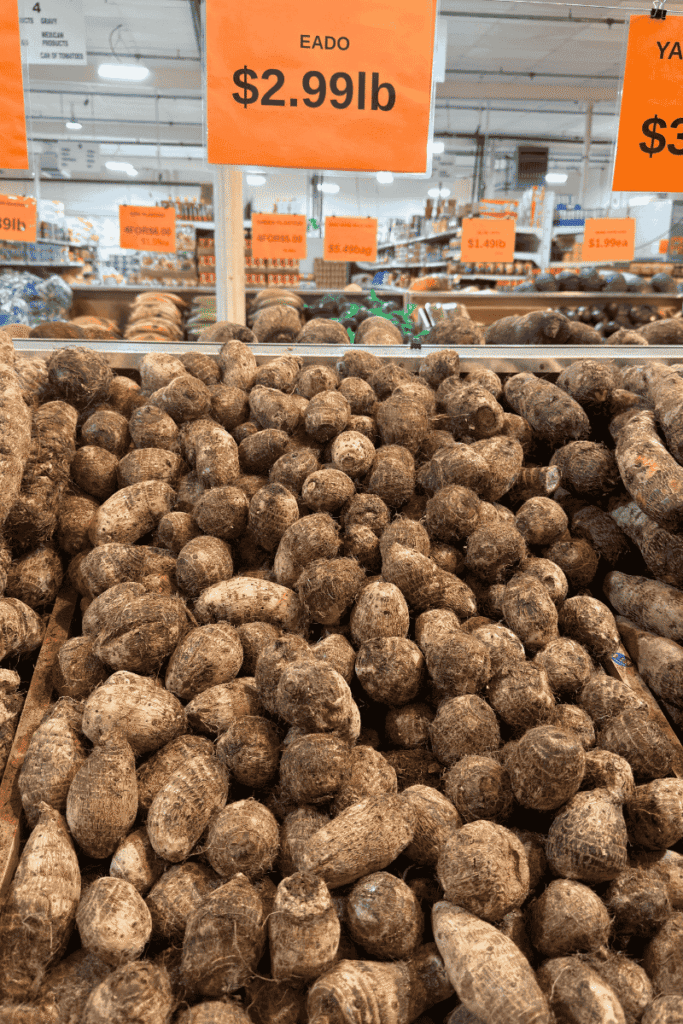
Tannia / Yautia / Malanga / Coco (Araceae Family)
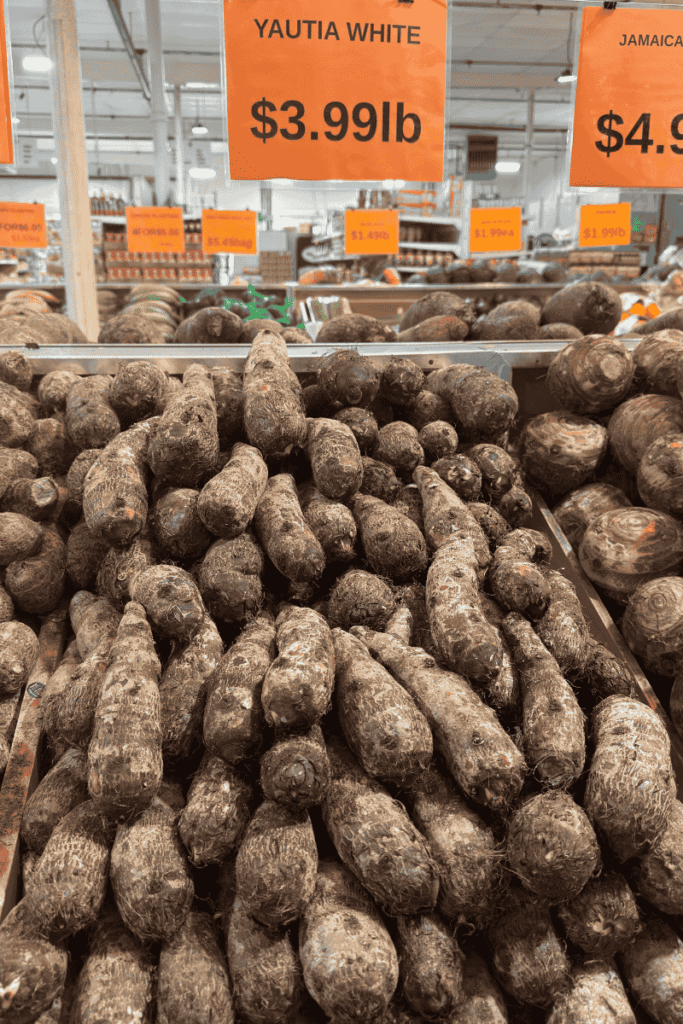
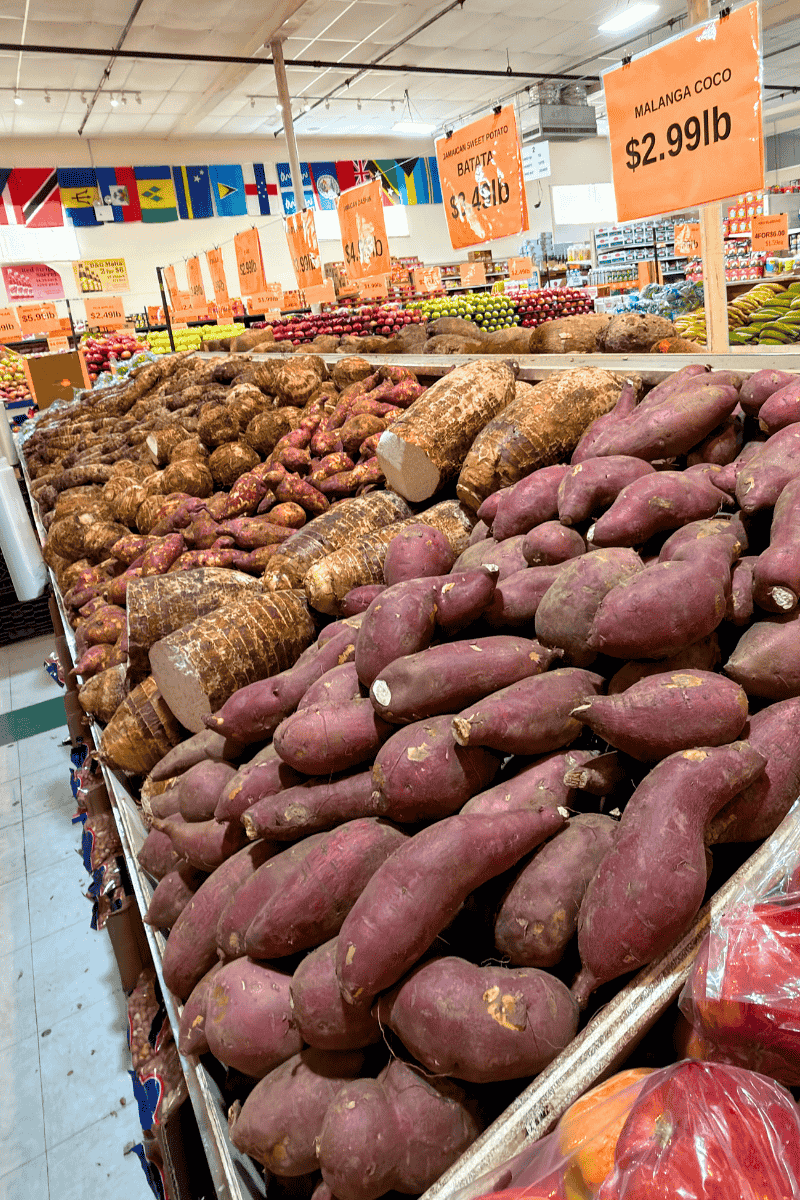
This group of closely related root vegetables is often confused in markets and includes tannia (Xanthosoma sagittifolium), yautia (white and lila), malanga, coco, and red coco. They belong to the Araceae (arum) family, not the yam family. Generally firmer or drier than dasheen, they are used interchangeably in soups and boiled provisions. Like dasheen, they may cause itching when raw, but this disappears once fully cooked.
Recipes- can be used interchangeably with eddoes: Sada Eddoes, Eddoes Choka, Chicken Soup, Fish Broth
Sweet Potatoes
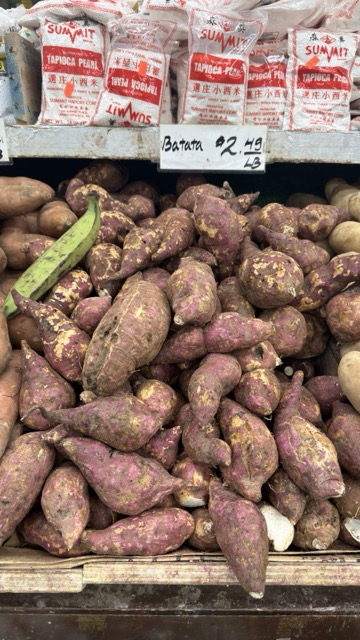
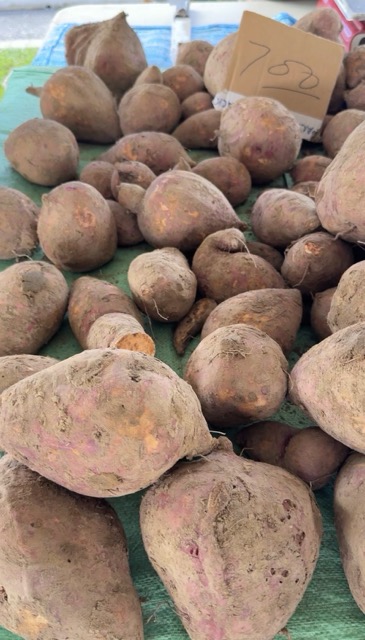
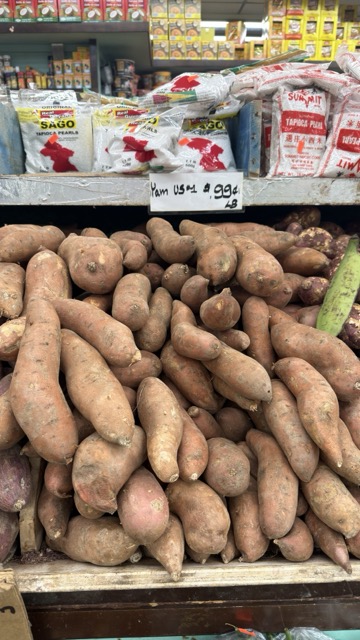
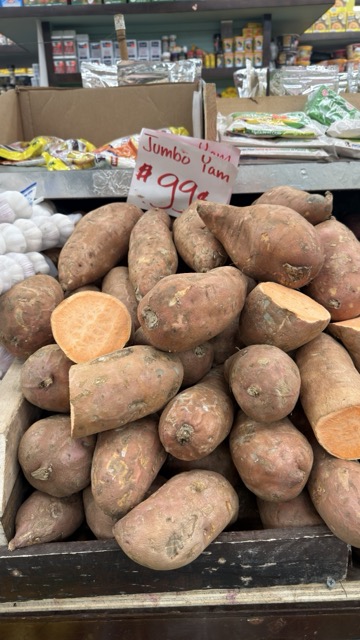
Sweet potatoes are softer, naturally sweet root vegetables that balance savory dishes. Varieties include orange, white, yellow, and purple sweet potatoes, as well as batata and Korean sweet potato. In North America, they are often mislabeled as “yam,” though they are entirely different botanically.
Potatoes (Included in Caribbean Practice)
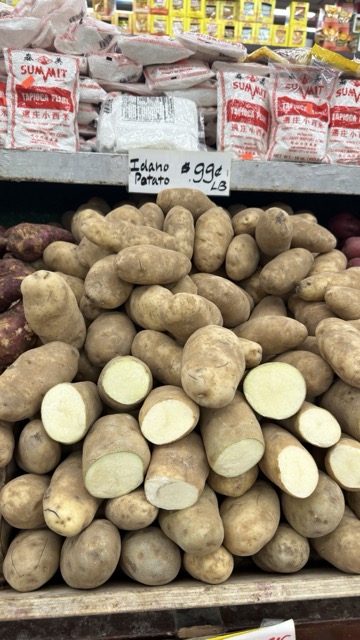
While not traditional Caribbean root crops, potatoes are commonly included in ground provisions in Trinidad homes. Varieties such as Idaho and red potatoes are often boiled alongside other provisions or prepared as “boil and fry” for added flavor and texture.
Non-Ground Provisions (Above Ground, Same Purpose)
Green Fig / Green Banana
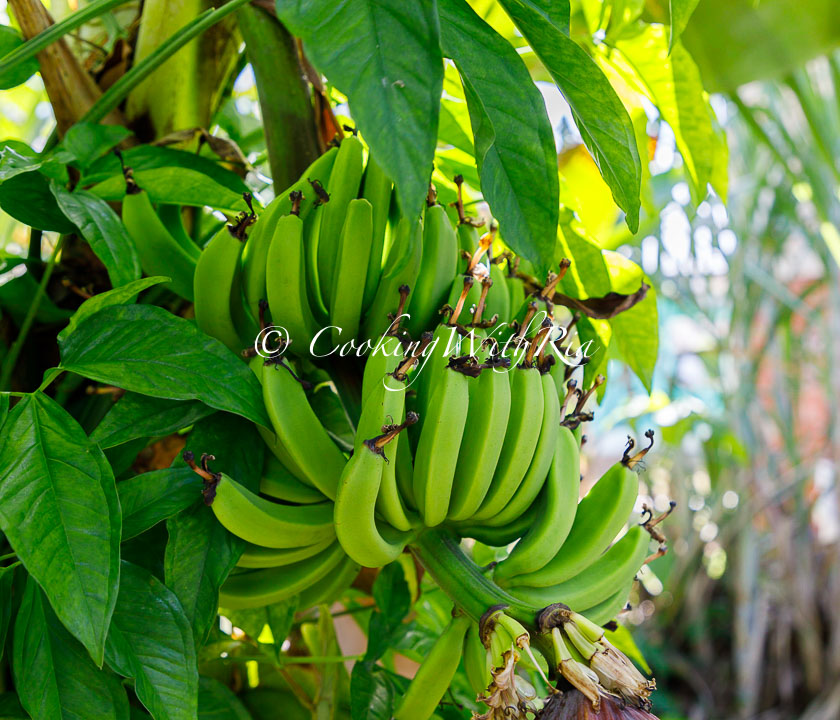
Firm, starchy, and neutral in flavor, green fig is commonly boiled and served alongside saltfish, stews, or callaloo. It holds its shape well and absorbs sauces beautifully.
Green Fig Recipes: St Lucian Green Fig Salad, Chicken Soup, Fish Broth
Green Plantain
/
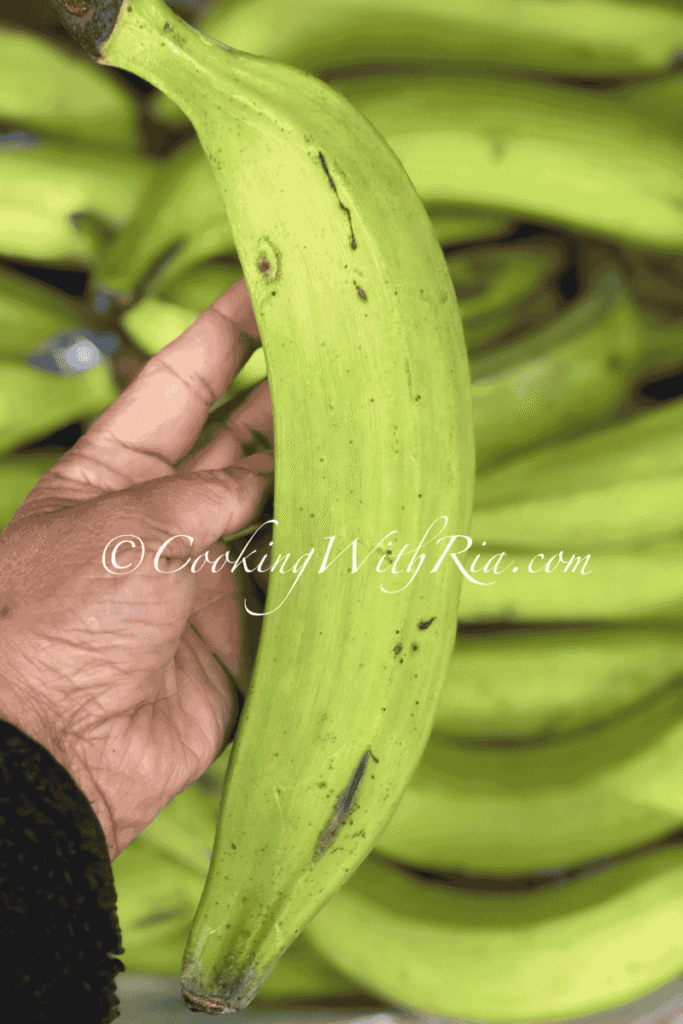
Dense and filling, green plantain is less sweet than its ripe counterpart and is often boiled, fried, or added to soups. It provides structure and substance similar to root vegetables.
Recipes: Fried Green Plantain – Crispy Tostones with Spicy Onion Pickle
Yellow Plantain (Ripe)
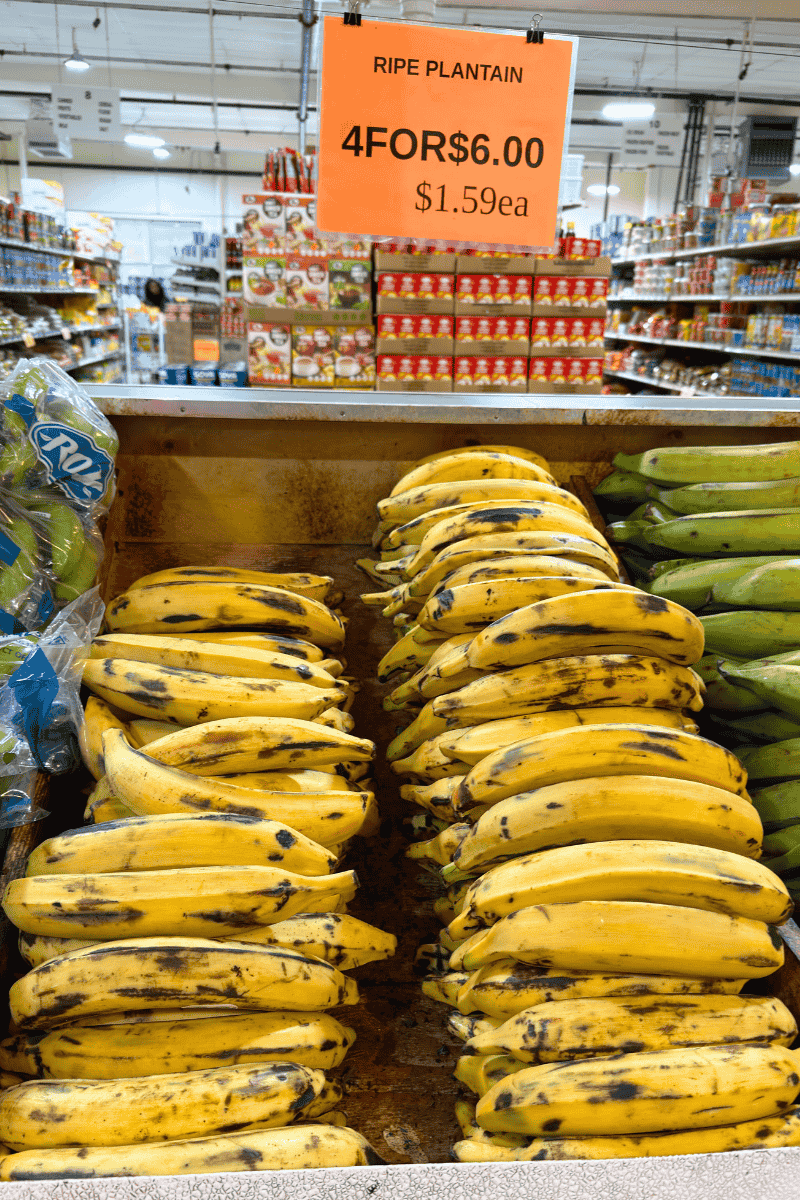
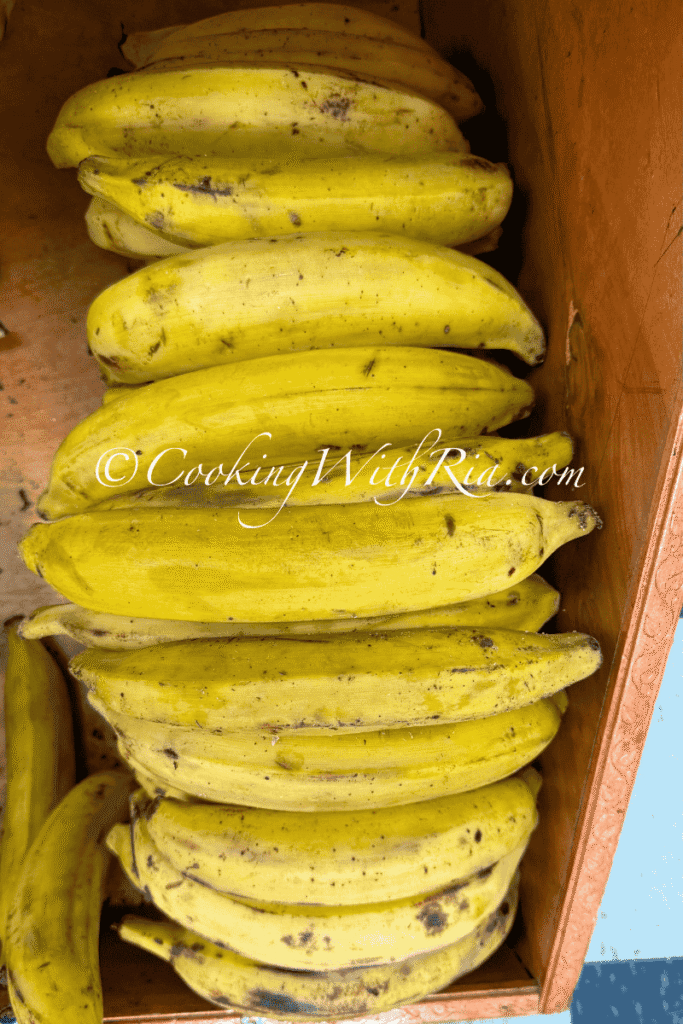
Softer and naturally sweet, ripe plantain brings balance to savory dishes. When boiled, it becomes tender and slightly sweet; when fried, it caramelizes and adds richness to the plate.
Plantain Recipes: Fried Plantain and Boil Plantain
Moko (Bluggoe Banana) — Names, Uses, and How It’s Cooked Across the Caribbean
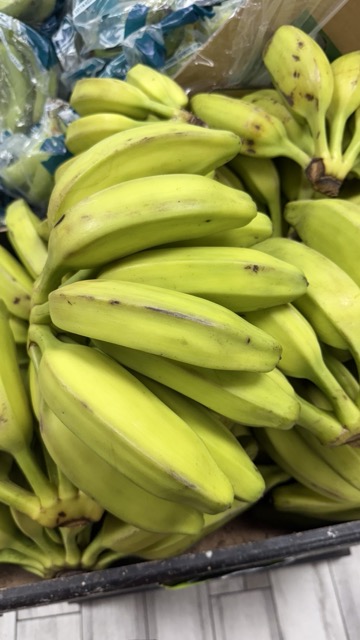
Moko belongs to a group of starchy cooking bananas known as the Bluggoe subgroup (ABB) — a class of bananas used primarily for cooking across the Caribbean and other tropical regions. These bananas are firm when green, less sweet than ripe plantains, and valued for their ability to hold structure in boiling, soups, and traditional provision dishes. They are typically shorter and thicker than plantains, with blunt ends rather than pointed tips, and develop a yellow color with brown markings as they ripen.
Across the Caribbean, this same type of banana is known by many different names depending on the island and community. Some of the more widely recognized names include:
Bluggoe / Bluggo / Blughor (Grenada, Tobago, wider Caribbean)
Mafubay / Mafoubay (St. Vincent and the Grenadines)
Moko (Trinidad and Tobago and elsewhere)
Other names such as Buck Buck (Tobago), Macaboo (Saint Lucia), Chata (in some Spanish-speaking Caribbean communities), Grindi (St. Vincent), and Boffet (Barbados) are used in specific places. These names reflect local dialects, traditions, and everyday use rather than strict botanical classification.
How Moko Is Cooked and Used in Caribbean Kitchens
Despite the different names, the use remains consistent across the Caribbean. Moko is commonly:
- boiled and served with saltfish or smoked herring
- added to soups and broths, where it holds its shape
- roasted or fried for deeper flavor and texture
- used slightly half-ripe for a softer, mildly sweet taste
- when fully ripe it is very sweet when fried
- sometimes grated and dried into flour for dumplings (especially in St. Vincent)
Note: In some Spanish-speaking Caribbean communities, similar cooking bananas may be referred to as plátano bulo or plátano burro, belonging to the same group of firm, starchy bananas used in traditional cooking.
Moko has a distinct taste compared to plantain — less sweet, more neutral, and closer in function to traditional ground provisions when boiled.
Because Caribbean food culture is deeply oral and regional, the same provision may carry different names across islands — and sometimes even within the same island — even though it belongs to the same broader group.
Breadfruit
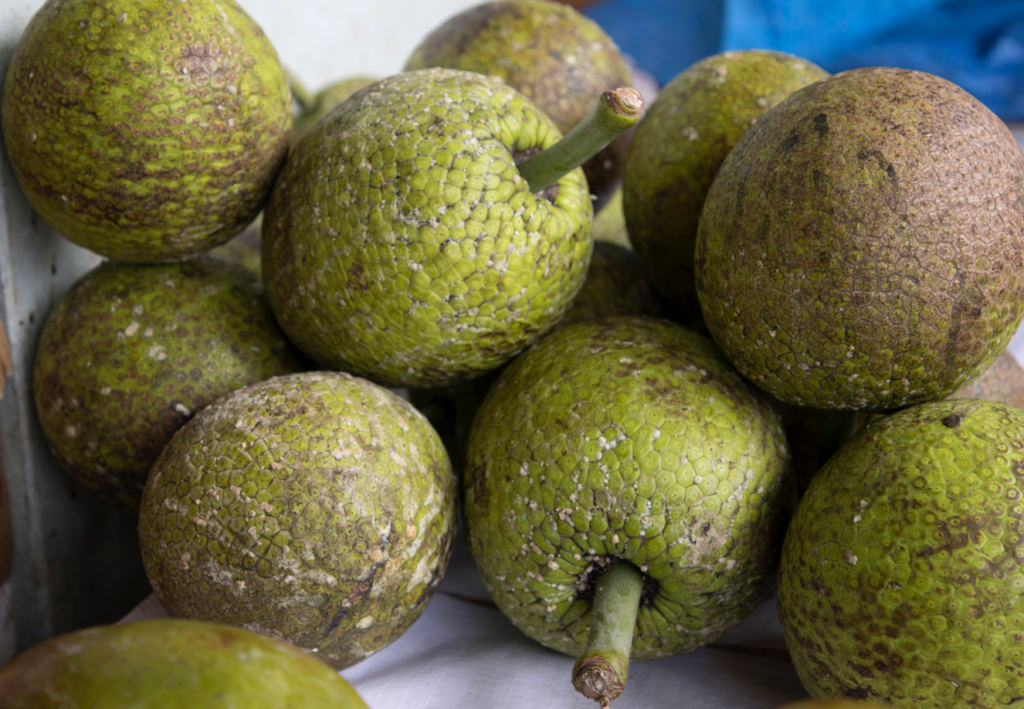
Breadfruit can be boiled, roasted, baked, or fried and is one of the most versatile Caribbean starches. Its texture ranges from firm to creamy depending on preparation, making it suitable for both simple sides and more complex dishes.
Though not root vegetables, these foods serve the same purpose on the plate — providing dense, satisfying starch that anchors the meal.
Breadfruit Recipes: Breadfruit Oil Down
Understanding Market Names
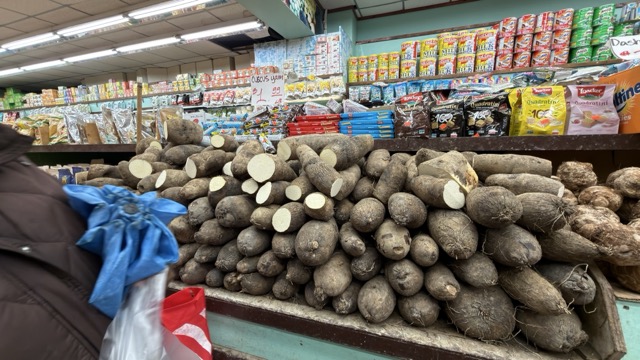
Caribbean markets can be confusing because the same ingredient may go by different names, and different ingredients may share the same name. Labeling is often inconsistent, especially across cultures and regions.
You may see multiple roots labeled simply as “yam,” while tannia, yautia, malanga, and coco are grouped together despite being distinct. Cush-cush may also be mislabeled or mistaken for other yams.
Best practice: rely on appearance, texture, and familiarity rather than the label alone. Over time, recognizing these provisions visually becomes just as important as knowing their names.
Common Cooking Methods for Ground Provisions
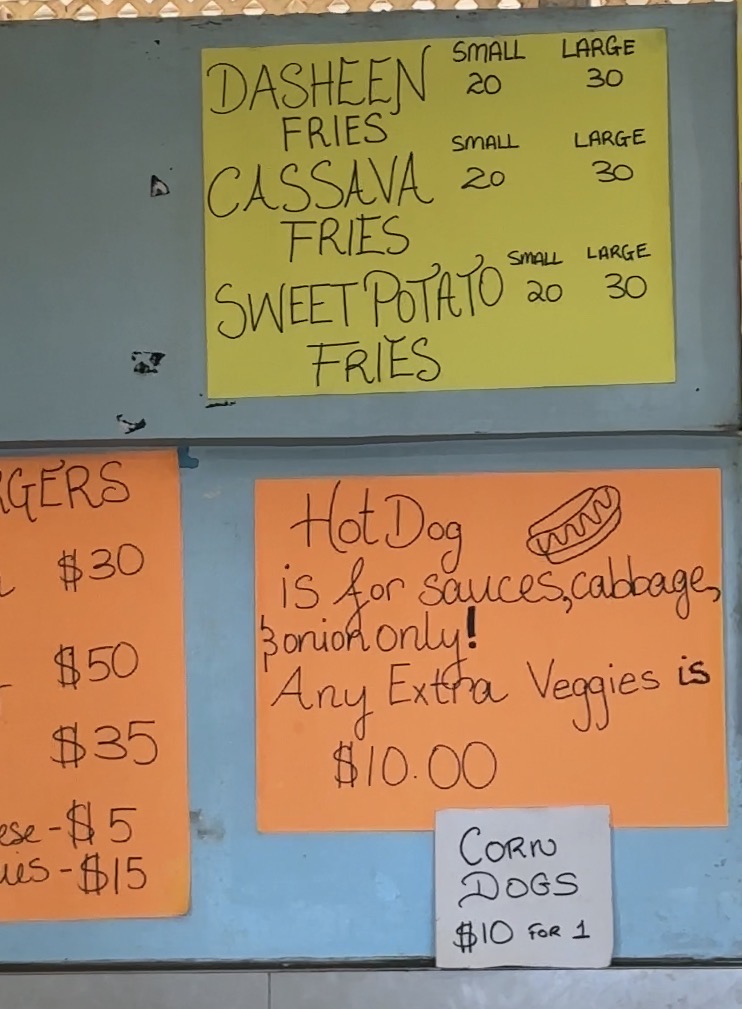
Ground provisions are not limited to one way of cooking. Across the Caribbean, they move easily between simple preparations and more layered, developed dishes. The same roots that are boiled and served plainly one day may be fried the next, simmered in coconut milk, added to soups, or transformed into breads and desserts.
This flexibility is part of what made them so essential. They could adapt to whatever the household needed — whether a quick side, a filling soup, or a full one-pot meal.
Boiled (The Most Traditional Method)
Boiling is the most common and widely recognized way of preparing ground provisions. The roots are peeled, cut into large pieces, and cooked in salted water until tender, then drained and served.
This method keeps the preparation simple and allows the natural qualities of each provision to stand out — the dryness of yam, the creaminess of dasheen, the firmness of cassava, and the softness of sweet potato.
Boiled provisions are rarely eaten on their own. They are served alongside saltfish, stewed or steamed fish, stewed meats, curry, beans, or callaloo, where they absorb the sauce and bring balance to the plate.
Boil and Fry

Another familiar method, especially in Trinidad and Guyana, is boil and fry. After the provisions are boiled and drained, they are sautéed or lightly fried with onions, scallions, garlic, peppers, butter, margarine, or saltfish.
This second step deepens the flavor and introduces a slight crispness while keeping the inside soft. It is a practical way to use leftovers, but also a deliberate method of cooking in its own right.
In Guyana, cassava takes on another form beyond boil and fry. It is mashed and used to make egg balls — a popular street food where a hard-boiled egg is wrapped in seasoned cassava, then deep-fried until crisp and golden. The cassava is typically flavored with garlic, onions, and hot pepper, creating a rich contrast to the soft egg inside. Served with mango sour for a tangy, spicy finish, egg balls are a beloved Guyanese comfort food.
Roasted (Oven or Open Flame)
Ground provisions can also be roasted, either in the oven or over an open flame. This is especially common with breadfruit, yam, and cassava.
Roasting brings out a deeper, slightly smoky flavor and changes the texture, creating a firmer exterior with a soft interior. Open-flame roasting, in particular, adds a distinct flavor that cannot be achieved through boiling.
Although breadfruit is not a root vegetable, it is often treated the same way and prepared alongside other provisions.
Simmered in Coconut Milk
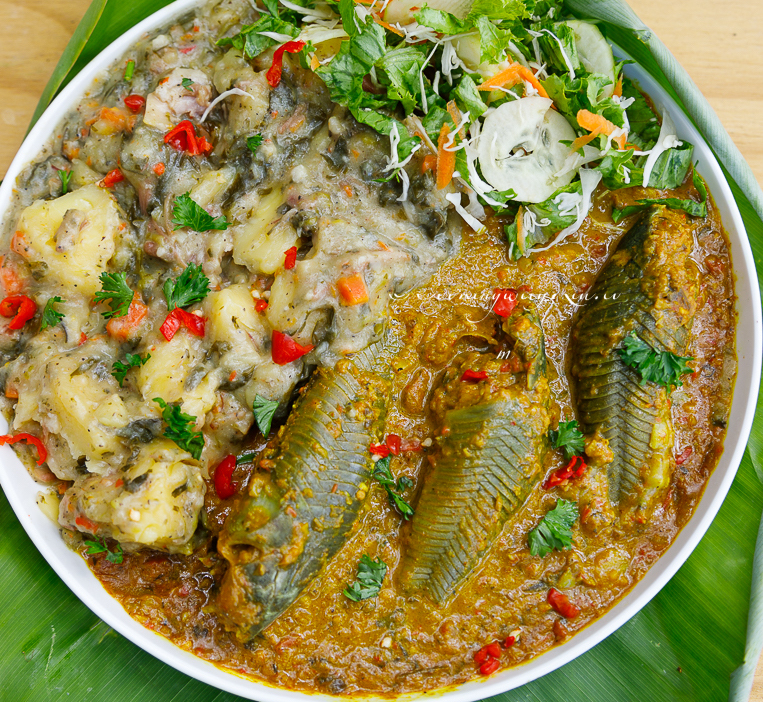
In some dishes, provisions are not boiled and drained, but cooked directly in seasoned coconut milk. As they simmer, they absorb the liquid, and the sauce reduces and thickens around them.
This method is seen in dishes such as oil down and metemgee, where cassava, dasheen, sweet potato, plantain, and breadfruit become part of a rich, cohesive one-pot meal.
Instead of sitting beside the dish, the provisions become the dish itself.
In Soups and Broths
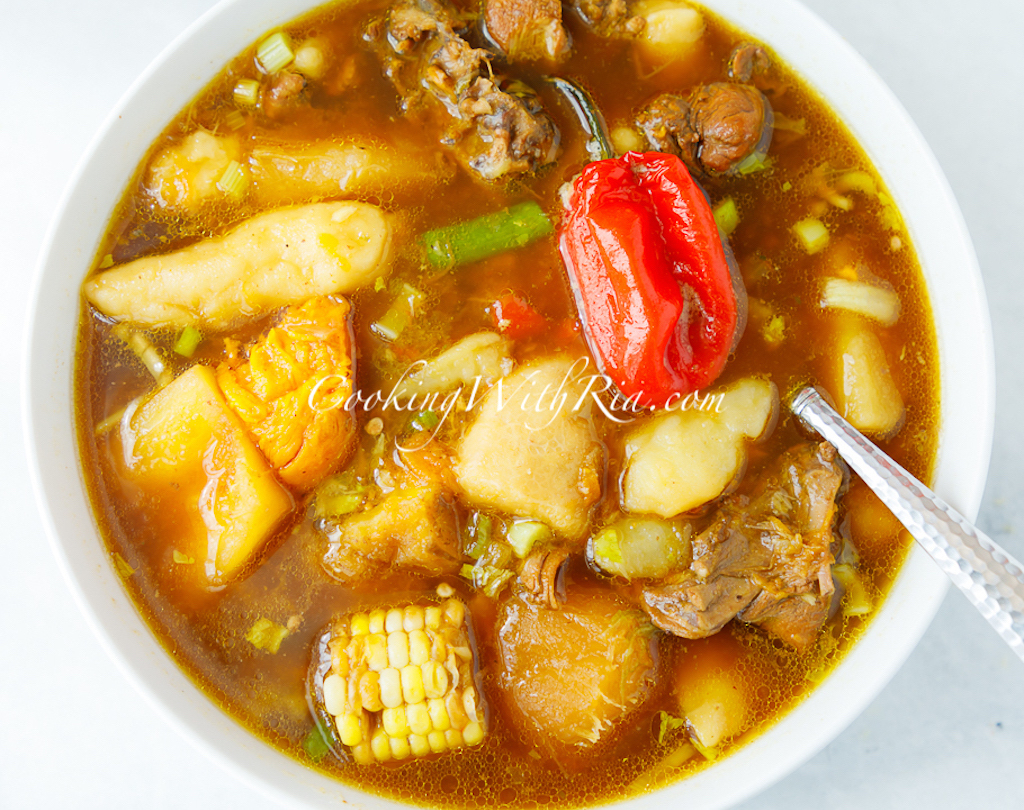
Ground provisions are essential in Caribbean soups and broths because they provide both body and substance. Without them, many of these soups would feel incomplete.
They are commonly added to fish broth, chicken soup, split pea soup, and beef soup. As they cook, they absorb flavor while also helping to thicken the liquid naturally.
In these dishes, provisions are not simply added for bulk — they are central to the structure of the meal.
In Curries and Stews
Provisions are also used in curries and stews, either cooked directly in the sauce or served alongside it, mostly the latter.
Cassava, yam, sweet potato, and plantain all work well in these dishes because they absorb flavor while maintaining their structure. Their presence helps stretch the meal and makes it more satisfying.
In Baked Dishes and Pies
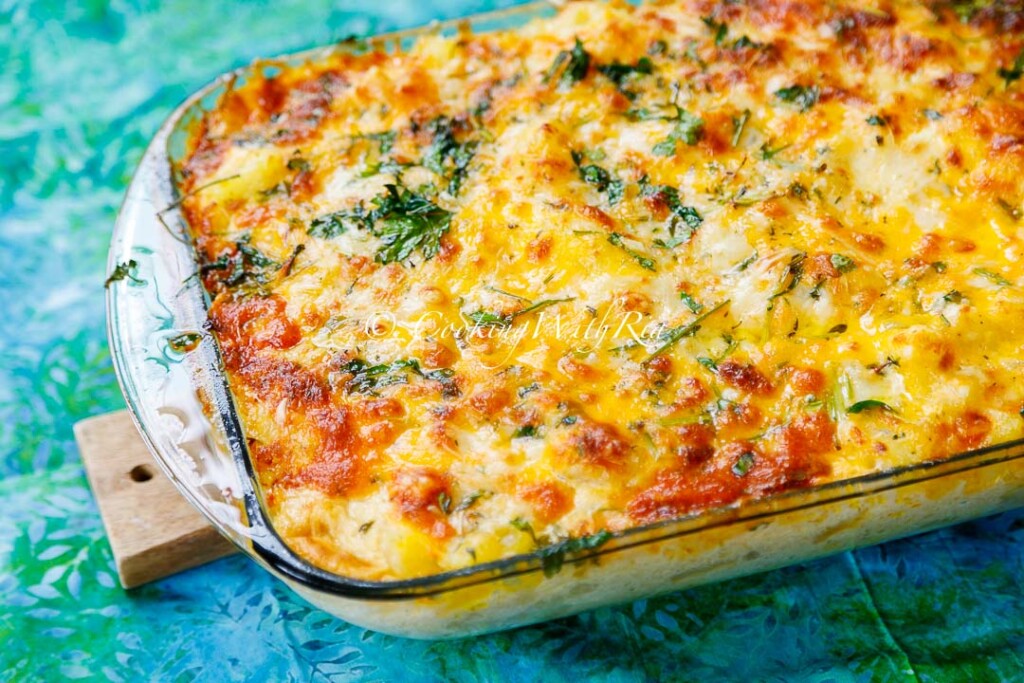
Some provisions, especially cassava and sweet potato, are well suited to baking. Their natural starch allows them to hold together and form structured dishes.
Cassava is used in cassava pone, cassava pie, and other baked preparations, while sweet potato may be used in both savory and sweet dishes.
These preparations show a different side of provisions — one that moves beyond boiling into something more developed and layered.
In Breads and Flatbreads
Cassava has long been used to make breads and flatbreads. It can be grated or processed into flour and then formed into cassava bread or cassava roti.
This method reflects older Indigenous traditions, where cassava was a primary staple and prepared in ways that extended beyond the pot.
In Salads and Cold Dishes
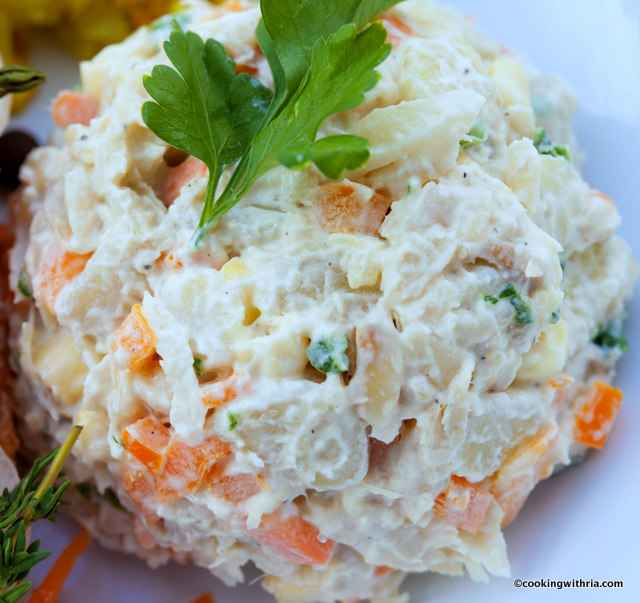
Some provisions can be boiled, cooled, and used in salads. Breadfruit is the most common example.
Once cooled, it can be combined with vegetables, herbs, and dressings to create a more substantial cold dish. This is often a practical way to use leftovers while still creating something complete.
In Desserts
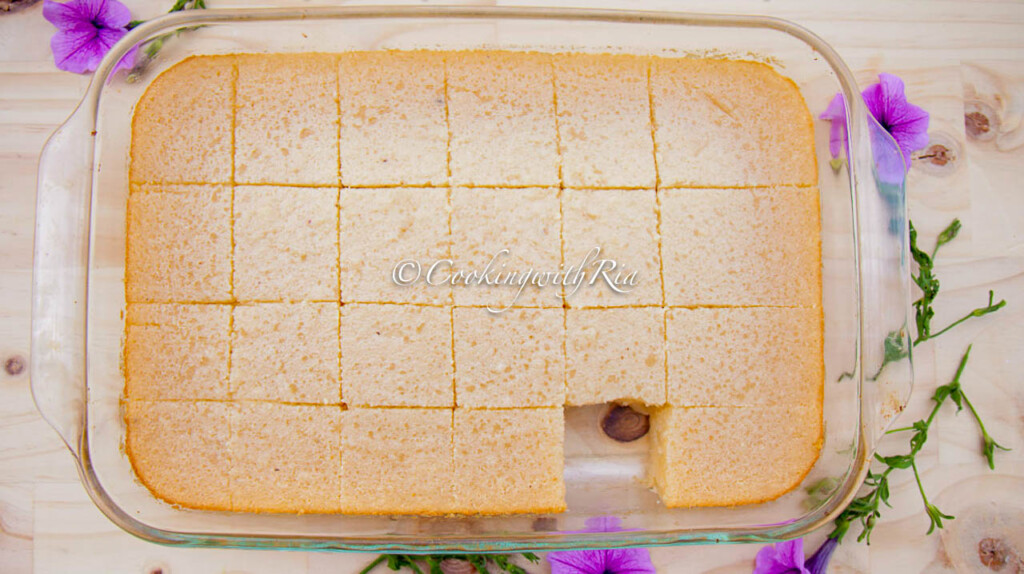
Not all provisions remain savory. Cassava and sweet potato are both used in desserts, where their natural starch and mild sweetness become an advantage.
Cassava pone is one of the most well-known examples, turning a simple root into a rich, fragrant dessert.
The Role They Play
Across all these methods, one thing remains consistent.
Ground provisions are not defined by how they are cooked, but by what they bring to the meal. Whether boiled, fried, roasted, or baked, they provide structure, absorb flavor, and ensure that the meal is satisfying.
That adaptability is part of their strength — and part of the reason they have remained central to Caribbean cooking for generations.
Why Provisions Matter So Much
To understand Provisions, you have to understand how Caribbean families lived, worked, and stretched what they had. Ground provisions are not defined by strict classification — they are defined by how they function on the plate.
In Trinidad kitchens, the language is simple and practical:
Yam — white or brown
Dasheen — white or blue
Eddoes — head or seed
These distinctions guide how we select, cook, and combine them, but what matters most is what they bring to the meal.
- They make the plate feel right. Even today, Boiled Provisions steady a meal. They hold the gravy, soften spice, and balance bold flavors. Without them, something feels missing.
- They fill you properly. Yam, cassava, and green fig are not light foods. They sit with you. In homes where people worked long hours in the sun — farming, fishing, building — a meal had to last. Provisions made sure you were steady for the day.
- They help a meal go further. One pot of stew could feed a family more than once when paired with different provisions — yam today, cassava tomorrow, green fig after that. The starch changed, but the meal still felt complete.
- They were easy on the pocket. Provisions were among the most affordable things at the market. A single bag could stretch across several days. That kind of cooking helped families save quietly over time.
- You could grow them yourself. Yam, cassava, and dasheen thrive in Caribbean soil. Many withstand dry seasons, and some remain underground until you are ready to harvest. That independence mattered.
- They carried people through hard times. When rice and flour were rationed during World War II, provisions became essential. What some once overlooked became necessary.
- They come from deep roots. Indigenous communities relied on root crops long before colonial trade reshaped the region. Later, provision grounds sustained enslaved Africans and indentured laborers when rations were not enough.
- They give the plate structure and substance. They hold gravy and absorb flavor. They balance rich, well-seasoned dishes. They keep you full and satisfied for hours.
This is why ground provisions have remained essential in Caribbean cooking — not because of what they are called, but because of what they do.
The Legacy of Provision
During slavery across the Caribbean, enslaved Africans were allotted small plots of land known as provision grounds. These were often marginal lands, yet they became sites of resilience. On those plots, families cultivated yam, cassava, dasheen, and plantain to supplement inadequate rations.
Provision were not gestures of generosity; they were systems of survival. Yet within them, agricultural knowledge carried from West Africa met Indigenous Caribbean root-crop traditions. Cassava, long cultivated by Indigenous communities, remained central. Yam cultivation techniques adapted to new soil. Dasheen and plantain flourished in tropical climates.
Out of those constrained spaces emerged a food culture centered on durability and nourishment. Yeah
Boiling root crops was practical. It required minimal equipment and preserved the integrity of dense starches. Large quantities could be prepared at once and portioned across meals. The provisions reheated easily and paired with salted fish, stewed meats, beans, or greens.
Over time, this method shaped the Caribbean plate itself.
Even as imported rice and flour became more accessible, root crops did not disappear. They remained steady companions to soups, stews, and Sunday lunches. They were sold in markets in heavy sacks. They were harvested from backyard plots. They represented a degree of independence that imported goods could not guarantee.
In this way, Provisions became more than food. They became continuity.
Ground Provisions Across the Caribbean
Across the Caribbean, ground provisions are known by many names, each reflecting local language, history, and culinary tradition:
- Hard Food (Jamaica)
- Yard Food
- Boil and Fry (Guyana, Trinidad variation)
- Metem / Metemgee (Guyana)
- Víveres (Dominican Republic)
- Blue Food / Dry Food (Trinidad)
- Roots
While the names differ, the foundation remains the same — a combination of root crops and starchy foods that bring substance, balance, and fullness to the plate.
In Jamaica, “hard food” refers to boiled yam, green banana, plantain, dumplings, and sometimes breadfruit, typically served alongside ackee and saltfish or curry dishes. The name itself reflects endurance — food meant to sustain.
In Guyana, these same ingredients expand into dishes like Metemgee, where cassava, eddoes, sweet potatoes, and plantains simmer in seasoned coconut milk until tender. The broth thickens and coats each piece, transforming what might otherwise be a side into the center of the table. Another common preparation is Boil and Fry, where provisions are first boiled, then sautéed with onions, scallions, garlic, peppers, and sometimes saltfish, adding deeper flavor and texture.
In Trinidad and Tobago, the term “ground provisions” is most common, though expressions like “blue food” or “dry food” are also used. Here, provisions are most often boiled and served alongside stewed meats, fish, curry, beans, or callaloo, anchoring the plate without drawing attention to themselves.
Across Spanish-speaking Caribbean countries, the word “víveres” describes a similar group of foods — staples meant to sustain and nourish, often prepared in equally practical and adaptable ways.
Despite regional differences in naming and preparation, the role of ground provisions does not change. They remain the part of the meal that fills you, steadies the plate, and carries the flavors of everything served alongside them.
Different names. Shared foundation.
Nutritional Benefits of Provisions
Provisions have sustained Caribbean families for generations not only because they were available, but because they nourish deeply. Long before calorie charts and nutrition labels, people understood through lived experience that these roots provided strength, energy, and fullness that lasted.
- Rich in Complex Carbohydrates
Yam, cassava, sweet potato, green fig, and plantain provide slow-digesting carbohydrates that release energy gradually. Unlike refined starches, they do not digest instantly, which helps sustain energy levels over longer periods. - High in Dietary Fiber
Most traditional provisions contain fiber that supports digestion, gut health, and satiety. Fiber slows absorption, helping you feel full and satisfied after a meal. - Naturally Gluten-Free
All classic provisions — yam, cassava, dasheen, eddoes, plantain — are naturally gluten-free. They serve as wholesome alternatives to wheat-based starches. - Minimally Processed Whole Foods
Boiled Provisions are not refined or stripped of nutrients. They are whole root crops prepared simply with water and salt. Boiling preserves their natural integrity without adding unnecessary fats. - Source of Essential Vitamins and Minerals
- Sweet potatoes provide vitamin A and antioxidants.
- Yam contains potassium and vitamin C.
- Dasheen and eddoes contribute magnesium and other trace minerals.
- Cassava provides energy-dense fuel that has historically sustained working populations.
- Promote Sustained Fullness
Their density and fiber content slow digestion. Historically, this helped people work long hours without frequent meals — and today it can help reduce constant snacking when eaten in balanced portions. - Encourage Balanced Eating
Traditional Caribbean meals pair provisions with legumes, fish, meat, and leafy greens. This natural combination of starch, protein, and fiber creates a well-rounded plate.
Boiled Provisions are not modern inventions. They are ancestral foods rooted in agricultural wisdom and practical nourishment.
A Note on Individual Health Needs
Although Boiled Provisions are whole and nourishing foods, they are still carbohydrate-dense starches. Portion size and overall dietary balance matter. Individuals managing diabetes, blood sugar concerns, kidney conditions, or other medical dietary restrictions should consult their healthcare provider or registered dietitian to determine appropriate portions for their specific needs.As with any traditional food, the strength of Boiled Provisions lies in balance — not excess.
Where to Buy Provisions
- Caribbean grocery stores
- West Indian markets
- African markets
- Latin American markets
- Supermarkets with international produce sections
Two or three varieties are enough to create balanced Boiled Provisions. You do not need every root in one pot.
How to Cook Ground Provisions
Ground provisions are prepared in many ways across the Caribbean, depending on the dish and the occasion. They may be boiled, roasted, fried, added to soups, or simmered in coconut milk.
The most common and traditional method is boiling, where the provisions are peeled, cut, and cooked in salted water until tender, then drained and served alongside dishes like saltfish, stewed meats, curry, beans, or callaloo.
👉 For a full step-by-step recipe, including how to prepare, cook, and serve them properly, see my full guide here:
[Boiled Ground Provisions — Caribbean Recipe]
Frequently Asked Questions
What are boiled provisions?
Boiled provisions are a traditional Caribbean combination of root vegetables and starchy foods — including yam, cassava, dasheen, eddoes, sweet potato, green fig, and plantain — cooked until tender and served as a hearty, satisfying side dish.
Why are they called “provisions”?
The term “provisions” historically referred to food supplies kept for sustenance. In the Caribbean, it became associated with hardy root crops that could be grown locally and relied upon during times of scarcity.
What is the difference between ground and non-ground provisions?
Ground provisions are root vegetables that grow underground, such as yam, cassava, dasheen, tannia, eddoes, and sweet potato. Non-ground provisions, like green fig (green banana), plantain, and breadfruit, grow above ground but serve the same purpose — providing dense, filling starch that anchors a meal.
Is boiled provision the same as Jamaican hard food?
They are closely related. Jamaican “Hard Food” typically includes boiled yam, green banana, plantain, and dumplings, served alongside dishes like ackee and saltfish or curry. The name differs, but the foundation is the same.
What do ground provisions taste like?
Each provision has its own texture and flavor. Yam is dense and slightly sweet, cassava is neutral with a mild nuttiness, dasheen is creamy, sweet potato is naturally sweet, and green fig is firm and starchy. Their mild flavor allows them to absorb sauces and gravies well.
Why are ground provisions so filling?
Root vegetables are rich in complex carbohydrates and fiber, which digest slowly and provide sustained energy. This is why they have historically supported physically demanding lifestyles.
Are ground provisions healthy?
Ground provisions are whole, minimally processed foods that are naturally gluten-free and rich in fiber and complex carbohydrates, making them both nourishing and satisfying.
Why do some Caribbean families prefer provisions over rice?
Provisions are locally grown, less processed, and provide longer-lasting fullness compared to refined grains. They have historically been more accessible and dependable.
What dishes use ground provisions?
Ground provisions are used in many Caribbean dishes, including boiled provisions, soups, oil down, metemgee, and stews. They may also be fried, roasted, or incorporated into baked dishes and desserts.
What is Metemgee?
Metemgee is a Guyanese dish where ground provisions are simmered in seasoned coconut milk until tender, transforming them into a rich, cohesive one-pot meal.
Where can I learn how to cook ground provisions?
You can find a full step-by-step recipe and preparation guide in my Boiled Ground Provisions post, where I show exactly how to clean, cook, and serve them.
Enduring at the Caribbean Table
Today, whether served beside callaloo and stew, simmered in coconut milk, or plated as Hard Food, Provisions continue to anchor Caribbean meals. The preparation remains simple, but the meaning remains layered.
These roots connect Indigenous cultivation, African agricultural memory, colonial hardship, wartime rationing, backyard gardens, and modern kitchens. What appears to be a humble bowl of yam or cassava carries a long history of adaptation and survival.
On the plate, Provisions steady spice, absorb gravy, and give structure to a meal. Even now, when imported grains are abundant, a bowl of boiled yam, dasheen, cassava, or green fig offers a grounding that feels complete.
Provisions endure because they were built for endurance — resilient, sustaining, and essential to the Caribbean table.
❤️ Did You Love This Guide?
If this guide helped you understand Provisions more deeply, I’d love to hear from you.
Leave a comment and a ⭐⭐⭐⭐⭐ rating on the recipe card — it helps more readers discover my work and supports everything I create here.
Tell me how you grew up eating provisions — was it Hard Food, Metemgee, Boil & Fry, or simply boiled and drained on a Sunday? Your stories matter. They keep these traditions alive.
And when you share your photos, don’t forget to tag me @cookingwithria on Instagram or @trinicookingwithria on Facebook so I can celebrate your beautiful creations!
Questions, Concerns, or Recipe Requests—Write Me!
If you have any questions, or if there’s a dish you’ve been searching for and would love to see me make, please don’t hesitate to leave a comment below or reach out via email at [email protected].
I’d love to hear from you.
Many of my favorite posts are inspired by your requests and kitchen stories, so don’t be shy.
📩 Subscribe for More Caribbean Cooking & Cultural Food Guides
Caribbean food is more than recipes — it’s history, memory, and lived experience.
Join my email list to receive new recipes, Sunday Lunch features, and traditional food guides straight to your inbox.
❤️ Shop My Kitchen Favorites
These are the trusted tools and pantry staples I use in my own kitchen — the ones that make Caribbean cooking easier and more enjoyable.
Learn More About Trinidad Cooking
➡ What Is Trinidad Food – Understanding the Flavors and Essential Ingredients in Trinidad Cooking — explore the cultural influences and traditions that shaped Trinidad cuisine.
➡ 10 Essential Ingredients in Trinidad Cooking — learn about the herbs, seasonings, and pantry staples that form the foundation of many Trinidad dishes.
➡ Spices in Trinidad Cooking — discover the key spices used in Trinidad kitchens, from curry powder and geera to amchar masala and other traditional seasonings.
➡ What Are Ground Provisions? A Complete Guide and How to Cook Them — learn about the root vegetables central to Caribbean cooking and how they are prepared.
➡ 52 Weeks of Sunday Lunch — experience the tradition of Trinidad Sunday lunch, where family, food, and culture come together around the table.
➡ Browse My Trinidad Recipe Collection — explore authentic Trinidad recipes you can cook at home.
Recent Posts
- Easy Caribbean Curry Chicken for Beginners (Small-Batch Recipe)
- What to Eat and Do in Sint Maarten and Saint Martin: Our Week in Paradise
- Caribbean Stewed Cannellini Beans
- Easy Spicy Chow Mein Recipe for Two (Ready in 20 Minutes)
- How to Cook Pumpkin with Mixed Seafood Recipe (Trinidad Pumpkin Talkarie)