
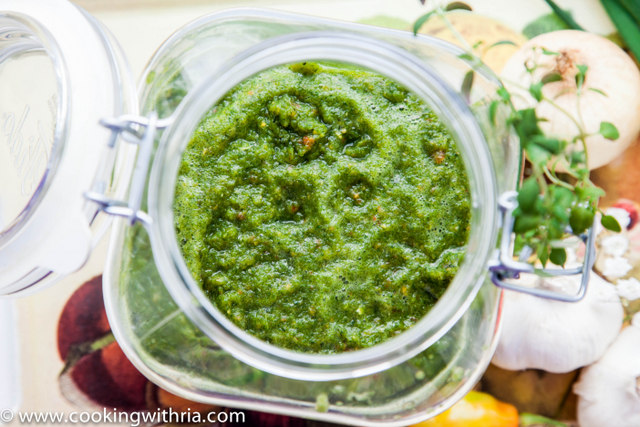
What Is Caribbean Green Seasoning?
Caribbean green seasoning is a fresh herb blend used throughout the Caribbean as a marinade, flavor base, and natural seasoning for countless dishes. Made from herbs, garlic, peppers, and aromatics, green seasoning is one of the most essential ingredients in Caribbean cooking.
Table of Contents
In Trinidad and Tobago and across the Caribbean diaspora, green seasoning is the backbone of everyday cooking. A spoonful instantly adds deep herbaceous flavor to meats, seafood, soups, stews, curries, and rice dishes.
Most Caribbean kitchens keep a jar in the refrigerator at all times. It is used to marinate chicken, season fish, build the base of stews, and flavor one-pot dishes like pelau or rice and peas. Just a few spoonfuls can transform a simple meal into something vibrant and aromatic.
Beyond flavor, it is also packed with nutrients thanks to its fresh herbs, garlic, and peppers. It is a natural, wholesome way to build flavor without relying on processed seasonings.
If you’ve ever enjoyed Caribbean food and wondered why it tastes so layered and aromatic, green seasoning is often the reason.
Other Names for Green Seasoning
Across the Caribbean and Latin America, similar herb blends exist under different names. While the ingredients may vary slightly, the purpose is the same: to build fresh flavor at the start of cooking.
Green seasoning in Trinidad plays a role similar to other famous herb bases around the world.
- Pesto in Italy
- Sofrito in Puerto Rico and Cuba
- Recaito in Puerto Rican cooking
- Epis in Haitian cuisine
You may also hear it called:
- Seasonin’
- Green sauce
- Herb seasoning
- Seasoning paste
Despite the different names, this seasoning remains one of the most distinctive herb blends in the region.
Caribbean Islands That Use Green Seasoning
Green seasoning is widely used throughout the Caribbean, though the exact ingredients may vary from island to island.
It is especially common in:
- Trinidad and Tobago
- Jamaica
- Barbados
- Saint Lucia
- Grenada
- Guyana
- Haiti
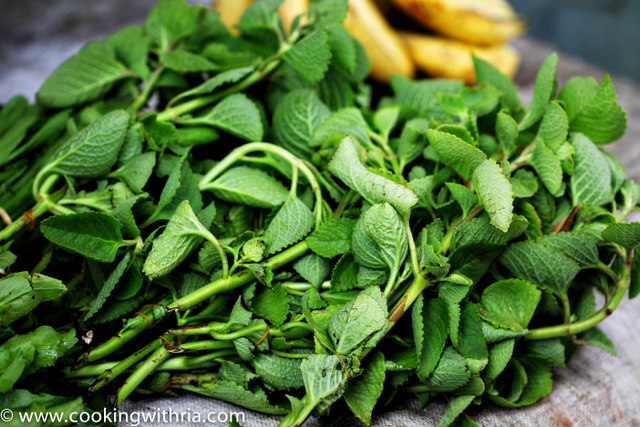
In Trinidad, green seasoning almost always includes chadon beni (culantro), thyme, garlic, scallions, and hot peppers. Other islands may use more parsley, cilantro, or different herbs depending on local traditions.
The History of Caribbean Green Seasoning
The history reflects the layered cultural history of the Caribbean itself.
Caribbean cuisine developed from the blending of African, Indigenous Amerindian, European, and Indian culinary traditions. Each group contributed ingredients and cooking techniques that shaped the region’s food.
Herbs such as chadon beni (culantro) are native to the Caribbean and Central America. Other ingredients, including thyme, garlic, and onions, arrived through colonial trade routes and migration.
Over time, Caribbean cooks combined these ingredients into herb blends used to marinate and flavor meats before cooking. This technique helped tenderize tougher cuts while building deep flavor.
Today, green seasoning remains a cornerstone of Caribbean cooking, passed down through generations and adapted slightly in every household kitchen.
My Personal Journey
One of the fascinating things about Caribbean green seasoning is that every household makes it a little differently. Each cook develops their own blend, which means the flavor of the same dish can vary from kitchen to kitchen.
For years, I obsessed over the exact balance of herbs and aromatics. I would constantly question my mother:
How much of this? How much of that?
I probably taunted poor Mummy endlessly with those questions until one day I decided to simplify my life.
These days, I usually start with one regular bunch of whatever fresh herbs I can find at the supermarket, add onion and garlic, and blend everything together. And just like that—green seasoning. Over time, I’ve added a few optional ingredients such as green and red sweet peppers and a little pumpkin, which contribute extra flavor and a beautiful color. But they are not essential.
Some days the supermarket may not have culantro. Other times I may skip parsley. Occasionally there are no pimentos, pumpkin, or sweet peppers available. And honestly… that’s perfectly fine.
Green seasoning is meant to be flexible.
Caribbean “Make-Do” Culture
One of the beautiful aspects of Caribbean cooking is what I like to call the “make-do” culture.
We cook with what we have.
If the only herb growing in the yard is culantro (bandhania, shado beni, or chadon beni) and we don’t feel like making a trip to the market, then that day the green seasoning might simply be culantro, onion, and garlic.
And it will still be delicious.
Sometimes a scallion or a sprig of thyme might even be “borrowed” from the neighbor’s garden—without any real expectation of returning it. That easygoing sharing culture is something many of us who grew up in Trinidad remember fondly.
Green seasoning, like so much of Caribbean cooking, reflects that spirit of resourcefulness, creativity, and community.
Every jar is slightly different, and that’s exactly the way it should be.
What Is Caribbean Green Seasoning Made Of?
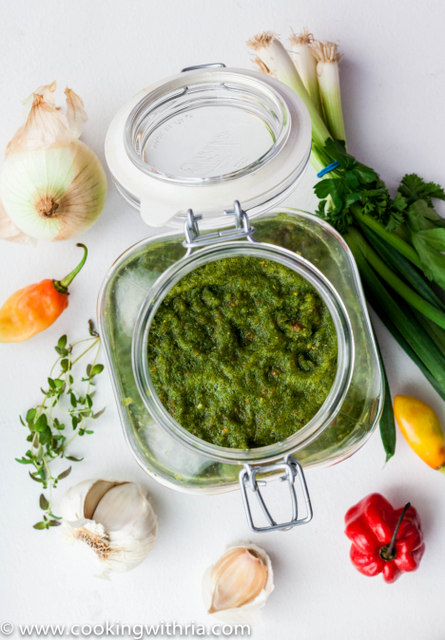
Making green seasoning is very simple. However, the ingredients below should be used only as a guideline. Every cook adjusts the herbs and aromatics based on what they enjoy and what is available.
The basic formula for traditional green seasoning is:
Optional Onion + Garlic + Fresh Green Herbs + Optional Aromatics = Green Seasoning
Once you understand this simple structure, you can easily customize your own blend.
Core Ingredients in Caribbean Green Seasoning
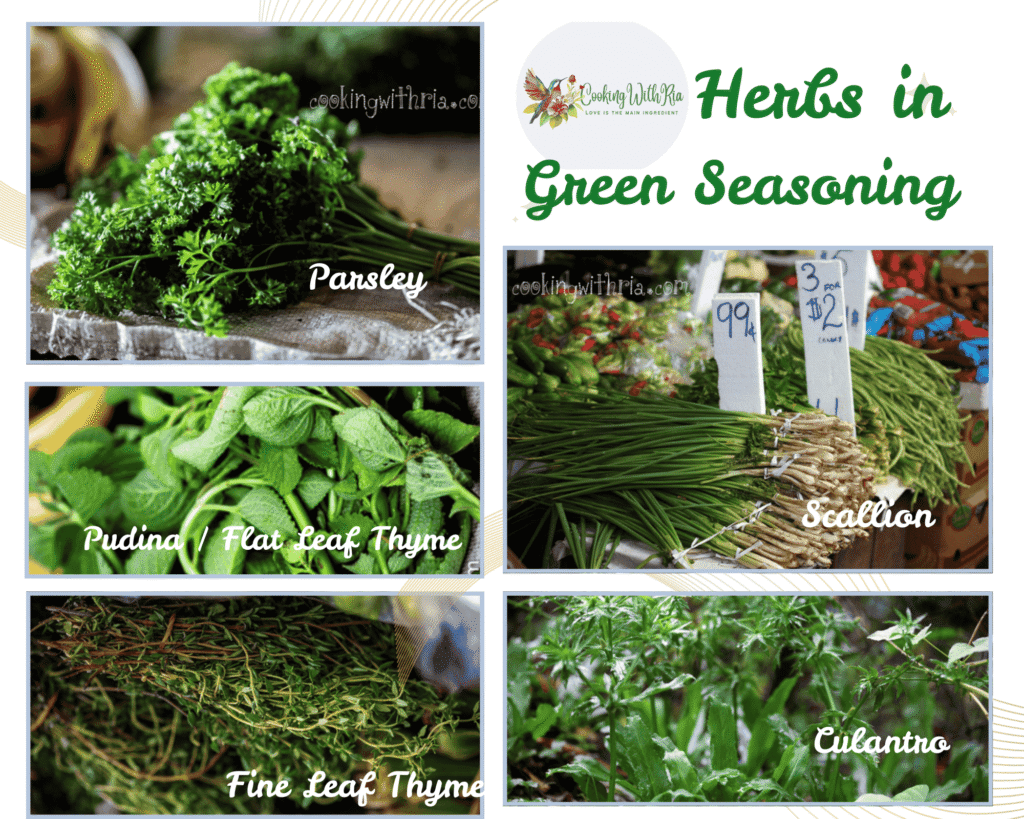
Most traditional blends include some combination of the following ingredients:
- Scallions (Green Onions) – Provide a fresh, mild onion flavor that forms the backbone of many Caribbean herb blends.
- Thyme – Adds earthy, slightly woody depth that complements meats and stews.
- Culantro (Chadon Beni / Shado Beni) – A bold, aromatic herb commonly used in Trinidad and throughout the Caribbean. It gives green seasoning its distinctive flavor.
- Garlic – Essential for depth and savory richness.
- Pimento Peppers – Mild Caribbean peppers that add fragrance and gentle sweetness.
Additional Ingredients Often Used
Many cooks also add some of these ingredients depending on personal preference:
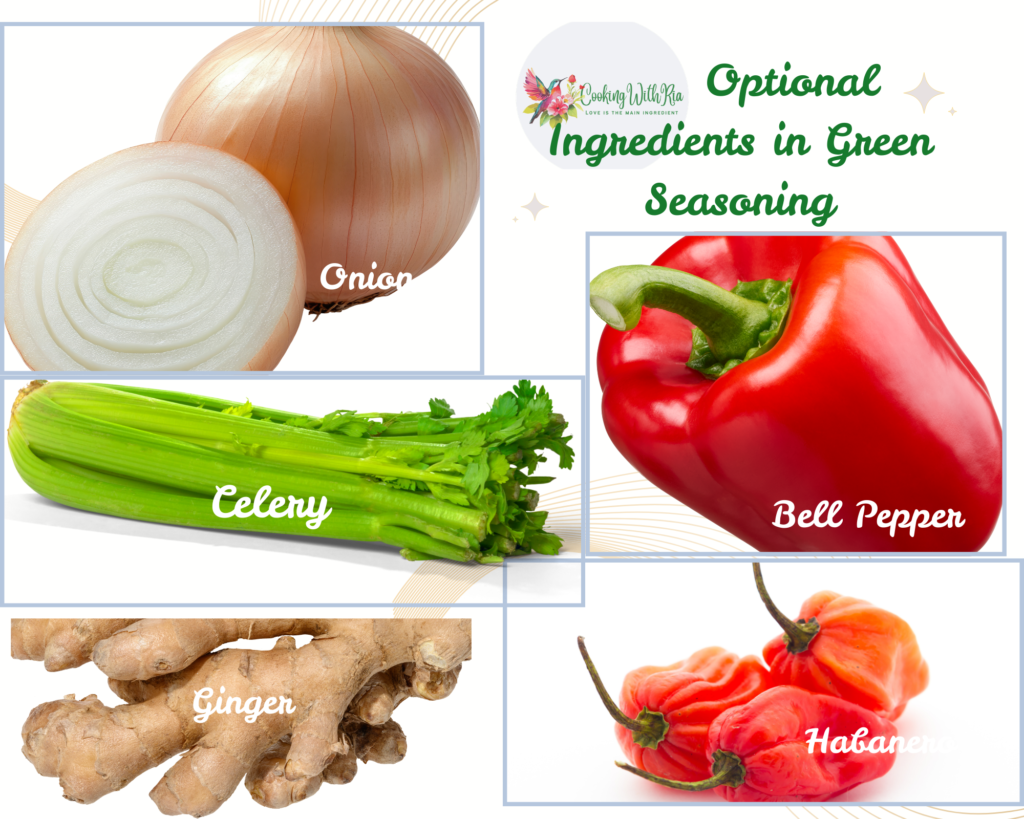
- Onion – Adds sweetness and body to the blend.
- Parsley – Contributes freshness and bright herbal notes.
- Celery (optional) – Adds subtle aromatic flavor and natural saltiness.
- Sweet Peppers (Bell Peppers) – Often used when pimentos are unavailable.
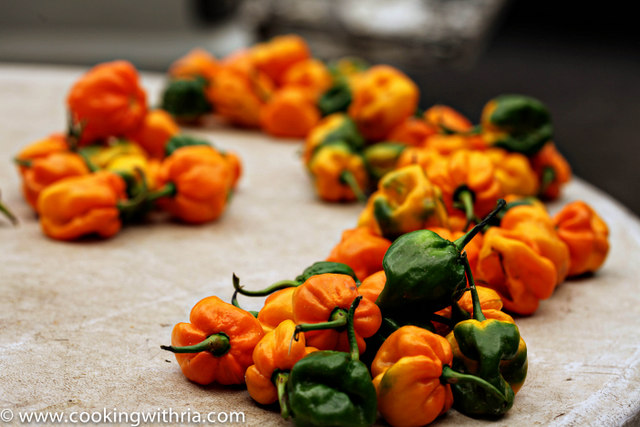
- Hot Peppers – Scotch bonnet, congo pepper, wiri wiri, or habanero can be added for heat.
How the Ingredients Become Green Seasoning
To make, simply:
- Wash the herbs thoroughly.
- Roughly chop the vegetables and herbs.
- Blend everything into a smooth or slightly coarse paste, depending on your preference.
Some variations may include ginger or a small amount of vinegar to help extend the shelf life of the seasoning.
How Green Seasoning Was Traditionally Made | Traditional Tools
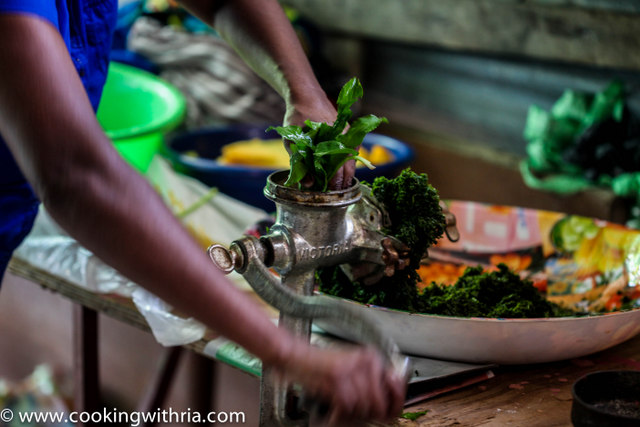
Before blenders and food processors became common in Caribbean kitchens, green seasoning was traditionally made fresh each day using simple stone tools.
The herbs and aromatics were ground on a sil and lorha—a small flat stone slab called the sil and a rounded grinding stone called the lorha. These stones were typically made from natural river rock and were widely used throughout Indian and Caribbean households.
To make green seasoning, the herbs, garlic, peppers, and other ingredients were crushed and ground slowly on the stone surface. This method produced a slightly coarse texture while allowing the herbs to release their natural oils and fragrance.
The sil and lorha were not used only for green seasoning. Caribbean cooks also used them to grind fresh curry powders, chutneys, and spice pastes, making them an essential tool in many traditional kitchens.
Later, the food mill became a popular kitchen tool, allowing cooks to grind herbs and vegetables more efficiently while still maintaining a concentrated texture.
Today, most people prepare Caribbean green seasoning using blenders or food processors, which make the process faster and easier. While these modern appliances are convenient, many cooks still wonder whether some of the deep flavor and aroma produced by the slower traditional grinding methods is lost.
How Caribbean Green Seasoning Is Used in Cooking
Caribbean green seasoning is incredibly versatile and forms the flavor base for many traditional dishes. It is commonly used as a marinade for meats and seafood, stirred into soups and stews, and added by the spoonful to rice dishes and curries to deepen the flavor.
In many Caribbean kitchens, a jar of green seasoning in the refrigerator means that a delicious meal is never far away. Just a few spoonfuls can transform simple ingredients into something fragrant, savory, and vibrant.
Here are some of the most common ways to use green seasoning in everyday cooking:
- Marinades: Green seasoning is widely used as a marinade for chicken, beef, pork, fish, shrimp, or tofu. The herbs and aromatics penetrate the protein and build deep flavor before cooking.
- Curries: Marinating meats with green seasoning before adding curry powder creates a richer, more layered flavor in Caribbean curries.
- Soups and Stews: A spoonful of green seasoning added to soups or stews brings freshness and aromatic depth.
- Rice and One-Pot Dishes: Green seasoning works beautifully in rice dishes such as pelau, rice and peas, or other one-pot meals.
- Vegetables: Toss roasted or sautéed vegetables with green seasoning for a fresh herbaceous finish.
- Sauces and Dressings: Green seasoning can also be blended into sauces or salad dressings to add complexity and brightness.
Tips for Making the Best Green Seasoning
- Customize It: Caribbean green seasoning is very personal, and every cook develops their own preferred blend. Adjust the herbs and vegetables based on your taste and what is available. If you enjoy more heat, add extra hot peppers. If you prefer a milder seasoning, simply reduce the peppers or leave them out.
- Traditional Preparation Methods: In the past, Caribbean cooks often prepared green seasoning using a mortar and pestle (sil and lorha). This traditional method created a slightly chunky texture and helped release the natural oils of the herbs and aromatics. Today, most people use a blender or food processor, which makes the process faster and more convenient while still producing excellent results.
- Flavor Boosters (Optional): Some cooks add a small amount of oil, vinegar, or lime juice to enhance flavor and help preserve the seasoning.
Personally, I prefer not to add these ingredients. Vinegar or lime juice can alter the flavor of the final dish, and I like to control the amount of oil or acidity while cooking. Many traditional Caribbean dishes do not benefit from added tartness, so I keep my green seasoning simple, fresh, and versatile.
How to Store Caribbean Green Seasoning
To preserve the fresh flavor and vibrant color, store it in an airtight glass jar in the refrigerator.
Without added preservatives such as vinegar or oil, green seasoning will usually stay fresh for about 1 to 3 weeks when properly refrigerated. Always use a clean spoon to prevent contamination and extend its shelf life.
Some cooks add a thin layer of olive oil on top to help preserve the seasoning slightly longer, which may extend its freshness to about one month.
Freezing Green Seasoning
Green seasoning freezes very well and is one of the best ways to store it for long-term use.
You can freeze it in several convenient ways:
- Flatten it in a resealable freezer bag, allowing you to easily break off small pieces while cooking.
- Freeze it in ice cube trays for ready-to-use portions.
- Store it in small glass containers for individual batches.
Frozen seasoning can maintain its flavor for up to 6 months.
Be sure to label the containers with the date so you can keep track of freshness.
Keeping a batch of green seasoning ready in your refrigerator or freezer makes Caribbean cooking faster, easier, and far more flavorful.
Frequently Asked Questions
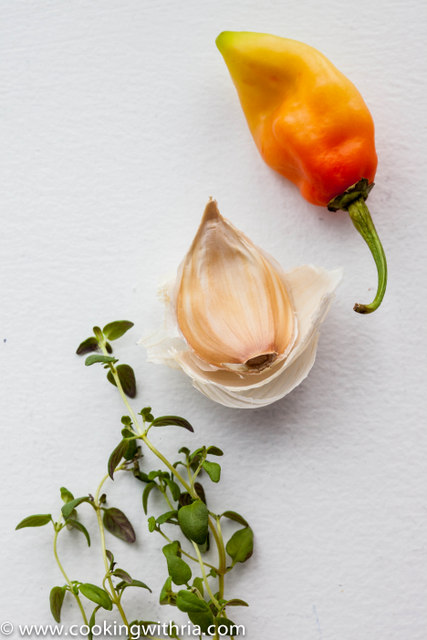
Do you add hot peppers to Caribbean green seasoning?
I personally do not add hot peppers to my green seasoning because of my daughters — and yes, my husband too. Hot peppers tend to give him hiccups.
Instead, I prefer to keep the seasoning mild and add heat directly to the dish when cooking. This allows me to control the level of spice depending on who will be eating the meal.
What is a good substitute for hot peppers in green seasoning?
Instead of hot peppers, I often use pimento peppers, bell peppers, or Spanish ajicito peppers. These peppers add wonderful fragrance and depth of flavor without making the seasoning spicy.
This allows the green seasoning to remain versatile and family-friendly while still providing plenty of aroma and character.
What are Caribbean pimento peppers?
Pimento peppers are known in Trinidad and Tobago as seasoning peppers or flavoring peppers. They look similar to small Scotch bonnet peppers but have little to no heat.
Many Caribbean islands have their own version. One of the most common varieties is ají dulce (ajicito), which is shaped like a small dented spinning top. In Cuba, a similar pepper is called chile cachucha.
Pimento peppers are prized for their strong fragrance and ability to add flavor without spice. The only challenges are cost and availability. In many areas they are usually found in West Indian, Latino, or Asian markets.
Which is better for making green seasoning: a blender or a food processor?
Both appliances work well for making Caribbean green seasoning.
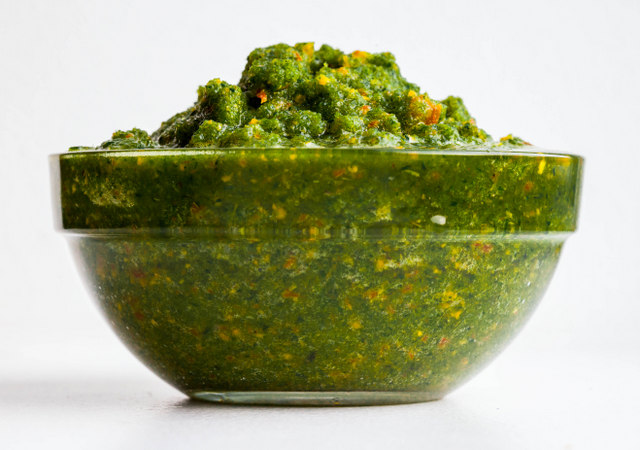
A blender creates a smoother seasoning and often requires a small amount of water to help the ingredients blend properly.
A food processor produces a slightly coarser, thicker seasoning with a more concentrated texture.
Either method works beautifully, so it mostly comes down to personal preference.
Can you make green seasoning without culantro (chadon beni)?
Yes. While culantro (chadon beni or bandhania) gives Trinidad green seasoning its distinctive flavor, you can still make an excellent seasoning if it is unavailable.
Many cooks substitute cilantro or simply increase the amount of scallions, thyme, and parsley. Green seasoning is very adaptable and can be adjusted based on what herbs you have available.
Why does my green seasoning turn brown?
Green seasoning may darken over time due to oxidation when the herbs are exposed to air. This is normal and does not necessarily mean it has spoiled.
Storing the seasoning in an airtight container and keeping it refrigerated helps preserve its bright green color longer.
Can you freeze Caribbean green seasoning?
Yes. Green seasoning freezes extremely well and is one of the best ways to preserve it for longer periods.
You can freeze it in ice cube trays, small containers, or flattened freezer bags. Once frozen, simply remove the amount you need while cooking.
Properly frozen green seasoning can keep its flavor for up to 6 months.
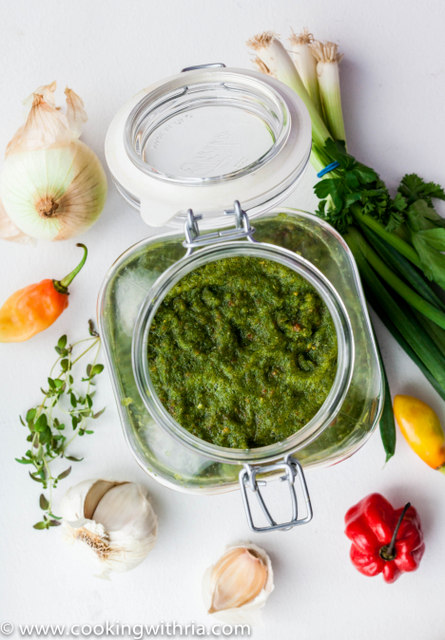
Green Seasoning Recipe
Ingredients
- 4 scallions aka green onions, also called “chives” in Trinidad
- 1 bunch thyme remove very thick stems. If thick. do not add into the green seasoning. Add during cooking.
- 1 bunch cilantro
- 1 bunch culantro aka bandhania or shado beni, optional
- 1 bunch parsley
- 2 heads garlic peeled
Optional Ingredients (May Be Added During Cooking if Not Included in the Green Seasoning Blend)
- 1 stalk celery
- 1 onion small
- 6 pimento peppers stemmed
- ½ red bell pepper seeded
- ½ green bell pepper seeded
- Habanero congo, scotch bonnet, cherry pepper or other hot pepper, to taste
Instructions
- Wash, drain and roughly chop herbs, onion, sweet pepper, onion and any other ingredients you are using.
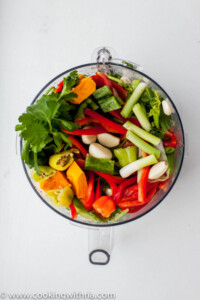
- Place all ingredients in a blender and food processor and puree until fine. Water is not required in a food processor, but add just enough water to blend in the blender. Scrape down sides and pulse again.
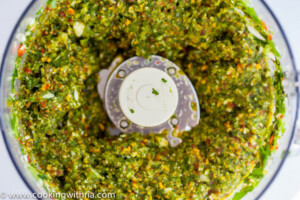
- Place in a glass jar, close tightly and store in the refrigerator. Will stay 1-2 weeks (sometimes I keep it up to a month in the refrigerator).
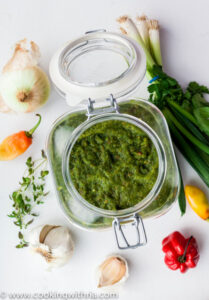
- The color will vary depending on the combination of ingredients used.
- Alternatively, pour into ice trays, freeze. Remove cubes, place in a resealable bag and store in the freezer, until ready to use.
Video
Watch the Full Video Tutorial
Now that you know all about Caribbean green seasoning, watch my detailed video tutorial above where I walk you through the ingredients, preparation, and tips for making it at home.
Once you make your first batch, you’ll quickly understand why this is considered the foundation of Caribbean cooking. Keep a jar in your refrigerator or freezer and you’ll always be ready to season meats, flavor stews, enhance rice dishes, and build incredible depth in everyday meals.
Whip up a batch and experience the fresh, herbaceous flavor for yourself — and say goodbye to bland, boring meals for good.
Recipes That Use Caribbean Green Seasoning
Green seasoning is one of the most important ingredients in Caribbean kitchens. Here are a few dishes from my blog where it plays a key role:
➡ Stewed Chicken
➡ Pelau (Caribbean One-Pot Rice Dish)
➡ Curry Chicken
➡ Stewed Pork
➡ Rice and Beans
Using green seasoning as the flavor base helps build the rich, aromatic taste that makes Caribbean cooking so distinctive.
❤️ Shop My Kitchen Favorites
These are the trusted tools and pantry staples I use in my own kitchen — the ones that make Caribbean cooking easier and more enjoyable.
📩 Subscribe
If you enjoy recipes like this and want more Caribbean cooking inspiration, practical kitchen tips, and Sunday Lunch stories delivered straight to your inbox, be sure to subscribe.
When you join, you’ll receive my free detailed Green Seasoning Booklet — a true Caribbean kitchen essential that adds depth, flavor, and confidence to so many traditional dishes.
Did You Make This Recipe?
If you tried this recipe, please leave a ⭐⭐⭐⭐⭐ rating on the recipe card — ratings help more readers discover my recipes and support the work I put into creating them.
You can also leave a review, questions, or recipe requests in the comments below. I love hearing from you!
And when you share your photos, don’t forget to tag me @cookingwithria on Instagram or @trinicookingwithria on Facebook so I can celebrate your beautiful creations.




Just how my Grandma use to make it…Perfect!!
I love your recipes it brings me back to my granny
Oh my word, I made this today and made a few substitutions coz I didn't have culantro. And I always like my food spicy so I added a few scotch bonnets. I am so happy! It tastes divine.
Love this post – not sure how I missed this post before. I just took a photo of my mother's old sil and lorha which I remember loving to use, despite the bruised knuckles from inexpert technique!
https://www.flickr.com/photos/chennette/15749463356/
Thanks Stacey! Also check out my pelau recipe on this site..:-)
Thanks for this Ria! I just made some excellent Trini Pelau tonight, made green seasoning as per what my father said to use, but I might have to try some of your recommendations next time!
Hi Maria..Thanks for visiting my blog! I use a cusinart food processor which I received as a gift from my sister. Food processors are sold at all major appliance store. I used no liquid and don't over process because I like my GS with some texture…When I use a blender, I just add just enough water to get it all moving. No more no less..
Hi Ria, I always try to make seasoning in a blender but it always comes out bad and mushy . Could you tell me what machine you used, and if you added any water? Also, where could I buy the grinder in your photo? Thanks very much, and I truly enjoy your blog !