What is Cabbage with Saltfish?
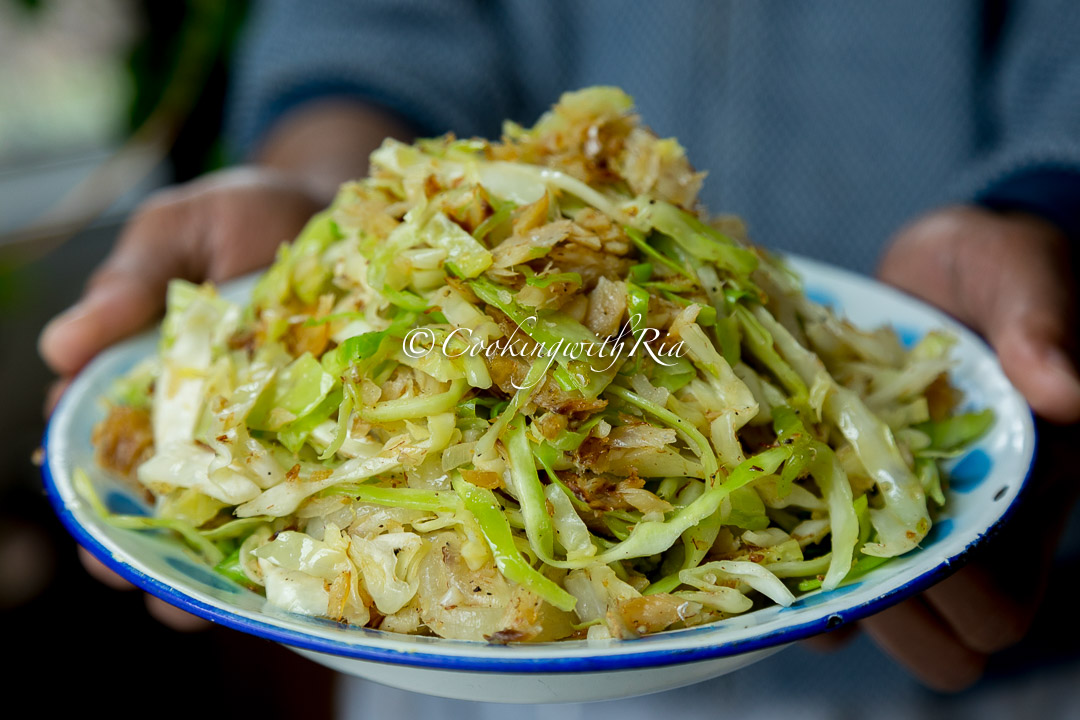
Cabbage with Saltfish is a quick, flavorful Caribbean stir-fry where tender-crisp cabbage meets golden, flaked saltfish. This dry version—made without tomatoes—keeps the flavors concentrated while allowing both ingredients to stand out equally. It’s simple, budget-friendly, and deeply rooted in Caribbean cooking, where saltfish has long been a staple because of its history of preservation before refrigeration.
Table of Contents
The moment the saltfish hits the hot oil, the kitchen comes alive. That deep, savory aroma rises first, followed by the onion, hot pepper and garlic as they soften and come together in the pan. When the cabbage goes in, it begins to pick up all that flavor while still holding a slight crunch.
This is where the dish starts—simple ingredients, built properly.
This version is a variation to cabbage and tomatoes or saltfish and tomatoes, but the intention here is different. This is not meant to be soft or saucy. This is a dry stir-fry, where flavor is developed step by step—starting with saltfish fried until golden brown, then layered with aromatics, and finished with cabbage that remains tender-crisp.
It’s the kind of meal that makes sense in a Caribbean kitchen. It stretches what you have, adds vegetables and fiber to the plate, and still feels complete and satisfying.
Saltfish itself carries history. Long before refrigeration, preserving fish in salt was essential. My mother often speaks about growing up without a fridge—where salting fish wasn’t a choice, it was survival. That history still lives on in how we cook today, and why saltfish remains such an important part of Caribbean cuisine.
I find myself reaching for these ingredients often. Cabbage shows up in my chow mein or a simple weekly vegetable stir fry, while saltfish appears across so many dishes—from saltfish and tomatoes to accra to stir-fried saltfish with vegetables and dumplings. This dish brings both together in a way that feels familiar and complete.
It also similar to fry buljol—especially the version where the saltfish is fried first—but here, the cabbage adds texture, volume, and balance. You can make it either way: with just a hint of saltfish for a lighter dish, or like this version, where both ingredients are equally present.
Saltfish remains one of the most widely used preserved ingredients across Caribbean cuisines, valued for both its flavor and history.
Why You’ll Love This Recipe
- Flavor built properly: Saltfish is fried until golden for deeper taste
- Perfect balance: 1 lb cabbage to ¾ lb saltfish keeps both prominent
- Quick & practical: Ready in about 30 minutes
- Texture-focused: Tender-crisp cabbage, never soft
- Versatile: Works for breakfast, lunch, or dinner
Ingredients You Will Need
You don’t need much here—just a few everyday ingredients, handled properly, to build the flavor in this dish.
- Cabbage: Adds structure, texture, and slight sweetness
- Saltfish: The star—savory, rich, and deeply flavorful
- Onion: Builds the flavor base
- Garlic: Adds depth and sharpness
- Scallions: Fresh finish and mild onion flavor
- Hot pepper: Adds heat and character
- Bell pepper (optional): Red or green, adds sweetness and color
- Carrot (optional): Adds subtle sweetness and texture
- Extra virgin olive oil (or any oil): Essential—saltfish absorbs oil and helps bind the dish
- Salt & black pepper: Final seasoning
Other Names for Saltfish – How to Identify it in the Supermarket
Saltfish is known by several names depending on the region and how it’s labeled in stores:
- Salted cod / salt cod (most common)
- Dried salted cod
- Bacalao (Spanish-speaking Caribbean & Latin America)
- Bacalhau (Portuguese)
- Salted pollock (a common alternative you may find in supermarkets)
Salted pollock is often used as a more affordable substitute for cod and works well in dishes like this. The flavor is slightly milder, but once properly prepared, it cooks up in much the same way.
Flavor Profile
This dish leans on the depth of the saltfish—fried until golden so it develops a richer, slightly crisp edge. The cabbage softens just enough to absorb that flavor while still holding its structure. The onion and garlic round everything out, and the pepper gives a gentle heat that lingers without overpowering.
It’s not saucy or heavy. The flavor is direct, balanced, and built right in the pan.
How to Buy Saltfish
Saltfish (salted cod) is widely available, but quality can vary, so it’s worth knowing what to look for.
You’ll find saltfish in Caribbean, Latin, and international grocery stores, and sometimes in the refrigerated or frozen seafood section of larger supermarkets. Caribbean markets usually carry the best selection and more consistent quality. I usually look for a brand from Canada, however, if not available I use whatever I can find.
When buying saltfish:
- Choose thick, meaty pieces — these have better texture and flavor
- Avoid very thin or brittle pieces — they tend to be overly dry and less flavorful
- Look for firm, well-salted fish — it should feel solid, not soft or mushy
- Smell matters — it should smell clean and salty, not sour or overly fishy
- Bone-in or boneless? I usually buy boneless for convenience—it saves time and makes prep much easier, especially when you’re cooking during the week. You can rinse, boil, and flake it quickly without having to stop and pick through bones. That said, the bone-in, skin-on variety can have a bit more flavor. It tends to be thicker and holds up well during cooking, but it does require more work. You’ll need to take your time removing the bones and any skin after boiling, so it’s a slower process. Either option works well. It really comes down to how much time you have and what you prefer.
If buying pre-cut or packaged saltfish, check that it’s not excessively dry or discolored. Good saltfish should rehydrate well after soaking and boiling.
Taking a moment to choose the right piece makes a noticeable difference in the final dish.
How to Clean / Prep Salted Cod / Saltfish
Prepare the Saltfish: Rinse thoroughly. Place in a pot of water over high heat and boil for 15–20 minutes. Drain, rinse again, and flake.
Prepare the Cabbage: Remove outer leaves. Wash and dry. Cut into halves or quarters, remove the core, then slice into ¼-inch strips—not too thick and not too thin, so it holds its texture during cooking.
How to Cook Cabbage with Saltfish – Tips for Success
Cooking cabbage with saltfish properly comes down to a few simple but important steps. Paying attention to these details makes all the difference in flavor and texture.
- Fry the saltfish properly: Let it develop a light golden color before moving on—this is where the flavor builds.
- Slice the cabbage evenly (about ¼-inch): Too thick and it won’t cook through properly; too thin and it softens too quickly.
- Use enough oil: Saltfish absorbs oil, and it helps carry the flavor across the dish.
- Keep the cabbage slightly firm: It should be tender with a bit of bite, not soft.
Variations
You can adjust this dish depending on how you prefer it:
- Add tomatoes if you want a softer, slightly saucy version
- Use less saltfish if you want the cabbage to take the lead
What to Serve with Cabbage with Saltfish
This is the kind of dish that fits easily into any meal.
Serve it with:
- Fry bake
- Onion Fry Bake
- Sada roti
- Hops bread
- Homemade bread
- The Perfect Sandwich Bread | Butter Flap | Coco Bread
- Pan Coconut Bread
- Coconut pot bake or simple pot bake/roast bake
It also works well as a side dish, alongside stews or curries, if you’re building out a fuller plate.
Health & Nutrition
This dish is naturally balanced—cabbage brings fiber and lightness, while saltfish provides protein and deep flavor. It’s simple food that satisfies and holds you without needing much else.
It also fits into a variety of dietary needs:
- Gluten-free: The dish itself contains no gluten (just be mindful of what you serve it with, like roti or bread).
- Dairy-free: No dairy is used, making it suitable for those avoiding milk-based products.
- Low-carb (on its own): When eaten as is, without bread or roti, it works well as a lighter, lower-carb option.
Saltfish is cured in salt, but much of that salt is removed during soaking and boiling. Even so, if you are watching your sodium intake, it’s something to be mindful of depending on how thoroughly the fish is prepared.
As always, if you have specific dietary concerns or health conditions, it’s best to check with your doctor or a qualified nutritionist.
Storage & Reheating
If you have leftovers, let it cool completely before storing.
- Keep refrigerated for up to 3 days
- Reheat in a skillet over medium heat so the texture holds
- Freezing isn’t ideal—the cabbage will lose its structure
Frequently Asked Questions
Where can I buy saltfish?
Saltfish (salted cod) is widely available in Caribbean, Latin, and international grocery stores. You can also find it in some larger supermarkets, usually in the refrigerated or frozen seafood section. Caribbean markets tend to have the best selection and more consistent quality. Look for thick, meaty pieces that are firm and well salted. Avoid pieces that are overly dry, brittle, or have an off smell.
Bone-in or boneless saltfish — which is better?
Both work, but it depends on what you prefer. I usually buy boneless for convenience—it saves time and makes prep easier, especially on a busy day. The bone-in, skin-on variety can have a bit more flavor and is often thicker, but it requires more work to remove the bones and skin after boiling. Either option will give you a good result once it’s properly prepared.
How do I prepare saltfish before cooking?
Rinse the saltfish thoroughly, then boil it in water for 15–20 minutes to remove excess salt. Drain, rinse again, and flake. If it still tastes too salty, you can repeat the boiling process or soak it longer before cooking.
How do I know if I removed enough salt?
Taste a small piece after boiling. It should be seasoned but not overly salty. If needed, boil again in fresh water or soak longer before cooking.
Why do you fry the saltfish first?
Frying the saltfish until it becomes lightly golden builds flavor. It adds depth and a slight crispness that carries through the dish and makes a noticeable difference in the final result.
Why is this cabbage with saltfish a dry dish?
This version is meant to be dry so the flavors stay concentrated and the cabbage keeps its texture. There are no tomatoes added, but you can include them if you prefer a softer, slightly saucy version.
Can I adjust the ratio of cabbage to saltfish?
Yes. You can use less saltfish for a lighter, cabbage-forward dish, or follow this version where both ingredients are balanced and equally present.
How thin should I slice the cabbage?
About ¼-inch thick works best. This allows the cabbage to cook evenly while still holding its structure and not becoming too soft.
What oil works best?
Extra virgin olive oil works well, but any cooking oil can be used. The oil is important because saltfish absorbs it and it helps carry the flavor throughout the dish.
Can I make this dish ahead of time?
Yes, but it’s best enjoyed fresh. If making ahead, store it in the refrigerator and reheat in a skillet so the cabbage keeps its texture.
Is cabbage with saltfish gluten-free?
Yes, the dish itself is naturally gluten-free. Just be mindful of what you serve it with, such as bread or roti.
Can I make this dish dairy-free or low-carb?
This recipe is naturally dairy-free. It can also be considered lower in carbohydrates when eaten on its own without bread or roti.
Explore More Caribbean Recipes
If you enjoy this dish, you’ll also love:
- Curry cabbage
- Saltfish buljol (boiled or fried)
- Sautéed Buljol
- Saltfish accra – saltfish fritter
- Ackee & Saltfish with Fried Dumplings
- Saltfish and tomatoes
- Stir-fried saltfish with vegetables and dumplings
Recipe Card: Caribbean Cabbage with Saltfish (Trini Fry Cabbage with Saltfish)
Ingredients
- 1 lb cabbage sliced (¼-inch thick)
- ¾ lb salted cod 1 package, prepared
- 6 tbsp extra virgin olive oil or any oil
- 1 medium onion sliced
- 4 cloves garlic crushed
- 2 scallions chopped
- ½ carrot grated (optional)
- ½ small bell pepper red or green, finely chopped (optional)
- Hot pepper to taste
- Salt and black pepper to taste
Instructions
- Prepare Saltfish: Rinse, boil 15–20 minutes over high heat, drain, rinse again, and flake.
- Prep Cabbage: Rinse, drain and slice cabbage into ¼-inch strips after removing core.
- Heat Oil (Medium-High): Add oil to a large skillet. Oil is essential—saltfish absorbs it and it helps fry everything properly.
- Fry Saltfish: Add flaked saltfish and stir-fry until golden brown. This is the key to better flavor.
- Add Aromatics: Add onion, hot pepper, and bell pepper (if using); cook 1 minute. Add garlic and cook another minute.
- Add Cabbage: Add cabbage, scallions, and carrot (if using); toss well to combine.
- Cook (Medium-High): Stir-fry 3–5 minutes until cabbage is tender-crisp. Do not overcook.
- Season: Adjust with salt and black pepper.
Notes
Nutrition
Did You Make This Recipe?
If you tried this recipe, please leave a ⭐⭐⭐⭐⭐ rating on the recipe card — I’d love to hear how it turned out for you.
You can also leave a comment below, share your results, or let me know what dishes you’d like to see next.
And when you post, don’t forget to tag me @cookingwithria on Instagram or @trinicookingwithria on Facebook so I can see and share your beautiful creations!
👉 Subscribe & Get My Free Green Seasoning Booklet
❤️ Shop My Kitchen Favorites on Amazon
Recent Posts
- Easy Caribbean Curry Chicken for Beginners (Small-Batch Recipe)
- What to Eat and Do in Sint Maarten and Saint Martin: Our Week in Paradise
- Caribbean Stewed Cannellini Beans
- Easy Spicy Chow Mein Recipe for Two (Ready in 20 Minutes)
- How to Cook Pumpkin with Mixed Seafood Recipe (Trinidad Pumpkin Talkarie)