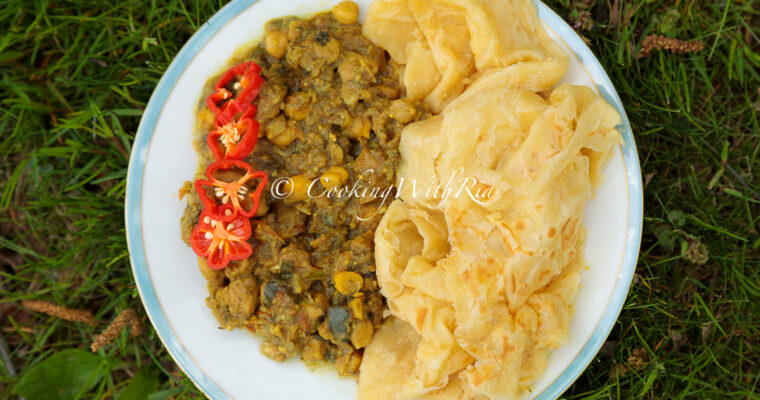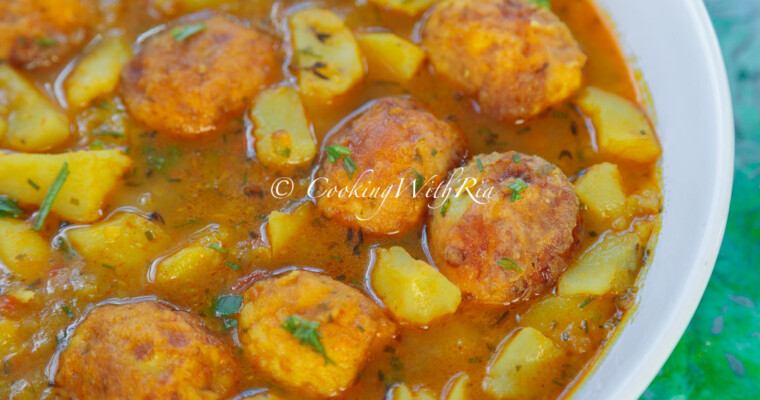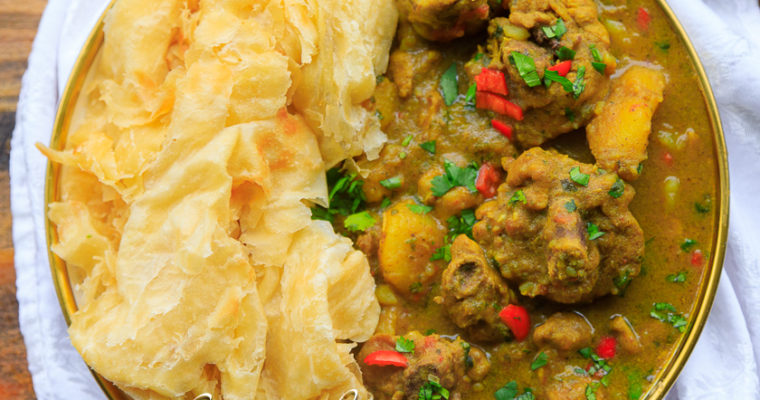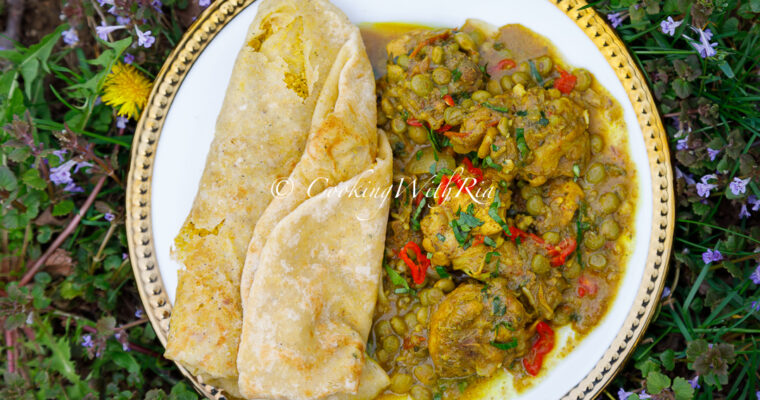
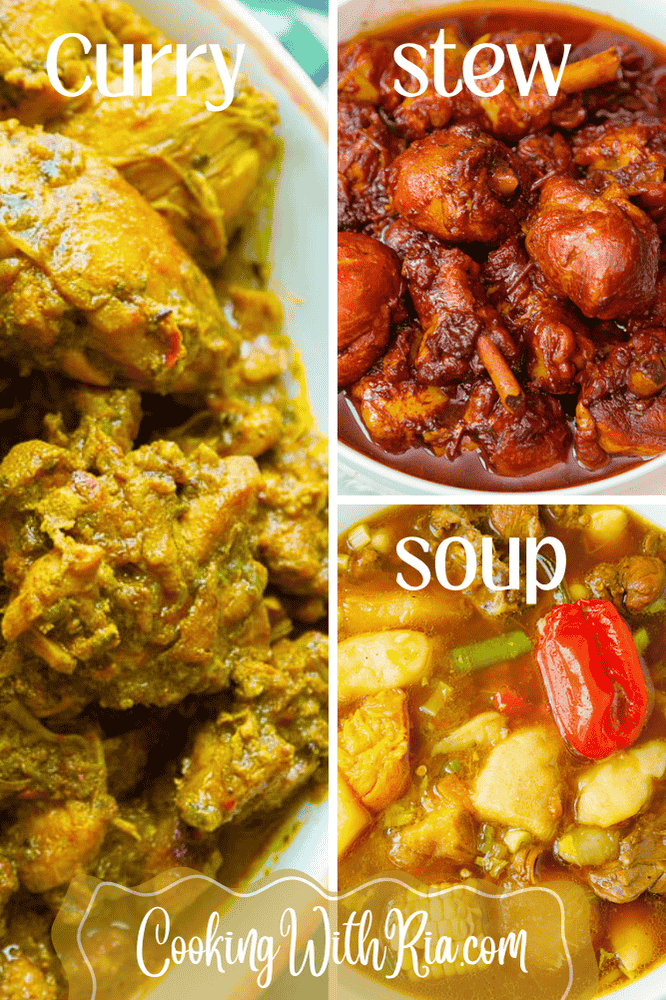
Have you ever stopped and wondered what really separates a curry from a stew or a soup?
Table of Contents
They can look similar at times. They may share ingredients. They’re often served with the same sides. But once you start paying attention, you realize they are not the same.
So what makes each one what it is?
Why does one have more sauce, another less, and another built around liquid?
And how do you tell the difference if no one ever explained it to you?
These are the kinds of questions people ask all the time. Sometimes it’s someone outside the culture trying to understand Caribbean food for the first time. Sometimes it’s someone who grew up eating these dishes but never had them broken down. And sometimes it’s a home cook who wants to understand more, not just follow steps.
Because once you understand the difference, your cooking changes.
You begin to recognize what’s happening in the pot—when something has reduced enough, when a curry has developed properly, when a soup needs adjusting.
In this guide, we’re going to answer the most common questions about curry, stew, and soup—what they are, how they’re made, and what sets them apart in Caribbean cooking.
Difference Between Curry, Stew, and Soup
The difference between curry, stew, and soup comes down to how each dish is built, how the liquid is used, and what role the ingredients play in the final dish.
Curry is defined by spices cooked in oil. The process begins with “burning”, bounjaying or toasting curry powder until it becomes fragrant, then building flavor with aromatics and seasoned meat or vegetables. As it cooks, the liquid reduces into a sauce that carries the spices throughout the dish. The flavor is layered, spiced, and developed from the very beginning.
Stew, in Caribbean cooking, often begins with browning—burnt sugar used to create a deep color and a slightly bittersweet base. From there, seasoned meat and aromatics are added, and the dish is allowed to cook down slowly. The liquid reduces into a thick, rich sauce that coats the ingredients. A stew is concentrated, with the protein as the focus and the sauce supporting it.
Soup is built differently. It contains more liquid and a wider range of ingredients, especially in Caribbean cooking where provisions like yam, cassava, dasheen, green fig, corn, plantain, and dumplings form the foundation of the meal. The broth is meant to carry all of these elements together, creating something that is both filling and balanced.
In some Trinidadian kitchens, soup may begin with browning the meat first—similar to the start of a stew—before adding provisions and enough water to form the soup. This step adds color and depth to the broth. While this is not done everywhere, it is how my family prepares soup in Central Trinidad.
While these dishes may share ingredients, they are not interchangeable. Each one is built with a different intention from the very beginning—curry for spice and depth, stew for richness and concentration, and soup for balance, variety, and nourishment.
If you’re new to Caribbean cooking, you can explore these techniques in full recipes across my site.
What Is Curry, Really?
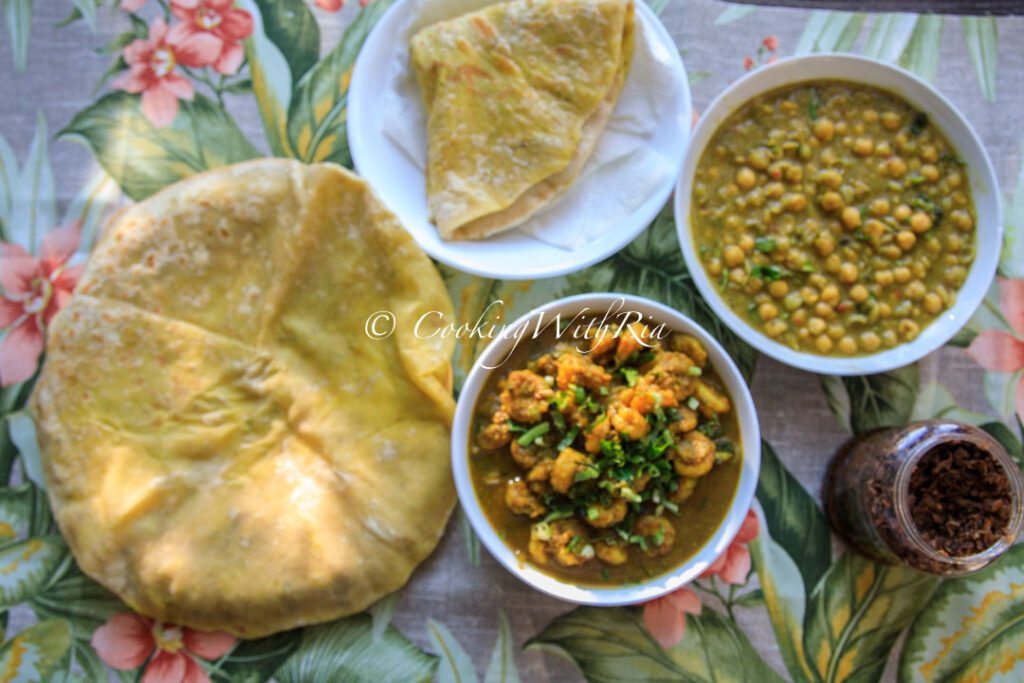
One of the most searched questions is simple: what actually makes a curry a curry?
Curry is not a single flavor or dish. It is a method of cooking built around spices, oil, seasonings and technique.
In Caribbean cooking, curry begins with a spice blend—typically turmeric-based—combined with aromatics like garlic, onion, hot pepper, and green seasoning. Learn how to make Caribbean green seasoning here. The defining step is what we call “burning or bounjaying the curry,” where the spices are toasted in oil until fragrant and slightly grainy.
This step is not optional. It develops the depth of flavor and removes the raw taste of the spices.
From there, seasoned raw meat is added directly into the curry base. As it cooks, it releases its own natural juices, which blend with the spices and form the sauce. The dish develops gradually, becoming richer and more cohesive over time.
When people ask what ingredient gives curry its flavor, the answer is not just curry powder. It is the combination of spices, oil, seasonings, heat, technique, and time working together.
🔗 Popular Curry Recipes
- Trinidad Curry Chicken
- Curry Goat
- Curry Beef
- Curry Fish
- Curry Lamb
- Curry Oxtail
- Curry Shrimp
- Vegan Curry: Curry Channa and Aloo, Curry Cabbage, Curry Bodi and Aloo, Curry Baigan(Eggplant)
Is Curry a Soup or a Stew?
Curry often sits between categories, which is why this question comes up so often.
It can have the looseness of a soup or the thickness of a stew, but it is not defined by liquid alone. What defines a curry is how the flavor is built—through spices infused in oil before anything else is added.
A curry can be dry, thick, or slightly saucy, depending on how it is cooked. Some are reduced until they cling tightly to the meat or vegetable, while others retain more liquid for serving with rice or roti.
So while curry may resemble a stew in consistency, it is not classified the same way. The foundation is entirely different.
Curry Chicken or Chicken Curry — Which Is Correct?
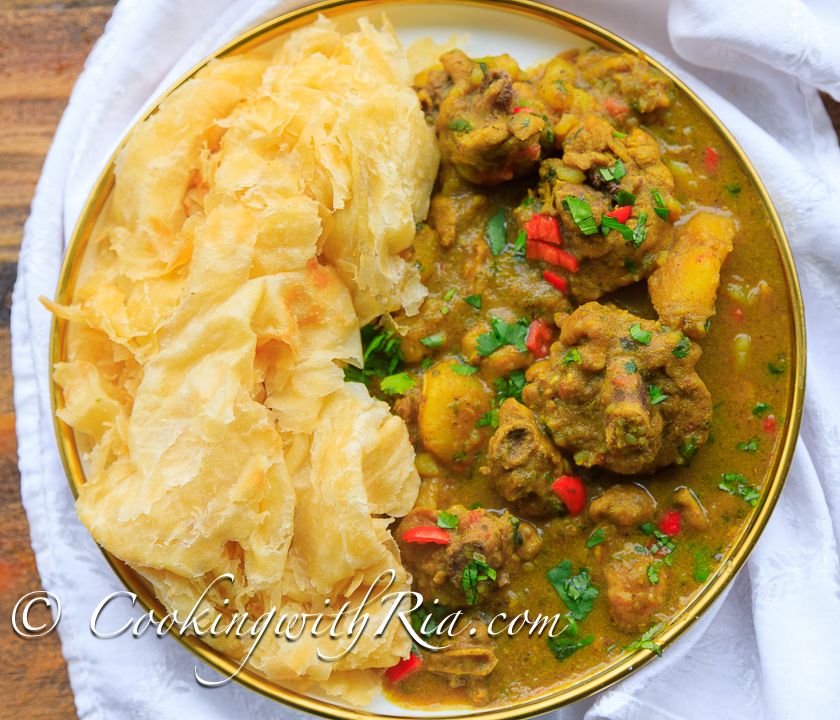
This question comes up constantly, and the answer depends on culture.
In Trinidad and Jamaica, we say curry chicken. In Guyana, India, and in many international contexts, you will more often hear chicken curry.
The difference is not about correctness. It reflects how we speak about food and how we think about the dish.
In Trinidad cooking, the method comes first. Curry chicken means chicken prepared using the curry technique. Stewed chicken follows the same pattern. The cooking method leads, and the ingredient follows.
Of course, on social media, this has taken on a life of its own. What started as a simple difference in language has turned into a quiet, ongoing debate—sometimes playful, sometimes pointed. There’s a kind of teasing that happens in the comments, a back-and-forth that never quite ends. One side insists on curry chicken, the other stands firmly behind chicken curry.
At this point, it’s almost become a cultural inside joke—a small rivalry that reflects pride more than disagreement.
Both terms are correct. They simply reflect different traditions, shaped by history, language, and the way each culture approaches cooking.
Where Did Curry Come From?
Curry traces its origins back to India, where spice-based cooking developed over centuries.
When Indian indentured laborers came to the Caribbean in the 1800s, they brought these techniques with them. Over time, the dishes evolved. Ingredients changed, flavors adapted, and what we now recognize as Caribbean curry took shape.
It is not identical to Indian curry. It is something that grew from it, shaped by place and experience.
Caribbean Curry vs Indian Curry: What’s the Difference?
While Caribbean curry and Indian curry share the same roots, the way they are prepared today reflects two distinct approaches.
In the Caribbean, curry is often built using a pre-made spice blend—curry powder—which is toasted in oil to develop flavor. It can be enhanced with additional turmeric, geera (roasted cumin), or specialty blends like duck and goat curry powder, but the foundation remains centered around a single blended seasoning rather than layering multiple individual spices. From there, fresh green seasoning—a blend of herbs, garlic, onion, and peppers—is added early in the cooking process, becoming part of the base of the dish.
In Indian cooking, the approach is more layered. Instead of relying on one curry powder, a variety of individual spices are used—such as turmeric, Kashmiri chili, cumin (jeera), coriander, and garam masala. These spices are added in stages to build complexity throughout the cooking process.
There are also clear differences in how ingredients are used.
In Caribbean cooking, coconut milk is commonly added to curry for richness and balance, especially in seafood and vegetable dishes. Cream is not traditionally used. In contrast, some Indian curries may include yogurt, cream, or tomatoes, depending on the region and style.
Marination also differs. In the Caribbean, meats are typically marinated with green seasoning, allowing fresh herbs and aromatics to penetrate the meat before cooking. In Indian cooking, meats are often marinated with dry spices—sometimes combined with yogurt—to tenderize and flavor the meat.
Another key distinction is how herbs are used. In Caribbean cooking, seasoning is built into the dish from the beginning. In Indian cooking, fresh herbs like cilantro (coriander) are more often added at the end as a finishing element rather than forming the base.
These differences highlight an important point: while both styles share a common origin, they have evolved into distinct traditions with their own techniques, flavors, and identity.
This Caribbean approach is reflected across many of the recipes on this site.
What Does Curry Taste Like?

Curry is not a single flavor, which is why it is often difficult to describe.
It is warm, earthy, layered and downright addicting(if I do say so myself). Turmeric brings a slight bitterness, while other spices—like geera (roasted cumin), amchar masala, and the blends used in duck or goat curry—add depth and aroma. Each variation brings its own character, depending on the spices and technique used.
Depending on the preparation and the addition of hot pepper, curry can be mild, spicy, or even slightly sweet.
In the Caribbean, especially in Trinidad, curry is not limited to meat alone. Ingredients like pigeon peas, potato, eddoes, chickpeas, eggplant, and cabbage are often added to create variety and balance in the dish.
There is also a wide range of curry-based vegetarian and vegan dishes, including curry chickpeas, curry eggplant, curry seim, curry bodi, curry peas and aloo, curry chataigne, curry mango, and curry eggplant with eddoes. Seafood curries are just as common, featuring fish, shrimp, calamari, or mixed seafood.
For some, curry is an acquired taste. For others, it is immediately familiar. What remains consistent is its complexity and the way the flavors develop over time.
Do You Put Raw Chicken in Curry?
Yes, and this step is essential.
In curry, the meat is added raw into the seasoned curry base. As it cooks, it releases its juices, which combine with the spices and form the sauce.
Cooking the chicken separately would prevent this process. The depth of flavor in curry comes from allowing everything to develop together in one pot.
What Makes a Stew a Stew?
A stew is defined by reduction and concentration.
It begins with liquid, but as it cooks, that liquid reduces and thickens into a sauce. The ingredients become coated rather than submerged, and the flavors deepen over time.
In Caribbean cooking, stews often begin with browning—what we call “burning the sugar.” This step creates that deep color and a slightly bittersweet base that defines the dish. From there, aromatics and seasoned meat are added, and the pot is left to simmer slowly until everything comes together.
In other parts of the world, the technique may differ, but the end result is similar—a dish built on heartiness and richness, where the liquid is no longer separate, but part of the body of the food.
A proper stew is thick, cohesive, and fully developed. It is not watery, and it does not rely on broth as its main element. In the Caribbean, it is made to be poured over rice, scooped up with roti or served with boiled ground provisions—while elsewhere, you may see it served with mashed potatoes, polenta, bread or noodles.
This method is used in many of our traditional stewed dishes.
🔗 Popular Stew Recipes:
What Is Curry Stew or Stew Curry?
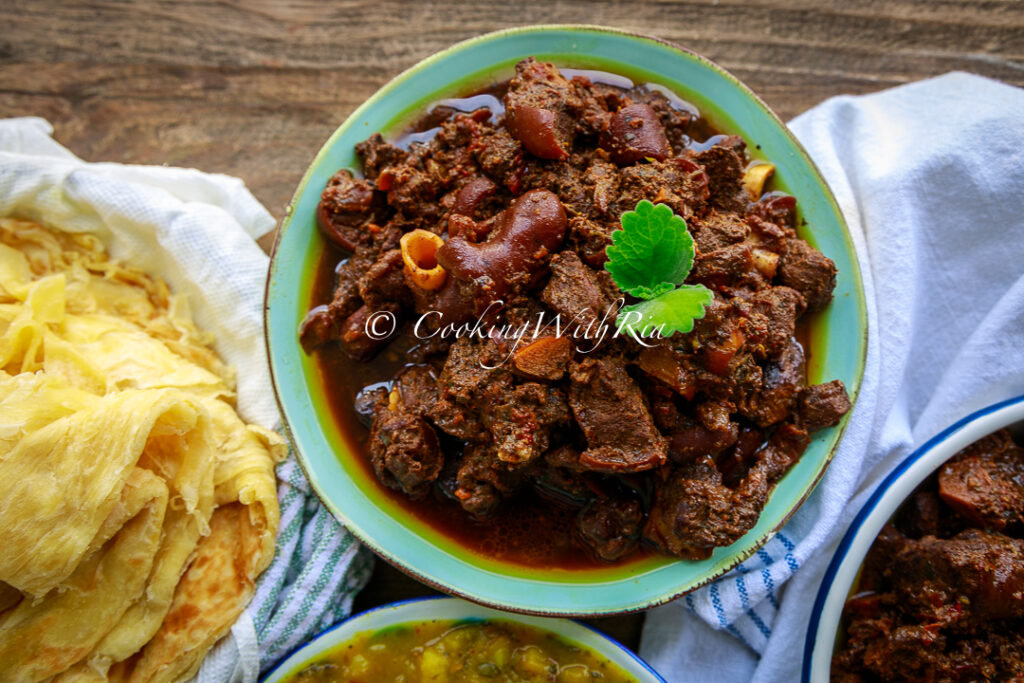
In Trinidad, curry stew—sometimes called stew curry—is not just a name. It’s a specific way of cooking that combines two methods.
It begins with browning—burning sugar to create that deep color and slightly bittersweet base. This step always comes first.
From there, curry is introduced either by seasoning the chicken beforehand with curry powder and green seasoning, or by adding the curry directly into the browned sugar and stirring it into the base. As it cooks, the flavors come together, creating something deeper and more complex than either method on its own.
The result is a dish that carries the richness of a stew with the warmth and depth of curry, all in one pot.
It’s a style widely loved in Trinidad. While you may find similar ideas elsewhere, this particular combination of browning and curry is not something commonly seen outside of Trinidadian cooking.
🔗 Popular Curry Stew Recipes
Is Pelau a Stew? How Stewing Turns Into a One-Pot Rice Dish
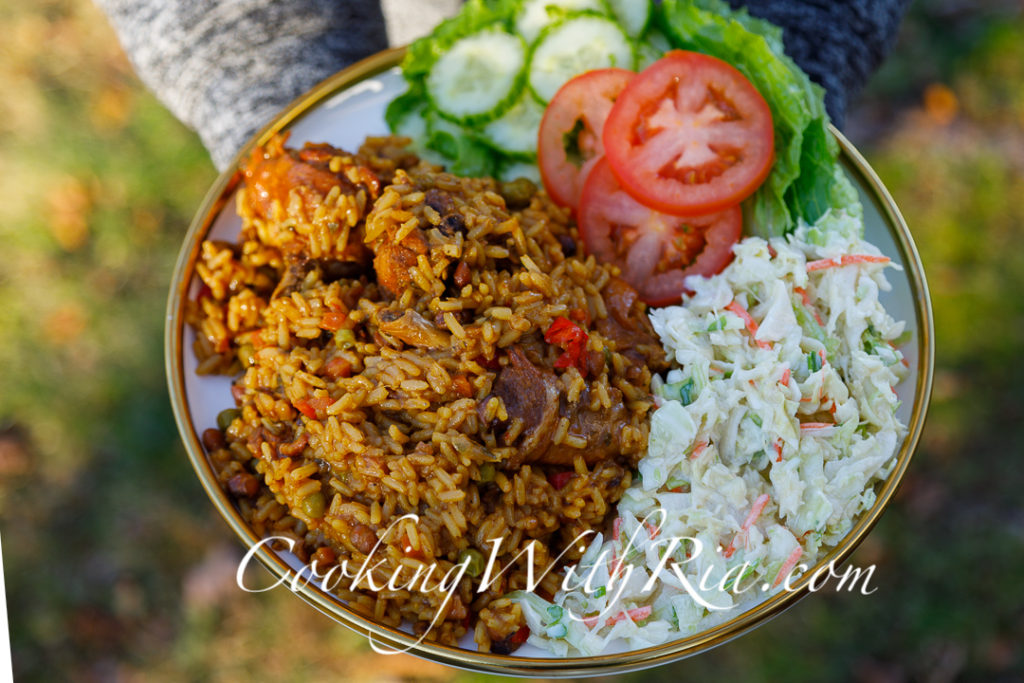
Pelau is not considered a stew, but it does begin in a very similar way.
Like many Caribbean stewed dishes, it starts with browning—burning sugar to develop that deep color and flavor—followed by seasoned meat that cooks down in that base. At this stage, the process mirrors a traditional stew.
But then it shifts.
Rice is added, along with liquid, and the dish transforms into a one-pot meal where everything cooks together. Instead of reducing into a thick sauce like a stew, the liquid is absorbed by the rice, creating one of Trinidad’s most beloved rice dishes.
So while pelau begins with the technique of stewing, it doesn’t remain a stew. It becomes something else entirely.
And that’s an important takeaway—these methods are not fixed. A dish can start one way and develop into another, depending on what is added and how it is finished.
🔗 Popular Pelau Recipes
What Is the Best Meat for Curry or Stew?
The best meats for curry and stew are those that benefit from time.
Tougher cuts, such as beef chuck, goat, or oxtail, become tender as they cook and release flavor into the dish. Even chicken, especially bone-in pieces, contributes more richness when simmered slowly.
These dishes are not designed for quick cooking. They rely on patience and gradual transformation.
What Classifies a Soup?

Soup is built around liquid.
In the Caribbean, a soup is not just broth with a few additions. It is a full, substantial meal made with meat and a variety of provisions—both ground and above ground—such as yam, cassava, dasheen, green fig, corn, plantain, and dumplings. These ingredients are not secondary; they form the foundation of the dish.
As the soup cooks, the starch from the provisions thickens the liquid naturally. And as it cools, it thickens even more. This is an important distinction. While soup is generally considered pourable, Caribbean soups can become quite thick once cooled. When reheating, it is common to add water to bring it back to the desired consistency.
Another key difference between soup and stew is complexity. A stew is usually more focused, often built around a protein with a few supporting ingredients like potatoes, peas, or small amounts of vegetables. In a soup, however, the variety of ingredients is much broader, and each one plays a visible and important role in the meal.
The ratio also matters. In a stew, the ingredients support the sauce and deepen the flavor of the protein. In a soup, the ingredients themselves are prominent—they are the meal, not just an addition.
This is why soup and stew are often confused. A thick soup can feel just as hearty as a stew, but it still contains more liquid and a wider variety of ingredients. The defining difference is that soup remains more fluid and expansive, while stew becomes concentrated, with the protein as the primary element.
Learn more about ground provisions and how they are prepared in Caribbean cooking.
🔗 Popular Soup Recipes:
- Chicken Soup
- Corn Soup
- Corn Soup with Pigtails
- Dhal & Dumpling Soup
- Cow Heel & Pigtail Soup
At What Point Does a Soup Become a Stew?
This is one of the most common questions, but in Caribbean cooking, the answer is clear.
A soup does not become a stew.
These are two separate dishes, made with different intentions from the very beginning. While in other cuisines a soup may be reduced into something thicker and stew-like, Caribbean soups are designed to remain soups—even as they thicken from starch.
A stew is built to reduce and concentrate. A soup is built to nourish with a balance of liquid and substance.
Understanding that distinction removes the confusion. You are not watching for one to turn into the other—you are cooking each for what it is meant to be.
Why Do People Eat Chicken Feet?
Chicken feet are used in many cuisines because of what they contribute to a dish.
They are rich in collagen, which breaks down during cooking and creates a silky, gelatinous texture in soups and broths. This is why they are often used in soups, curries, and souse (pickled chicken feet), rather than dry dishes.
Beyond texture, they are also valued for their nutritional benefits. Chicken feet are considered supportive for joint health and skin, and when properly cleaned and cooked, they are fully digestible.
What might seem unusual at first is, in practice, a very efficient and traditional way to build depth, body, and richness in a dish.
🔗 Chicken Feet Recipes Coming Soon!
Frequently Asked Questions
Do stews have less liquid than soups?
Yes, stews always contain less liquid than soups. As a stew cooks, the liquid is reduced until it becomes a thick, concentrated sauce that coats the ingredients. Soup, on the other hand, is built around liquid and remains more fluid, even when it is hearty or filled with provisions.
Which is thicker, soup or stew?
Stew is thicker than soup. A stew develops a cohesive texture where the sauce clings to the meat and vegetables, while soup remains more broth-forward. Even a thick Caribbean soup, though substantial, still holds more liquid than a stew.
What are the basic rules for stewing?
A proper stew is built with intention from the beginning. Flavor is developed early—often through browning or sautéing aromatics—then the dish is cooked slowly over steady heat. The liquid is allowed to reduce naturally, creating depth, body, and a rich, unified sauce.
Can you turn a soup into a stew?
In general cooking, a soup can be reduced into something thicker by simmering uncovered or adding starches like potatoes, dumplings, or rice. However, in Caribbean cooking, soup and stew are considered two distinct dishes made with different intentions, so one is not typically transformed into the other.
Is curry sweet or spicy?
Curry can be mild, spicy, or slightly sweet depending on how it is prepared. The level of heat comes from the use of hot pepper, while the balance of spices and ingredients determines whether the final dish leans more savory, earthy, or subtly sweet.
What flavor is curry similar to?
Curry does not have a direct comparison. It is a layered blend of warm, earthy, and aromatic flavors, with a slight bitterness from turmeric and depth from spices like cumin and coriander. It is better understood as a profile built over time rather than a single taste.
Is curry an acquired taste?
For some, yes. The complexity of curry can take time to fully appreciate, especially for those unfamiliar with spiced dishes. Over time, however, many come to recognize and enjoy the depth and balance that curry offers.
Do Guyanese and Caribbean people say curry chicken or chicken curry?
In Trinidad and Jamaica, the common term is “curry chicken,” reflecting a style where the cooking method comes first. In Guyana, India, and many international contexts, “chicken curry” is more commonly used. Both are correct and reflect different cultural traditions.
What ingredient gives curry its flavor?
Curry’s flavor comes from a blend of spices rather than a single ingredient. Curry powder—often made with turmeric, cumin, coriander, and other spices—forms the base, but the true depth of flavor develops when those spices are properly toasted in oil and allowed to cook into the dish.
How do you prepare chicken feet for cooking?
Chicken feet are prepared by trimming the nails, removing the outer yellow skin if present, and rinsing thoroughly with water and sometimes lime or vinegar. Once cleaned, they are ready to be added to soups, curries, or souse, where they cook slowly and release collagen into the dish.
How do you know when curry is finished cooking?
A curry is ready when the oil begins to separate slightly from the sauce, the liquid has reduced to your desired consistency, and the spices no longer taste raw. The flavors should taste blended and developed, not sharp or powdery.
Why is my curry watery?
Curry can become watery if too much liquid is added or if it has not been allowed to reduce long enough. Letting it simmer uncovered helps the sauce thicken naturally and concentrate the flavor.
Why is my stew not thickening?
A stew thickens over time as the liquid reduces and the ingredients break down. If it remains thin, it likely needs more cooking time or less liquid. Keeping the pot uncovered toward the end helps it develop that rich, thick consistency.
Can curry be dry or does it always have sauce?
Curry can be made both ways. Some curries are left with a sauce for serving with rice or roti, while others are cooked down further into what is often called a “dry curry,” where the spices coat the ingredients with very little remaining liquid.
Why does Caribbean soup thicken as it cools?
Caribbean soups contain starchy ingredients like yam, cassava, dumplings, and plantain. As the soup cools, these starches continue to absorb liquid and thicken the broth. When reheating, adding water helps return it to the desired consistency.
Once you understand these differences, cooking becomes more intuitive.
You begin to recognize when something is reducing into a stew, when a curry has developed enough depth, and when a soup needs more time or balance.
Over time, these distinctions stop feeling like rules. They become part of how you cook—naturally and with confidence. And this is just the beginning.
If you want to deepen your understanding of Trinidad and Caribbean cooking—how we season, how we build flavor, how we bring simple ingredients together into something meaningful—explore more right here on CookingWithRia.com.
From everyday meals to traditional dishes, each recipe is another step toward cooking with clarity, purpose, and connection to the culture behind it.
Cook, share, love, and enjoy.
Did You Love This?
If this guide helped you better understand curry, stew, and soup in Caribbean cooking, I’d love to hear from you.
Have you ever wondered about these differences while cooking? Or do you have your own way of describing them in your kitchen?
Leave a comment below and share your thoughts—your experiences and questions help shape future posts and keep these conversations going.
If you want to learn more about Trinidad and Caribbean cooking, explore the full collection of guides and recipes on my site.
👉 What Is Trinidad Food
💬 Questions, Concerns, or Recipe Requests—Write Me!
If you have any questions, or if there’s a dish you’ve been trying to understand or would love to see me break down—please don’t hesitate to leave a comment below or reach out via email at [email protected].
Many of my most meaningful posts come from your questions, your curiosity, and your stories in the kitchen.
📩 Subscribe & Get My Free Green Seasoning Booklet
If you want to continue learning how to cook with Caribbean flavor—building dishes from the ground up with confidence and understanding—subscribe below.
You’ll get my free Green Seasoning booklet, plus updates on new recipes, guides, and cooking tips straight from my kitchen to yours.
❤️ Shop My Kitchen Favorites
These are the trusted tools and pantry staples I use in my own kitchen—the ones that make Caribbean cooking easier and more enjoyable.
Recent Posts