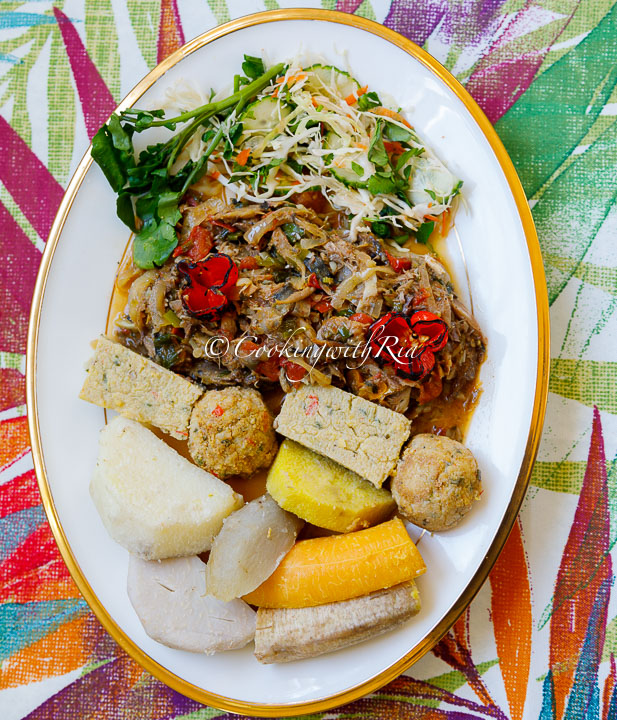
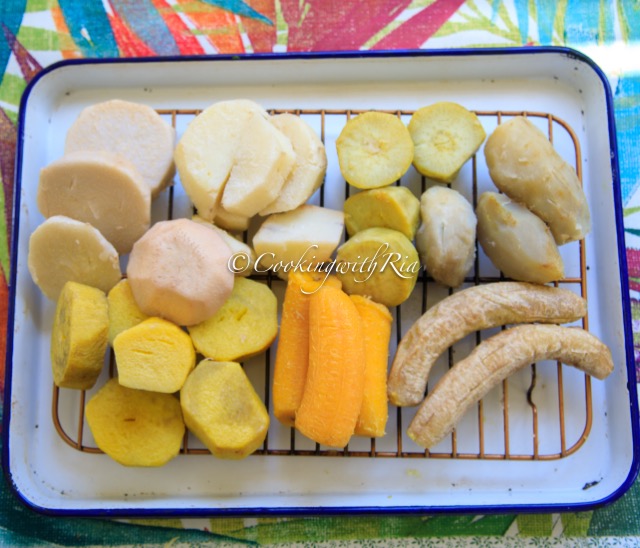
Boiled Ground Provisions is one of the most essential parts of Caribbean cooking — a mix of yam, cassava, dasheen, sweet potato, and green fig(or other combo), boiled in salted water until tender and served alongside stews, saltfish, curry, or callaloo.
Table of Contents
This is the kind of cooking that doesn’t need much instruction once you’ve done it a few times. It’s something you learn by watching, helping, and eventually doing without thinking.
What matters is understanding how each provision behaves — how it cooks, how it feels when it’s ready, and how it fits into the meal.
Why You’ll Love This Recipe
- Simple, but complete: A pot of provisions can turn anything into a proper meal
- Deeply satisfying: Dense, filling foods that actually keep you full
- Flexible: Works with whatever you’re cooking — saltfish, stew, curry, beans
- Rooted in tradition: This is how many Caribbean kitchens have always cooked
New to Ground Provisions?
👉 Read my full guide here:
What Are Ground Provisions? A Complete Guide to Caribbean Root Vegetables and How to Cook Them
Ingredients You Will Need for Boiled Ground Provisions
You can use any combination of ground provisions, depending on what you have available or what looks good that day.
Yam, cassava, dasheen, sweet potato, green fig — they all work, and within each one there are different varieties you’ll come across in the market. Some cook a little firmer, some softer, some slightly sweeter — and over time, you’ll learn which ones you prefer.
You can also include green or ripe plantain. Green plantain cooks firm and starchy, similar to green fig, while ripe plantain softens and adds a subtle sweetness to the pot.See my tostones recipe here – made with green plantain.
You might add eddoes or tannia if you have them, or keep it simple with just one or two provisions. In most Caribbean kitchens, people cook what they have — not what a recipe tells them they must use.
👉 There’s no fixed combination and no strict rule to follow. This is the kind of cooking where you mix, match, taste, and figure out what you enjoy over time.
Common Provisions You Can Use
- Yam — dense and starchy, the one that gives the pot its structure and holds up from start to finish
(you’ll come across different types like yellow yam, white yam, cush-cush — each slightly different in texture)
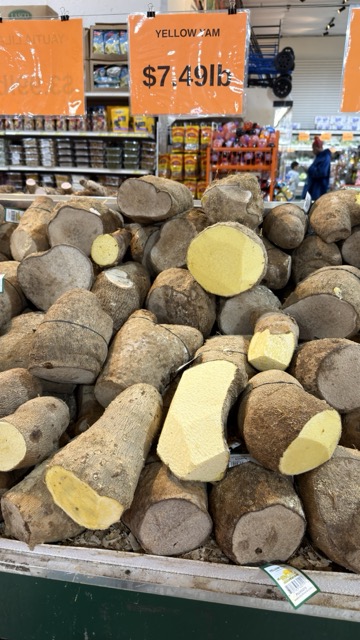
- Cassava (yuca) — firm with a slight dryness, mild in flavor but excellent at soaking up whatever you serve it with
(some are drier or more fibrous than others depending on the variety)

- Dasheen (taro) — softens as it cooks, becoming tender with a slightly creamy finish
(you may see white dasheen or “blue” dasheen with purple streaks)
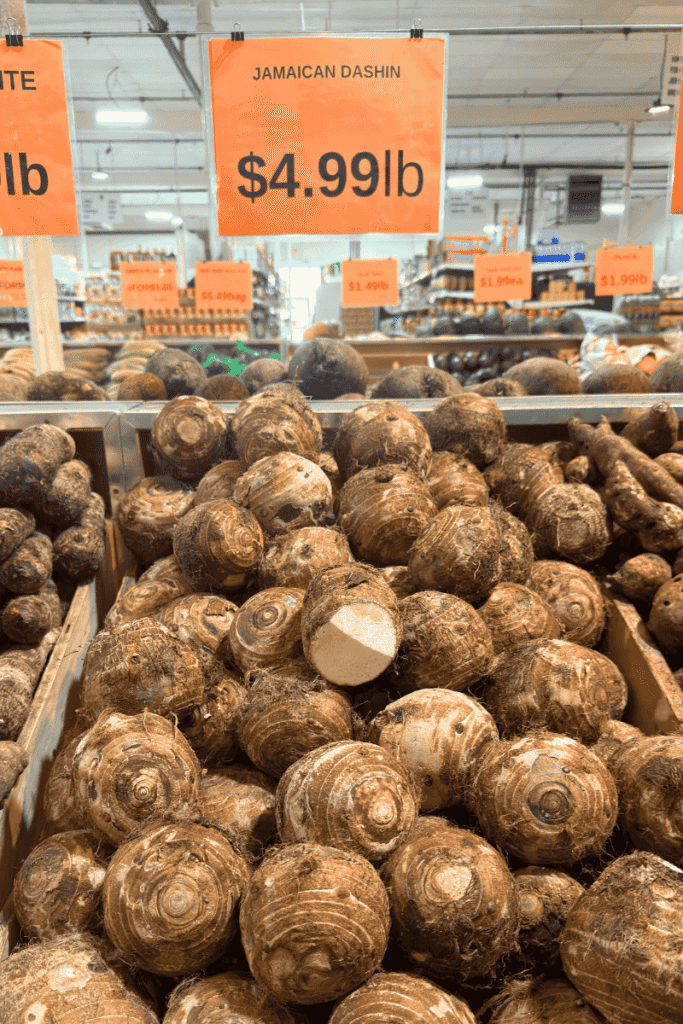
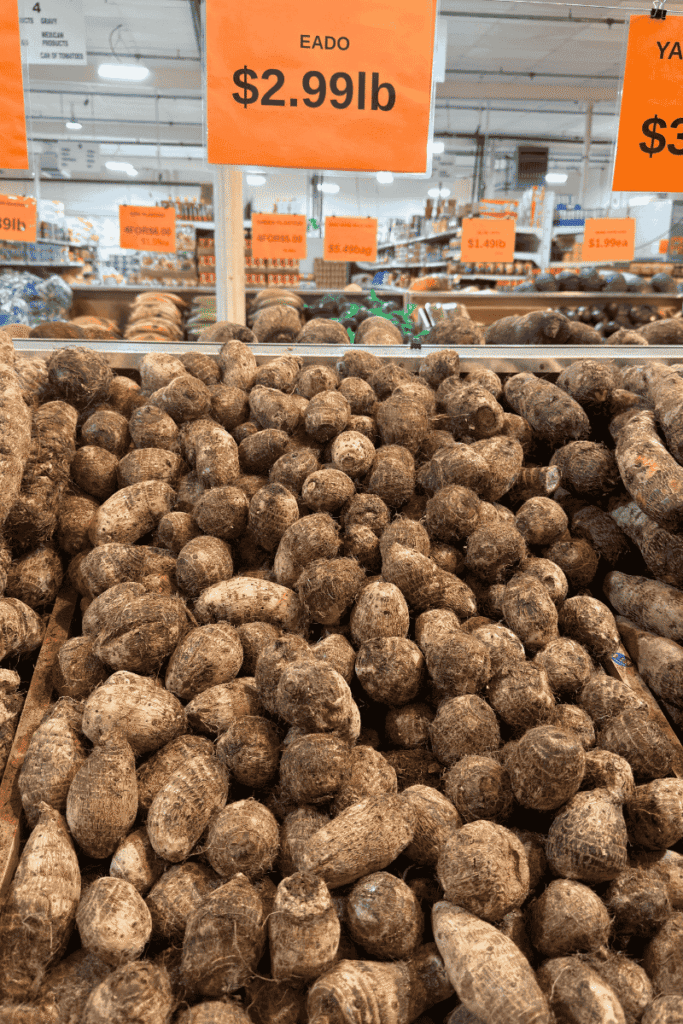
- Eddoes / Tannia / Malanga — firmer root vegetables that cook up tender but hold their shape well
(often grouped together in markets, though they are slightly different)
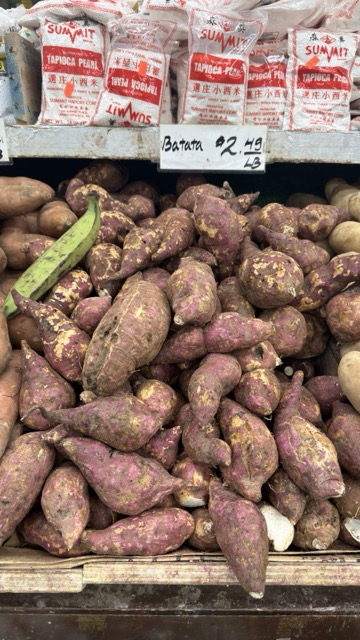
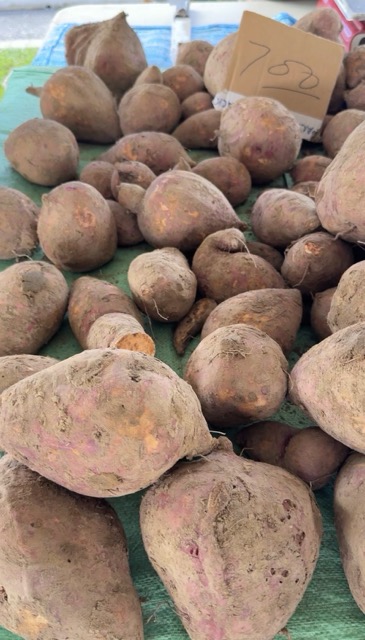
- Sweet potato — adds a gentle sweetness that balances everything else in the pot
(orange, white, yellow, or even purple varieties)
- Green fig (green banana) — firm and neutral, helping to round everything out
(keeps its shape and works well with saltfish and stews)
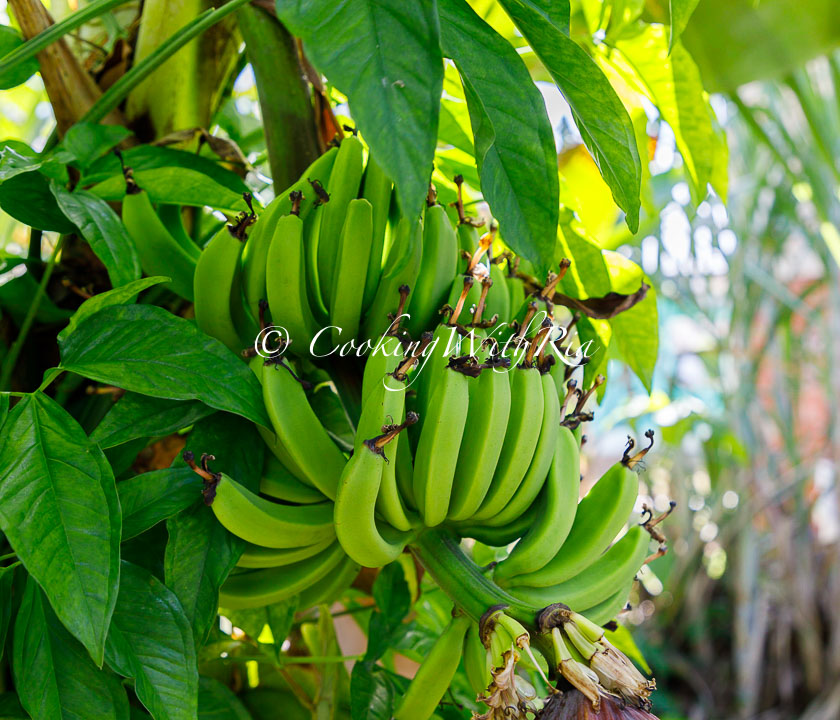
- Plantain (green or ripe) —
- green plantain stays firm and starchy, similar to green fig
- ripe plantain softens and adds a subtle sweetness
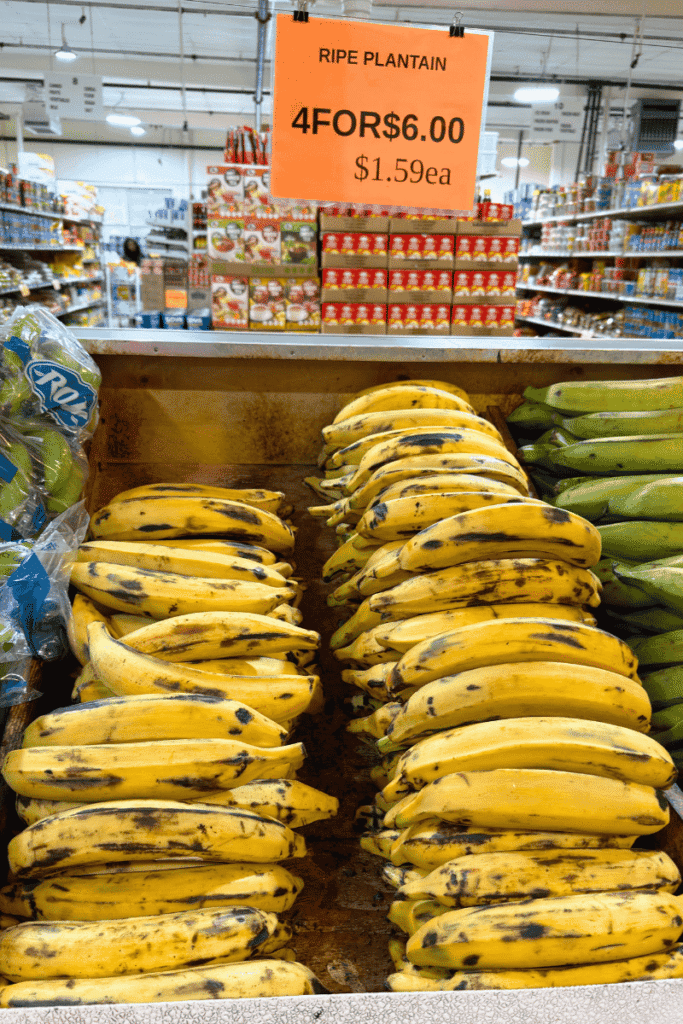
👉 Every provision comes in different varieties, and part of learning is trying them and seeing what you prefer.
Where to Buy Provisions
You’ll usually find ground provisions in:
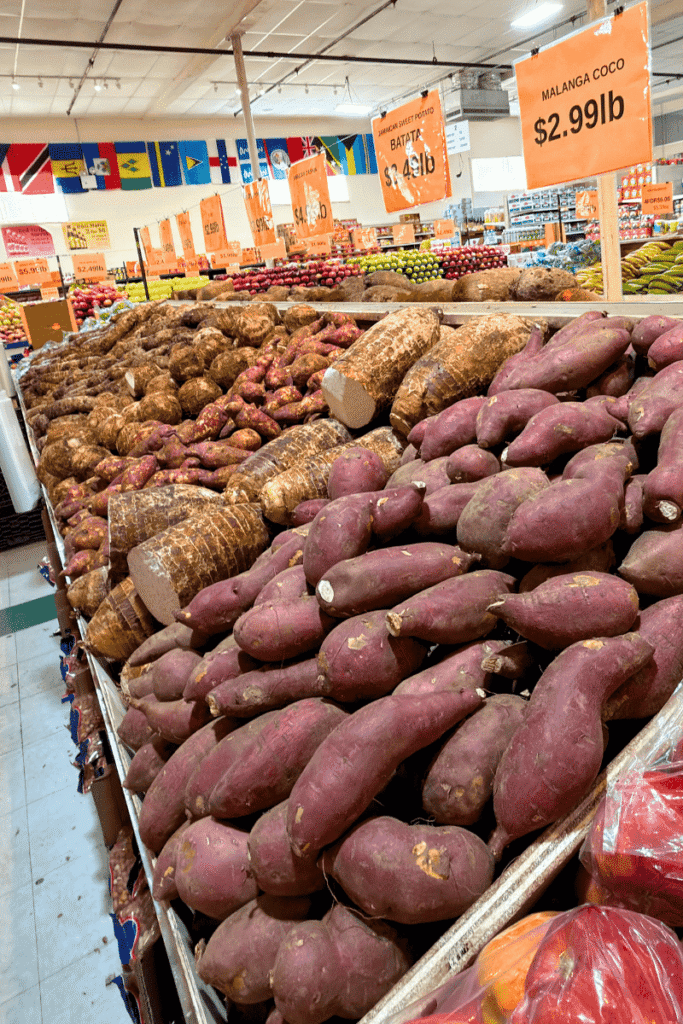
- Local Markets – in the Caribbean, or if overseas:
- Caribbean or West Indian grocery stores
- African and Latin American markets
- Supermarkets with international produce sections
They’re often sold loose in bins or crates, not packaged — so you’re choosing them by hand.
👉 Start with what looks fresh and familiar. Over time, you’ll recognize them easily.
How to Choose Good Provisions at the Market
This is something you learn more by feel than by label.
Look for:
- firm, dense texture when pressed
- heavy weight for the size (a good sign of freshness)
- dry, intact skin
Avoid:
- soft or spongy spots
- slimy or damp patches
- sour or fermented smell
If cut open:
- flesh should look clean and even
- no grayness or streaking
👉 Simple rule:
- Firm + heavy + dry = good
- Soft + light + sour = leave it
How to Clean and Prep Provisions
Start by washing everything thoroughly — these come straight from the ground.
Then take your time with the peeling:
- Yam & dasheen: peel fully — no skin left behind
- Cassava: remove
- outer brown skin
- inner layer
- fibrous core (very important)
- Green fig/Plantain:
- trim both ends
- score the skin
- peel off
- use a little oil on your knife if the sap sticks
Once peeled:
- cut into large, even pieces (not small — they need to hold shape)
- keep in water if not cooking immediately (prevents discoloration)
Flavor Profile
This isn’t the kind of food that tries to stand out on its own. It’s simple, but each piece brings something different to the plate.
Yam is firm and a little dry, the kind that holds up and gives the meal some weight. Cassava is more neutral, slightly nutty, and soaks up whatever you put it with. Dasheen softens as it cooks, almost creamy at the edges. Sweet potato adds a quiet sweetness, and green fig or green banana stays firm and starchy, keeping everything balanced.
On their own, they’re mild. But once they’re on the plate — with gravy, sauce, or broth — that’s when they make sense.
How to Serve Boiled Ground Provisions

Boiled provisions are there to complete the plate, not stand on their own.
They’re most often served:
- With tomatoes and saltfish, Salted Mackerel with tomatoes(as seen above), saltfish buljol or sautéed buljol— a classic pairing, especially for breakfast
- With stewed fish, steamed salmon in coconut milk, or steamed fish — the provisions absorb the sauce and balance acidity
- With stewed meats (chicken, pork, beef, oxtail) — they stretch the meal and hold the gravy
- With curry dishes — especially curry fish with mango(fried method), simple coconut curry fish, curry duck, curry pork(short ribs with zucchini), curry stew pork, curry goat or chicken
- With callaloo — the creamy texture coats each piece
- As part of Sunday lunch — alongside rice, stewed red beans, and a main dish
👉 They sit quietly on the plate — but without them, the meal feels incomplete.
Storage & Reheating
- store in the fridge for up to 3 days
- reheat gently (steam or low heat works best)
- add a little water if they feel dry
Freezing is possible, but:
- texture may soften slightly
- best used within a few days when fresh
Frequently Asked Questions
What are boiled provisions?
Boiled Provisions are a traditional Caribbean mixture of root vegetables (ground provisions) and firm starches — including yam, cassava, dasheen, eddoes, sweet potato, green fig, and plantain — that are peeled, cut, boiled in salted water until tender, drained, and served as a substantial, satisfying side dish.
Why are they called “provisions”?
The word “provisions” historically referred to food supplies kept for survival. In the Caribbean, it became associated with hardy root crops that could be grown locally and relied upon during times of scarcity.
How long does it take to boil provisions?
Most provisions cook in 20–30 minutes once the water is boiling. They are ready when a knife slides easily through the thickest piece without resistance.
Why does dasheen or tannia make my hands itch?
Raw dasheen and tannia contain calcium oxalate crystals that can irritate the skin. This disappears completely once cooked.
Is cassava safe to eat?
Yes, once properly peeled and fully cooked. The outer skin, inner layer, and fibrous core must all be removed.
Can I mix different provisions in one pot?
Yes. Just keep in mind that softer ones cook faster and may need to be removed earlier.
What do boiled provisions taste like?
Mild, earthy, and slightly sweet depending on the provision. Their main role is to absorb flavor from whatever they’re served with.
Classic Caribbean Boiled Provisions
Ingredients
- 1 lb yam yellow or white
- 1 lb cassava yuca
- 1 lb dasheen taro
- 1 lb sweet potato any variety
- ½ lb green fig green bananas or green or ripe plantain
- 1 tbs salt Himalayan
- Water to boil
Instructions
How to Clean & Prepare
- Prepare the Yam: Peel thickly to remove all brown skin and any fibrous outer layer. Rinse well and cut into large, even chunks.
- Prepare the Cassava: Cut into manageable lengths. Slice through the thick brown outer skin and remove both the brown outer layer and the pinkish-white layer beneath it. Rinse thoroughly. Split each piece lengthwise and remove the tough fibrous core running through the center.

- Prepare the Dasheen (Taro): Peel completely to remove all skin. Rinse thoroughly. Some people experience mild itching when handling dasheen; wearing gloves or lightly oiling your hands beforehand may help. Cut into large chunks.
- Prepare the Sweet Potato: Peel if desired and cut into large, even pieces.
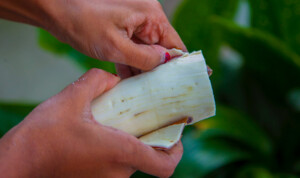
- Prepare the Green Fig (Green Banana): Trim both ends. Lightly score the peel lengthwise and remove the skin. To prevent staining from sap, lightly oil your knife before cutting. Leave whole or cut in halves if large.
- Keep all cut provisions submerged in cool water until ready to boil to prevent discoloration.
Cooking Instructions
- Layer the Provisions in the Pot: Place all prepared provisions into a large, deep pot, arranging denser roots such as yam and cassava at the bottom so they cook evenly.
- Add Water & Salt: Cover completely with cold water and add 1 tablespoon salt.
- Bring to a Boil: Place over high heat and bring the water to a full rolling boil.
- Reduce to a Steady Simmer: Once boiling, reduce heat to medium and allow the provisions to cook uncovered at a steady simmer to prevent breaking apart.
- Skim if Necessary: As the provisions cook, some starch — particularly from cassava or dasheen — may rise to the surface. Skim off any foam for a cleaner finish.
- Check for Doneness (20–45 Minutes): The provisions are ready when a knife slides easily through the thickest piece without resistance. Sweet potato and dasheen may cook faster than yam or cassava; remove individual pieces as they become tender if necessary.
- Drain Thoroughly: Once tender, drain immediately in a colander and allow the provisions to steam-dry for 3–5 minutes before serving.
Nutrition
Did You Make This Recipe?
If you tried this recipe, please leave a ⭐⭐⭐⭐⭐ rating on the recipe card — ratings help more readers discover my recipes and support the work I put into creating them.
You can also leave a review or any questions or recipe requests in the comments below. I love hearing from you and I’m always happy to help!
And when you share your photos, don’t forget to tag me @cookingwithria on Instagram or @trinicookingwithria on Facebook so I can celebrate your beautiful creations!
Questions, Concerns, or Recipe Requests—Write Me!
If you have any questions, or if there’s a dish you’ve been searching for and would love to see me make—please don’t hesitate to leave a comment below or reach out via email at [email protected].
I’d love to hear from you. Many of my favorite posts come from your requests and your kitchen stories.
Recent Posts
- Easy Caribbean Curry Chicken for Beginners (Small-Batch Recipe)
- What to Eat and Do in Sint Maarten and Saint Martin: Our Week in Paradise
- Caribbean Stewed Cannellini Beans
- Easy Spicy Chow Mein Recipe for Two (Ready in 20 Minutes)
- How to Cook Pumpkin with Mixed Seafood Recipe (Trinidad Pumpkin Talkarie)
Learn More About Trinidad Cooking
➡ What Is Trinidad Food – Understanding the Flavors and Essential Ingredients in Trinidad Cooking — explore the cultural influences and traditions that shaped Trinidad cuisine.
➡ 10 Essential Ingredients in Trinidad Cooking — learn about the herbs, seasonings, and pantry staples that form the foundation of many Trinidad dishes.
➡ Spices in Trinidad Cooking — discover the key spices used in Trinidad kitchens, from curry powder and geera to amchar masala and other traditional seasonings.
➡ What are Ground Provisions and How to Cook them — a simple guide to the root vegetables at the heart of Caribbean cooking
➡ 52 Weeks of Sunday Lunch — experience the tradition of Trinidad Sunday lunch, where family, food, and culture come together around the table.
➡ Browse My Trinidad Recipe Collection — explore authentic Trinidad recipes you can cook at home.