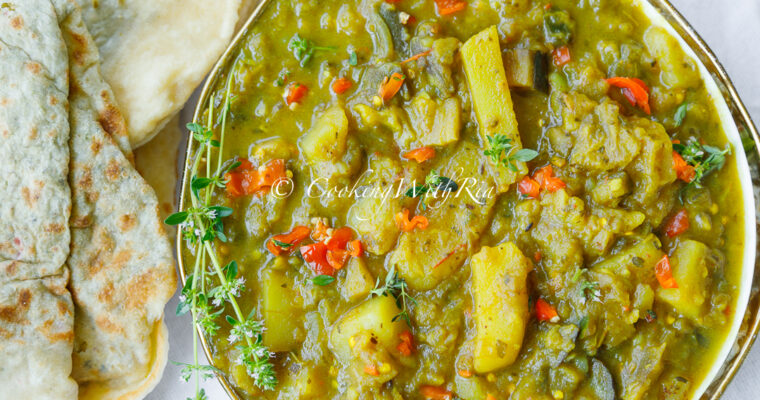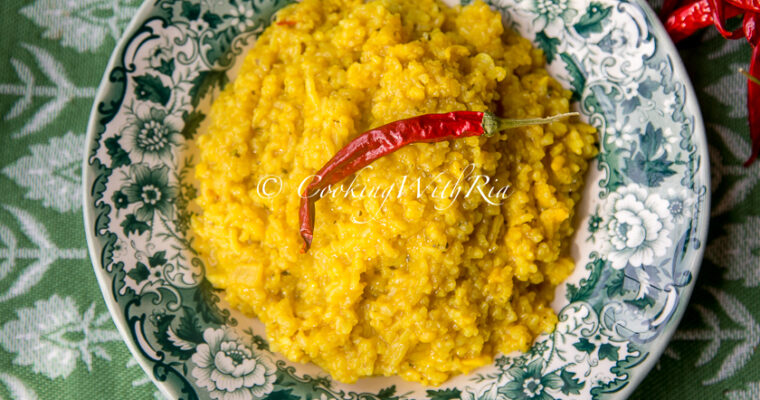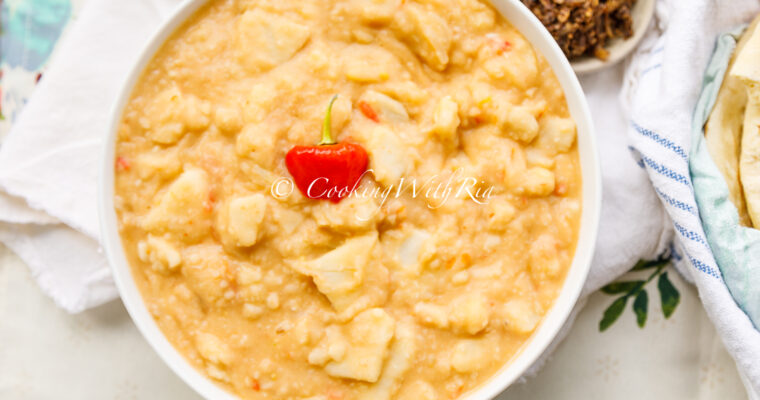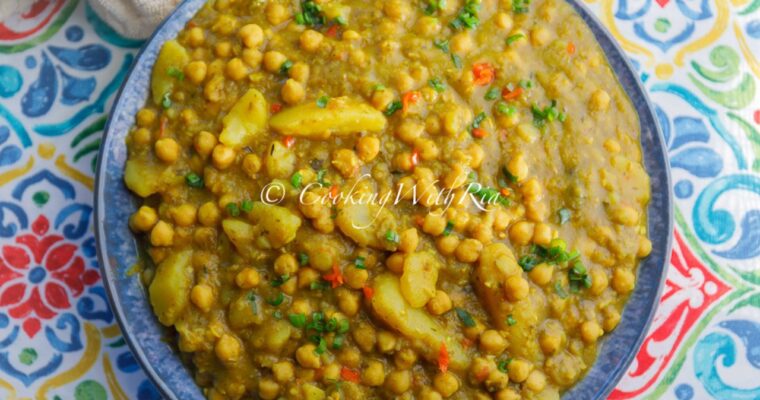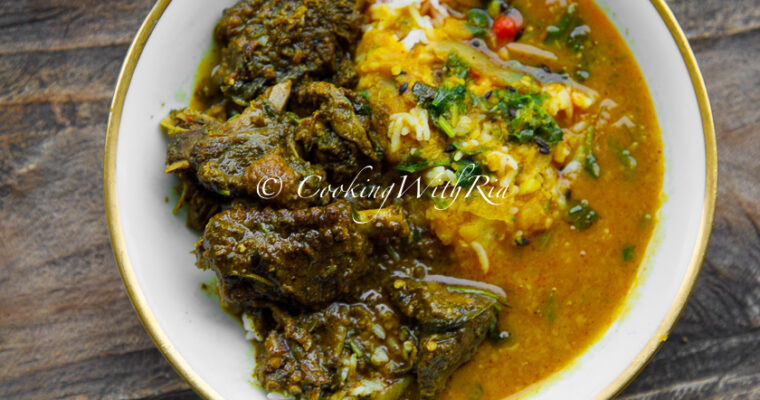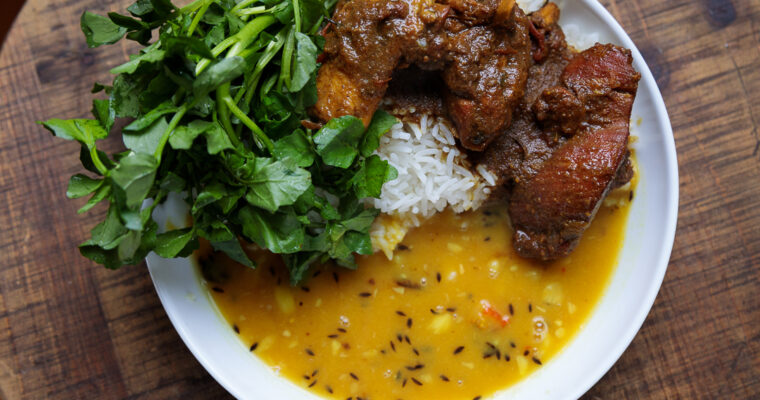
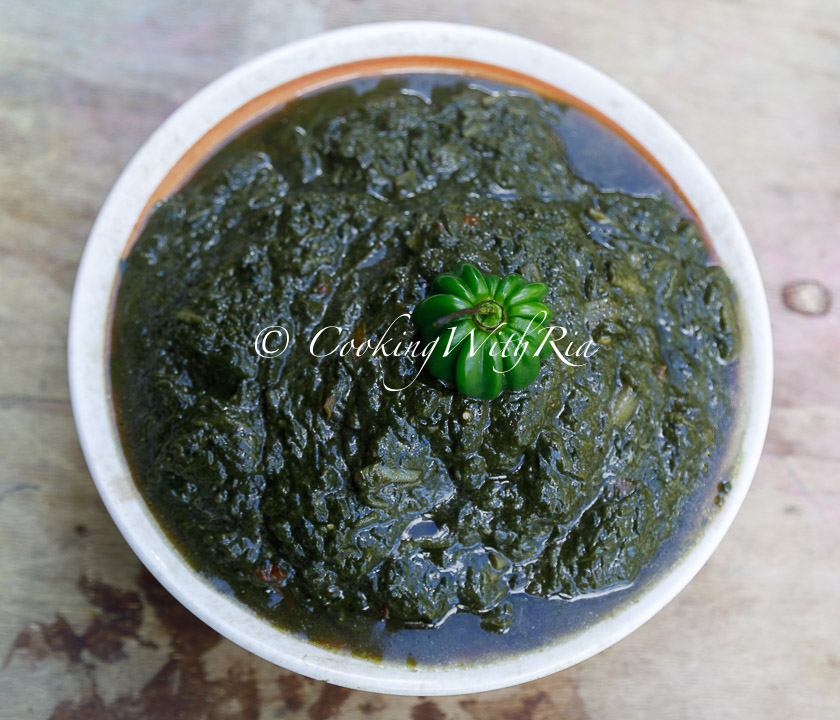
Dasheen Bush Bhagi is a traditional Trinidadian dish made with tender taro leaves, also known as dasheen bush, cooked down with onion, garlic, hot pepper, tomatoes, oil, and salt until soft, flavorful, and fully tender. It can be prepared slightly chunky or swizzled smooth into a silky, callaloo-style consistency. In Trinidad, this dish is eaten with dhal and rice, sada roti, or paratha roti, and it also holds an important place in vegetarian meals served during Hindu pooja on a sohari leaf.
Table of Contents
What Is Dasheen Bush Bhagi?

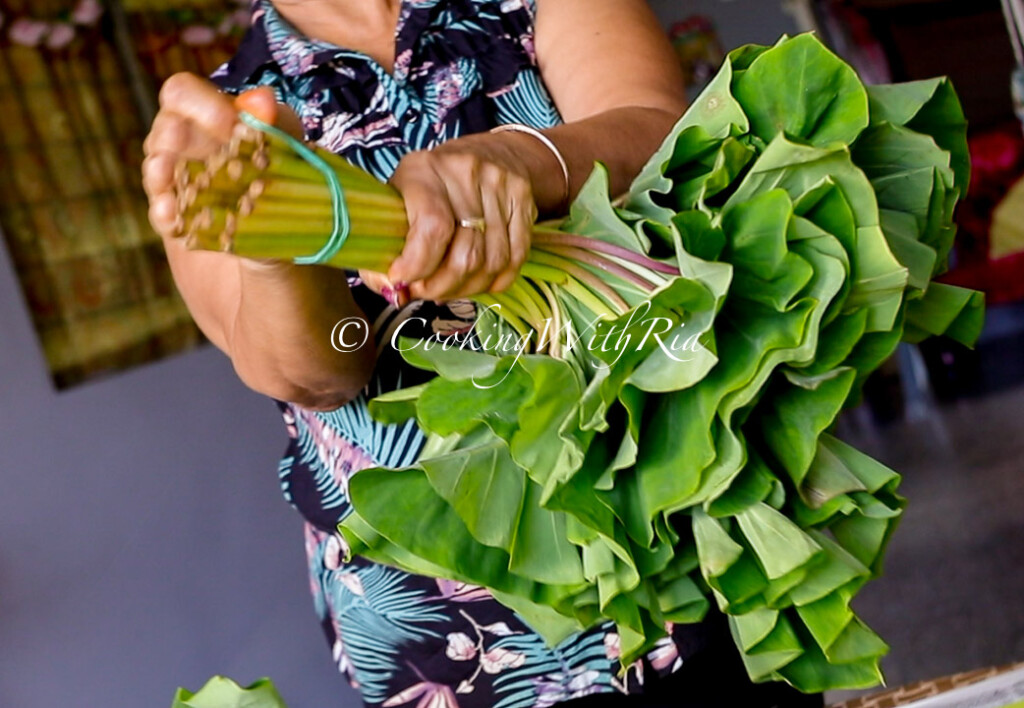
Dasheen bush bhagi/bhaji/bhagee is a traditional Trinidadian dish made from the leaves of the taro plant, cooked down until soft, flavorful, and fully tender. In Trinidad, we don’t call it taro leaves—we call it dasheen bush, something many of us grew up seeing in backyards, along drains, or near water where it thrives.
The leaves are large and heart-shaped, deep green on the surface with a lighter underside, and when handled and cooked properly, they break down into a soft, cohesive dish. While the dasheen root is also widely used, the leaves are what give us bhagi and callaloo—two of the most important green dishes in Trinidad cooking.
Dasheen bush has been used for generations across many parts of the world, but in Trinidad, it has its own identity. It is not treated as just another leafy green. It is something familiar, practical, and deeply tied to everyday cooking as well as special occasions like pooja.
When cooked properly, dasheen bush becomes soft and tender, with a mild, earthy flavor that takes on the seasonings around it. It doesn’t overpower the plate—it supports it, bringing balance and depth to whatever it is served with.
Why You Will Love This Recipe
This is one of those dishes that looks simple but carries real knowledge.
It is:
- Deeply rooted in Trinidad cooking
- Made with simple, accessible ingredients
- Flexible in texture—chunky or smooth
- Naturally vegan, dairy-free, and gluten-free
- A true example of practical, home-style Caribbean cooking
Ingredients You Will Need
The flavor of dasheen bush bhagi develops slowly as it cooks. At the beginning, the leaves are firm and slightly rough, but as they soften, they take on the seasonings around them—garlic, onion, pepper, and tomatoes—creating a balanced, well-rounded dish. The final result is not sharp or overpowering. Instead, it is subtle and grounding, with a mild depth that makes it easy to pair with stronger dishes like dhal, chutneys, and talkari. Its strength comes from proper preparation, enough cooking time, and allowing the natural flavor of the dasheen bush to come through.
- Dasheen bush (taro leaves), 1 bundle (about 1 lb) – The main ingredient. The leaves must be pinched at the tips, sliced very thinly, washed thoroughly, and cooked properly. When prepared this way, they soften and melt into a cohesive texture, forming the earthy base of the dish.
- Dasheen bush stems – Separated from the leaves and either peeled and cut small or cut into about 1-inch pieces without peeling. The stems add body and a slight bite, giving the bhagi structure as it cooks down.
- Onion, chopped – Builds the foundation of flavor. As it cooks and the edges begin to brown, it adds a subtle sweetness that balances the earthiness of the bhagi.
- Garlic, peeled and finely chopped or minced – Essential. Garlic gives depth and a rich savory note that develops as the bhagi cooks.
- Hot pepper, or pimento pepper (Caribbean seasoning pepper) to taste – Adds warmth and a gentle heat(pimento pepper is not hot). It should not overpower the dish but sit quietly in the background, lifting the overall flavor.
- Tomatoes, chopped – Added after the aromatics. They bring slight acidity and moisture, helping to balance the dish and support the breakdown of the leaves.
- Oil – Used to sauté the aromatics at the start. This step is important for building flavor before the bhagi is added.
- Salt, to taste – Enhances the natural flavor of the leaves and ties all the ingredients together.
- Water – Used only if you want a smoother, softer, callaloo-style consistency. It helps loosen the bhagi and allows it to be swizzled into a silky texture.
How to Clean / Prep Dasheen Bush
- Proper preparation is essential when cooking dasheen bush.
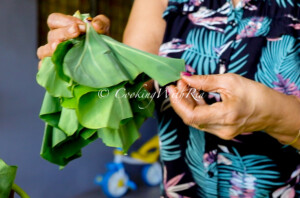
- Start by pinching or cutting off the tips of the leaves. This helps remove the part that can cause irritation in the mouth if not handled properly.
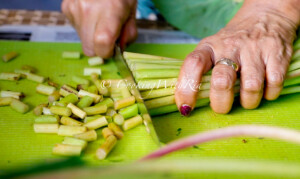
- Separate the leaves from the stems. The stems can be peeled and cut into small pieces, or simply cut into about 1-inch pieces without peeling, depending on your preference.
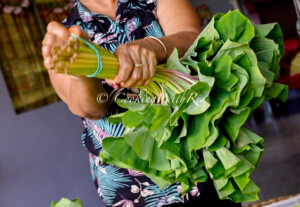
- Bundle the leaves together and slice them very thinly. The thinner they are sliced, the easier they will cook down and melt into the dish.
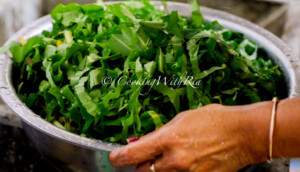
- Wash the sliced bhagi thoroughly several times until there is no dirt or sediment settling at the bottom. This step is important, especially since dasheen bush is often grown in damp soil.
- Dasheen bush must always be cooked properly. It is not a dish to rush. When cooked thoroughly, the leaves soften completely and become safe, smooth, and enjoyable to eat.
How to Make Dasheen Bush Bhagi
- Place a pot over high heat and add oil.
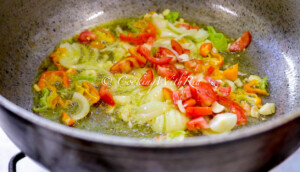
- Add the chopped onion, hot pepper, and garlic. Cook until the edges of the onion begin to brown. This step builds the base flavor of the dish.
- Add the chopped tomatoes and sauté for 1 to 2 minutes to release their juices and slightly soften them.
- Add the prepared dasheen bush along with salt and mix well to combine everything.
- Cover the pot and allow the bhagi to cook for about 20 to 30 minutes, stirring every 5 minutes to ensure it does not stick.
- As it cooks, the leaves will begin to soften and break down.
Two Ways to Finish Dasheen Bush Bhagi
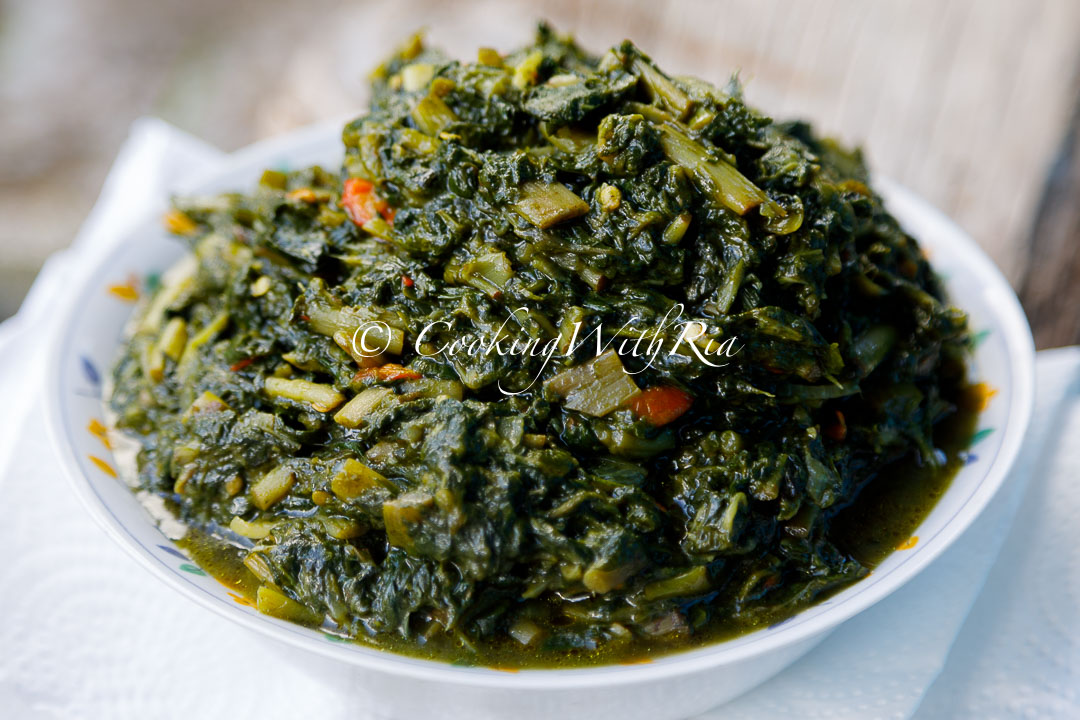
- Chunky Dasheen Bush Bhagi-This version is cooked in its own natural liquid. The leaves soften and break down, but some texture remains. It should still be fully cooked and tender.
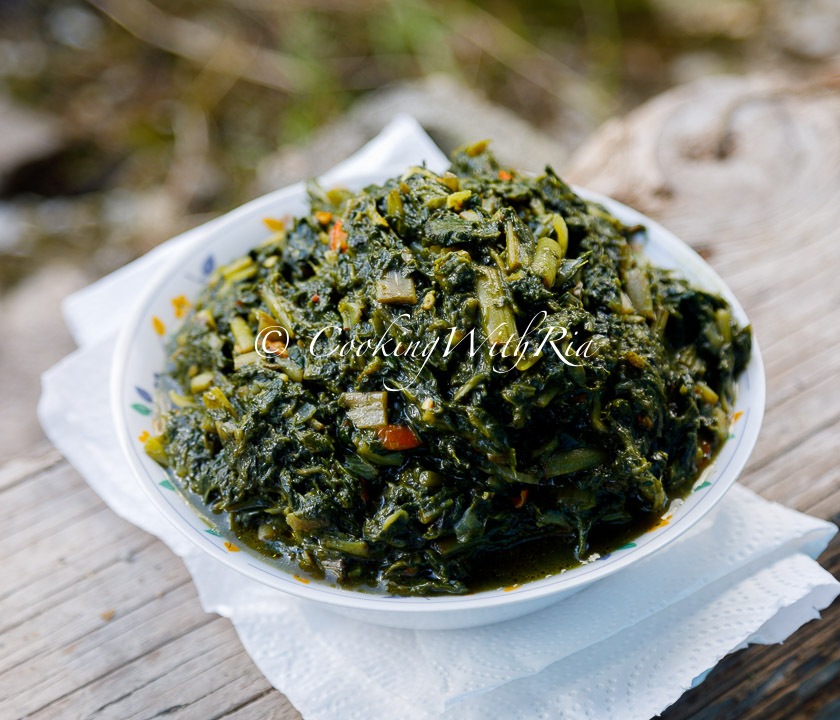
- Smooth Callaloo-Style Dasheen Bush Bhagi – For a softer, smoother version, add 1 to 2 cups of water toward the end of cooking. Use a swizzle stick, the same way you would when making Trinidad callaloo, and swizzle until the bhagi becomes smooth and silky.
How this Bhagi Is Served in Trinidad
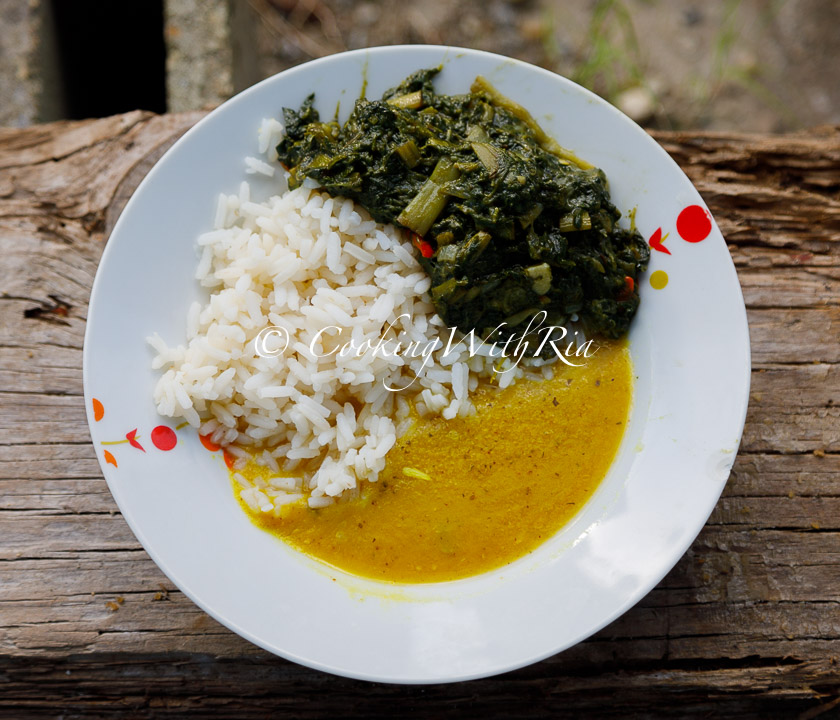
Dasheen bush bhagi is usually served with:
- Dhal and rice
- Sada roti
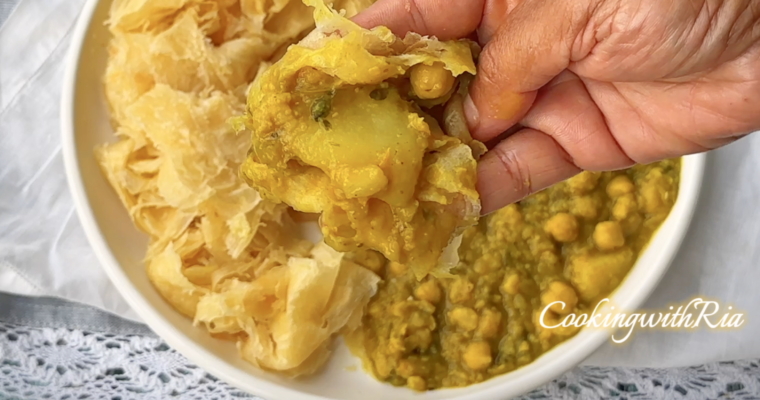
- Paratha roti, also called buss up shut
- Other vegetarian dishes during pooja or prayers
It is everyday food, but it is also special occasion food.
Dasheen Bush Bhagi Served at a Pooja / Prayers / Religious Function
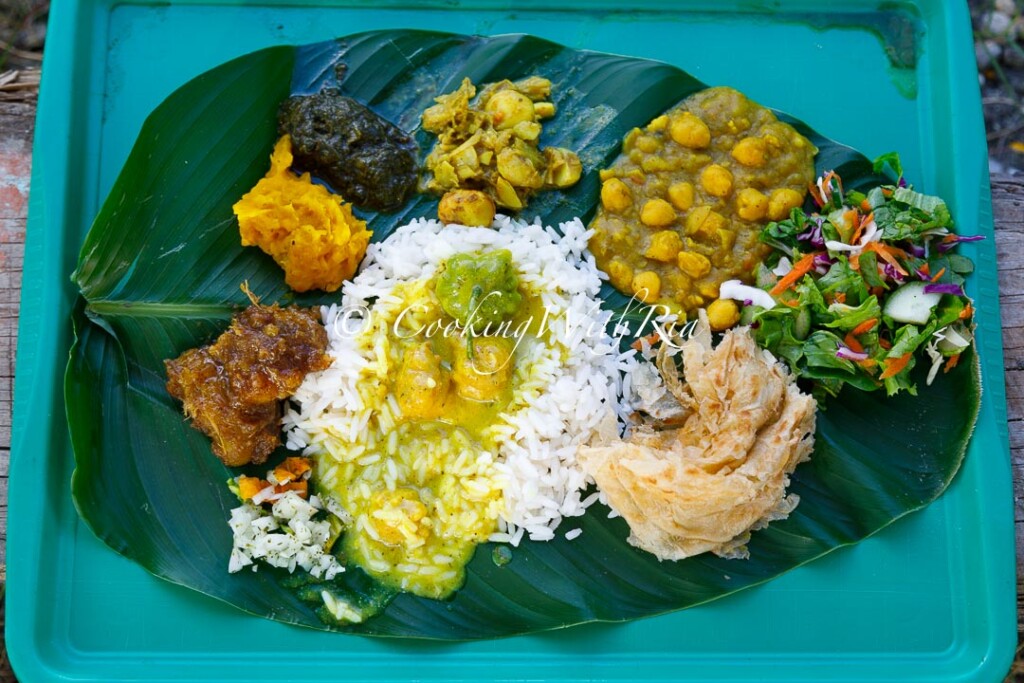
During a Hindu pooja in Trinidad, dasheen bush bhagi is served on a sohari leaf, a natural leaf used as a plate for serving vegetarian meals.
A traditional pooja plate may include:
- Dasheen bush bhagi or bhagi with peas and caraille(click for recipe)
- Curry channa and aloo
- Carhee or kurhi / kurhee with rice
- Mango or pommecythere talkari (as seen above)
- Pumpkin talkari
- Saheena with mango or tamarind chutney
- Trinidad salad
- Paratha – buss up shot
Each dish is placed carefully onto the leaf, creating a meal that is balanced, nourishing, and meaningful. The bhagi brings a soft, earthy element that complements the sharper chutneys, the curries, and the rice.
Cultural Importance
Dasheen bush grows naturally in many parts of Trinidad, especially in backyards, along waterways, and in damp soil. It has long been part of everyday cooking, especially in homes that relied on what was readily available.
This dish is deeply connected to the history of Indians from India who came to Trinidad as indentured laborers. They carried with them knowledge of cooking greens—simple, practical dishes that could be made from what was available around them. In Trinidad, that knowledge adapted to the land, and dasheen bush became one of those greens.
Bhagi was not created as a luxury dish. It was sustenance. It provided nourishment for people working long, physically demanding days in the sugar cane fields. The diet was largely vegetarian, built around foods that were filling, affordable, and sustaining.
A typical day of eating might include:
- Breakfast with sada roti
- Lunch with dhal and rice
- Dinner again with roti, sometimes with a side of kuchela or amchar
Dasheen bush bhagi fit naturally into this way of eating. It was easy to prepare, deeply nourishing, and made from something that grew close to home.
Over time, it became more than just survival food. It became part of tradition—something cooked in everyday meals and also served during pooja, where vegetarian dishes are prepared with care and intention.
Even today, many still see dasheen bush bhagi as a longevity food. It represents not only nourishment, but resilience—the ability to take what is available and turn it into something sustaining, meaningful, and lasting.
Other Ways to Cook Dasheen Bush (taro leaves)
Dasheen bush is used in several Trinidad and Caribbean dishes, including:
- Trinidad callaloo
- Bhagi rice
- Kitchri / kitcherie / khichdi-style dishes
- Saheena
- Bhagi with pigeon peas and ochro –optional caraille
On this blog, you can also find recipes for Jamaican callaloo, frozen chopped spinach, chorai bhagi, and other ways to enjoy greens in Caribbean cooking.
Important Cooking Notes
- Dasheen bush must be cooked thoroughly.
- Slice the leaves very thinly so they soften and melt more easily.
- Add water only if you want a smoother texture.
- Stir often so the bhagi does not stick to the pot.
- The stems may be peeled or left unpeeled, depending on preference.
- If you are sensitive to taro leaves, handle carefully and make sure the dish is fully cooked before serving.
Dietary Notes
Dasheen bush bhagi is naturally:
- Vegan
- Vegetarian
- Dairy-free
- Gluten-free
- Meat-free
It is a clean, wholesome dish made with simple ingredients—fresh greens, aromatics, and basic pantry staples—prepared in a way that allows the natural flavors to come through.
Storage and Reheating
Store leftover dasheen bush bhagi in an airtight container in the refrigerator for 3 to 4 days. Reheat gently on the stovetop over low heat, adding a small splash of water if needed to loosen the texture. It can also be frozen for up to 2 months.
Frequently Asked Questions
Why does dasheen bush itch the mouth if it is not cooked properly?
Dasheen bush, or taro leaves, contains calcium oxalate crystals. These crystals can irritate the mouth and throat if the leaves are not prepared and cooked properly. That is why the leaf tips are removed, the leaves are sliced thin, and the bhagi is cooked thoroughly until soft.
Do I have to remove the tips of the leaves?
In Trinidad cooking, the tips are often pinched or cut off because they are believed to be one of the parts that can cause itching. This step is part of the traditional preparation and is worth doing.
Do I peel the dasheen bush stems?
Some people peel the stems and cut them into small pieces. Others cut the stems into 1-inch pieces without peeling. Both methods are used. The important thing is to cook the stems until tender.
Should dasheen bush bhagi be smooth or chunky?
Both are correct. Some families prefer it chunky, with a little texture. Others add water and swizzle it until smooth like callaloo. This recipe gives you both options.
Can I cook dasheen bush bhagi without adding water?
Yes. You can cook it in its own natural liquid for a thicker, chunkier bhagi. Add water only if you want it softer, looser, and more like callaloo.
How do I know when dasheen bush bhagi is fully cooked?
The leaves should be soft, tender, and no longer raw-tasting. They should lose their rough texture and begin to melt into the dish. If the bhagi still feels tough or causes irritation, it needs more cooking.
What do you eat with dasheen bush bhagi?
In Trinidad, dasheen bush bhagi is often eaten with dhal and rice, sada roti, paratha roti, or as part of a vegetarian pooja meal served on a sohari or sarhi leaf.
Recipe Card: Dasheen Bush Bhagi
Equipment
- large pot
- knife
- Cutting board
- Large bowl for washing
- Swizzle stick, optional
Ingredients
- 1 bundle dasheen bush / taro leaves stem and leaves, about 1 pound, peeled and chopped or cut into 1-inch pieces
- 4 tbsp Oil for cooking
- 1 onion chopped
- hot pepper and/or pimento pepper to taste
- 6 cloves garlic peeled and finely chopped or minced
- tomatoes chopped
- Salt to taste
- 1 to 2 cups water optional, for a smoother callaloo-style texture
Instructions
- Prep the dasheen bush: Pinch or cut off the tips of the leaves to help remove the part that can cause itching in the mouth. Separate the leaves from the stems.
- Cut the stems: Peel the stems if desired, then cut them into small pieces, or cut them into about 1-inch pieces without peeling.
- Slice the leaves: Bundle the leaves together and slice them very thinly. The thinner the leaves are sliced, the easier they will cook down and melt.
- Wash the bhagi: Rinse the sliced leaves and stems several times until there is no dirt or sediment at the bottom of the bowl or pot.
- Heat the oil: Place a pot over high heat and add oil.
- Cook the onion, pepper, pimento pepper, if using, and garlic: Add the chopped onion, hot pepper, and minced garlic. Cook until the edges of the onion begin to brown.
- Add the tomatoes: Stir in the chopped tomatoes and sauté for 1 to 2 minutes.
- Add the bhagi: Add the prepared dasheen bush and salt. Mix well so the leaves are coated with the aromatics.
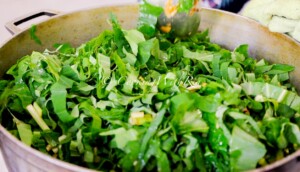
- Cover and steam: Cover the pot and cook for 20 to 30 minutes, stirring every 5 minutes to prevent sticking.
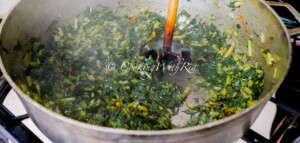
- Finish chunky or smooth: For chunky bhagi, cook until the leaves are soft and somewhat melted. For smooth bhagi, add 1 to 2 cups water and use a swizzle stick to break it down until it reaches a smooth, callaloo-style consistency.
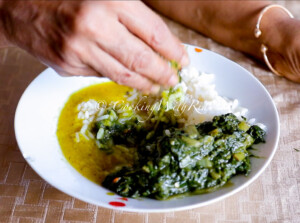
- Taste and adjust: Taste at the end and add more salt if needed.
Video
Notes
- Dasheen bush must be cooked thoroughly.
- Slice the leaves very thinly so they soften and melt more easily.
- Add water only if you want a smoother texture.
- Stir often so the bhagi does not stick to the pot.
- The stems may be peeled or left unpeeled, depending on preference.
- If you are sensitive to taro leaves, handle carefully and make sure the dish is fully cooked before serving.
Nutrition
Did You Make This Recipe?
If you tried this recipe, please leave a ⭐⭐⭐⭐⭐ rating on the recipe card — ratings help more readers discover my recipes and support the work I put into creating them.
You can also leave a review or any questions or recipe requests in the comments below. I love hearing from you and I’m always happy to help!
And when you share your photos, don’t forget to tag me @cookingwithria on Instagram or @trinicookingwithria on Facebook so I can celebrate your beautiful creations!
Questions, Concerns, or Recipe Requests—Write Me!
If you have any questions, or if there’s a dish you’ve been searching for and would love to see me make—please don’t hesitate to leave a comment below or reach out via email at [email protected]. I’d love to hear from you! Many of my favorite posts are inspired by your requests and kitchen stories, so don’t be shy.
Subscribe & Get My Free Green Seasoning Booklet
Join my email list and receive my free Green Seasoning booklet, plus new recipes, cooking tips, and updates straight to your inbox.Recent Posts
- Caribbean Stewed Cannellini Beans
- Easy Spicy Chow Mein Recipe for Two (Ready in 20 Minutes)
- How to Cook Pumpkin with Mixed Seafood Recipe (Trinidad Pumpkin Talkarie)
- Trinidad Salad – How I Make it at Home
- How to Build a Caribbean Pantry (With Recipes)