
WHAT IS TRINIDAD DOUBLES?
Trinidad doubles is one of the most popular Caribbean street foods, made with two pieces of fried dough (bara), filled with tender, well-seasoned chickpeas (channa), and topped with condiments like tamarind sauce, pepper sauce, and chutneys.
Table of Contents
KEY ELEMENTS OF TRINIDAD DOUBLES
- Soft, pillowy bara with a light chew
- Tender, slightly saucy channa that settles into the bara
- A balance of condiments — sweet, spicy, tangy, and fresh
- Made to be eaten hot, fresh, and by hand
- Naturally vegan, built from simple ingredients
STOP — You’ve Found the Best Trinidad Doubles Recipe
You’ve found the most detailed, authentic Trinidad doubles recipe online — built from experience, testing, and a deep understanding of what makes doubles what it is.
If you’re here because you searched “What is doubles?” or “How to make doubles?” — you’re in the right place.
By the time you finish reading, you’ll understand why this humble street food holds such a strong place in Trinidad. You may even find yourself craving it. And when you do, the full recipe and video are right here to guide you through making it at home.
Doubles is, without question, one of the most popular, affordable, and satisfying street foods in Trinidad. Often called a snack, it is far more than that — for many, it’s a full meal. It’s not unusual to have two… three… even five in one standing, right there by the vendor.
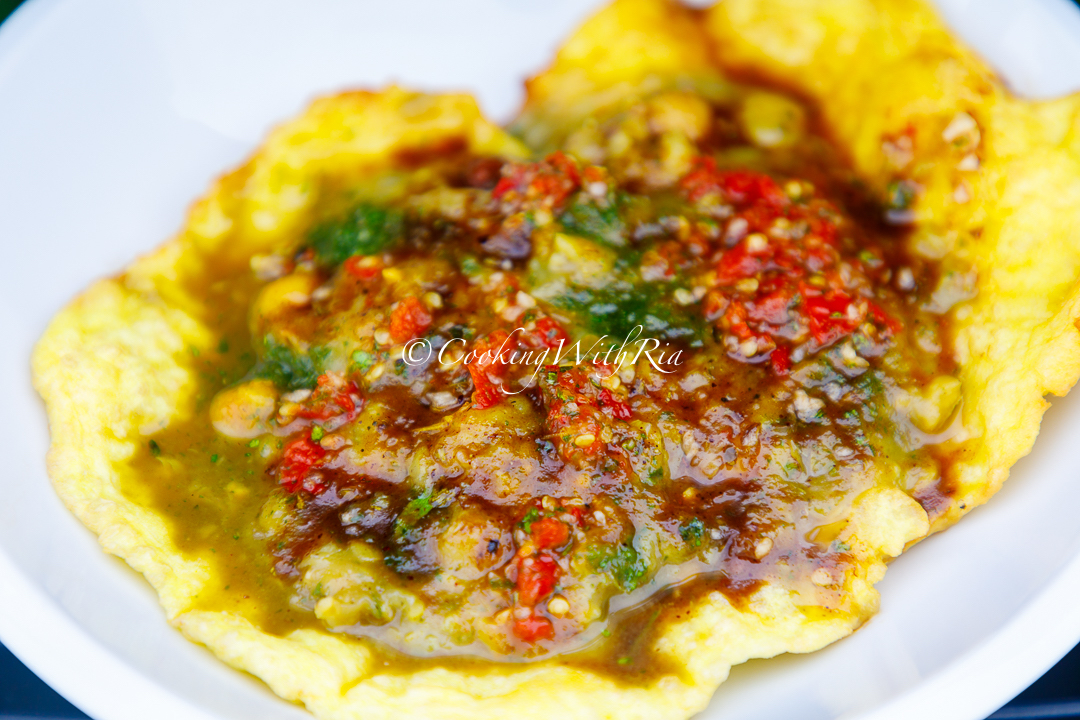
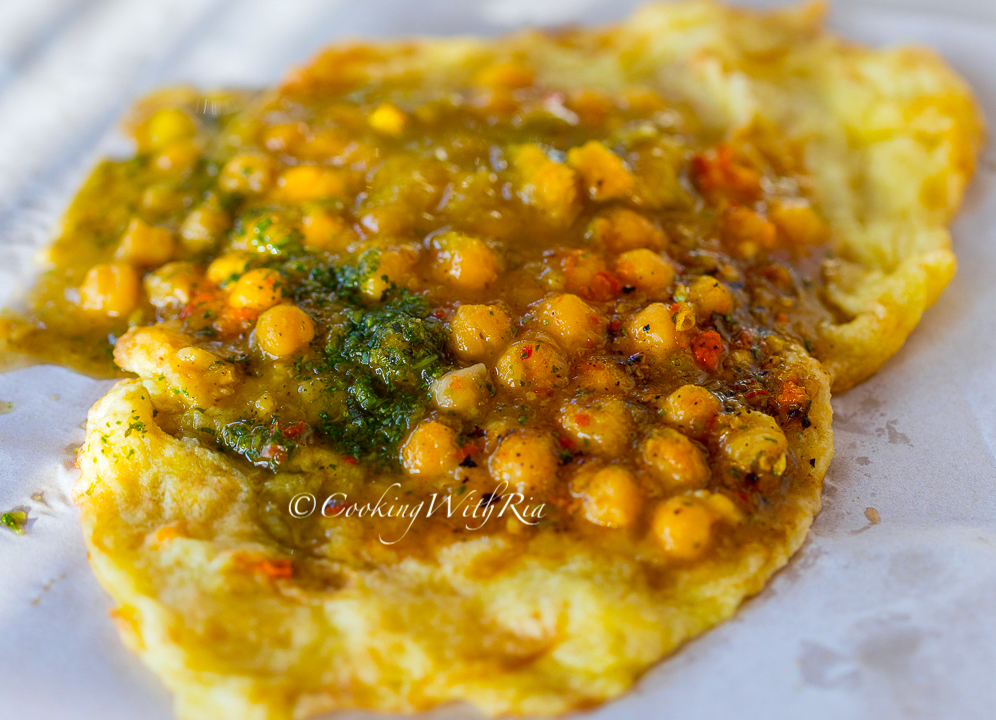
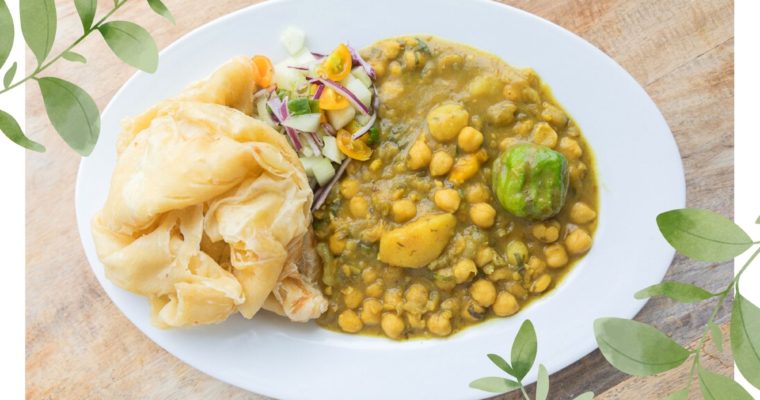
At its heart, doubles is a soft, slightly messy, deeply satisfying combination of two pillowy baras — fried dough that can be loosely understood as a type of flatbread — filled with tender, well-seasoned channa.
It’s then finished with condiments like tamarind sauce, pepper sauce, and chutneys, creating that unmistakable balance of sweet, spicy, and tangy.
Simple ingredients. Real flavor. And once you have it, you understand.
IS DOUBLES VEGAN OR VEGETARIAN?
Yes — traditional Trinidad doubles is completely vegan.
It is made with:
- Bara (flour, water, yeast, turmeric)
- Channa (chickpeas, herbs, spices)
- Plant-based condiments
No meat, dairy, or animal products are required.
While some variations outside of Trinidad may include meat or different fillings, authentic doubles is a naturally vegan street food that has been enjoyed this way for generations.

WHY DOUBLES IS SO POPULAR
Trinidad doubles is more than just street food.
It’s affordable, filling, and deeply rooted in culture. It reflects the influence of Indian heritage, Caribbean ingredients, and generations of refinement.
It’s eaten for breakfast, lunch, or any time in between — often standing, often among others, always fresh.
And once you have it, it stays with you.
HOW TO MAKE DOUBLES BARA (AND WHAT IT SHOULD BE LIKE)
Doubles bara is made from a soft, slightly sticky dough that is gently mixed, rested, and then fried until light and golden.
The dough is combined with flour, yeast, turmeric, and a touch of sugar, then left to rest until soft and airy. This resting time is key — it allows the bara to develop that signature lightness and stretch.
Once divided and flattened thin, the dough is quickly fried in hot oil, where it puffs almost instantly.
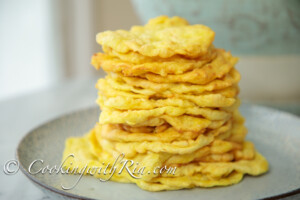
Proper doubles bara should be soft, pliable, and slightly chewy — never dense, stiff, or overly greasy. When stacked after frying, the bara gently steams itself, creating that tender texture that makes doubles what it is.
👉 Check the recipe card below for full ingredients and step-by-step instructions.
HOW TO MAKE DOUBLES CHANNA (AND WHAT IT SHOULD BE LIKE)
Doubles channa starts with properly soaked chickpeas, which are then cooked until tender and soft.
As they simmer, the chickpeas are seasoned with salt, a small amount of baking soda to help them soften, and then finished with fresh bandhania, garlic, turmeric, and optional hot pepper. From there, the channa is stirred continuously, allowing some of the chickpeas to break down naturally into the sauce.
This step is important.
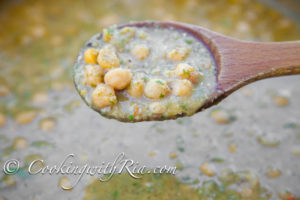
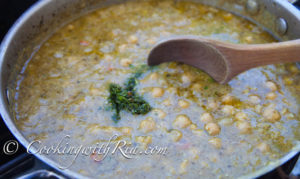
Proper doubles channa should not be thick or chunky. It should be slightly loose, with soft chickpeas that begin to break down and blend into the sauce. The texture should allow it to settle into the bara, not sit heavily on top of it.
And while many people refer to it as “curry chickpeas,” traditional doubles channa is not built like a curry. It is more lightly seasoned, allowing the flavors of the bara and condiments to come through without being overpowered.
The result is tender, saucy, and balanced — exactly what doubles needs.
👉 Check the recipe card below for full ingredients and step-by-step instructions.
LET’S TALK ABOUT DOUBLES CONDIMENTS
Doubles (bara and channa) is really a vessel for the mouth-watering condiments and bold Caribbean flavors that bring it to life.
Condiments range from a choice of (Top left to right) boiled mango chutney, cucumber chutney (grated cucumber),
Bottom Left to right: Bandhania Chutney, pepper sauce, roasted pepper sauce.
Not shown: tamarind chutney, kuchela, coconut chutney.
Bandhania Chutney is a simple blend of fresh bandhania (culantro), garlic, hot pepper, and salt — sharp, fresh, and essential.
Cucumber Chutney is made by grating cucumber with the skin on, then seasoning it with salt, ground bandhania, pepper, and garlic. It adds a cool, refreshing contrast.
Pepper Sauce is a blend of hot peppers — habanero, Scotch bonnet, or cherry pepper — with bandhania, garlic, sometimes mustard, and salt. The roasted version deepens the flavor, as the peppers are charred before blending.
Kuchela is a pickled green mango seasoned with amchar masala — bold, pungent, and unmistakable. (Recipe coming soon.)
Coconut Chutney is made from roasted dried coconut, grated (including the charred bits), then seasoned with bandhania, garlic, hot pepper, and salt — smoky, savory, and rich.
Together, these condiments are what make doubles what it is. The bara and channa hold everything, but it’s the layering of flavors — sweet, spicy, tangy, and fresh — that defines the experience.
I have also heard talk of “triples” — using three baras instead of two. Fillings have evolved as well, with variations like curry chicken, curry shrimp, or curry goat. I’ve never come across these myself, so I can’t say how common they are — but like most street food, doubles continues to evolve in its own way.
WHAT IS DOUBLES TABANCA?
Doubles is a joyful culmination of sweet, savory, tangy, and spicy — all in one mouthful. A true gastronomical delight that is both addictive and, in its own way, afflicting.
Afflicting, because when you’ve gone too long without it, you begin to feel it — that quiet longing, that pull. We call it doubles tabanca.
And in Trinidad, tabanca means unrequited love.
That feeling of wanting something you can’t quite have… until you finally do.
WHO INVENTED DOUBLES?

Leaving the family feud aside, it is widely accepted that in 1936, Emamool Deen and his wife, Rasulan Ali, were facing financial hardship in southern Trinidad, in the town of Princes Town.
They had sold their only goat, but were determined to move forward despite difficult circumstances — shaped, in many ways, by generations of colonial struggle and limited opportunity.
With the small money earned from that sale, Rasulan began preparing a simple, nourishing dish: chickpeas (kabuli channa), seasoned and served on fried dough called bara.
At the time, the dish reflected their Indo-Trinidadian roots — influenced by foods brought by indentured laborers from India in the 1800s. Early versions are said to have used split peas or channa served on a single bara, inspired by dishes like chole and fried breads.
Over time, Rasulan refined it. The chickpeas were no longer just fried — they were slowly braised with turmeric, geera, and other spices, developing the rich, layered flavor we know today. Chutneys were added — tamarind, pepper, and bandhania — transforming it into something more complex and deeply satisfying.
The bara evolved as well. What may have once been made with different flours shifted to a soft, elastic dough using wheat flour (maida), creating the pillowy texture that defines doubles today.
And then came the moment that gave doubles its name.
It is said that a customer once asked for “double” — two baras instead of one. That simple request stuck, and from then on, the dish became known as doubles.
Emamool took this creation to the streets, selling it in paper wrappers to workers and passersby. Affordable, filling, and full of flavor, it quickly became a staple.
What began as survival — a way to make something from very little — grew into one of Trinidad and Tobago’s most iconic and beloved foods.
Read more about the history & origins of doubles here. Read more about the history & origins of doubles here.
WHAT MAKES A GOOD DOUBLES?
For me, it starts with the bara.
The texture and thickness have to be just right — soft, with a slight chew, never stiff or greasy. And that signature golden color? That comes from a touch of turmeric, but it should never overpower the flavor.
The channa must be tender and well-seasoned — not dry, not watery — but rich, saucy, and able to soak into the bara without breaking it apart.
And then come the condiments. They are not optional. They are what take doubles from good to unforgettable — layering sweet, spicy, tangy, and fresh in every bite, leaving you reaching for another… or three.
I once asked my sister what she thinks makes a good doubles. She said, “It melts in your mouth, not in your hand — like M&M’s.”
Alrighty then… and honestly, she’s not wrong.
THE DOUBLES EXPERIENCE
Doubles is not just something you eat — it’s something you find yourself in.
You step up to the vendor and call out your order the way everyone does — slight, heavy, or everything. Slight means just a touch of pepper. Heavy means you want to feel it. Everything means all the condiments, layered just right.
The doubles man or woman moves quickly, almost without thinking, shaping each one with a kind of practiced ease that comes from doing it over and over again. There’s very little talking. Just the work. Bara opened, channa spooned on, condiments added exactly as you called it. The movements are steady, confident — almost automatic — unless they pause briefly to clarify your order.
In a matter of moments, it’s ready.
If you’re eating there, it’s handed to you open, resting in paper. You step aside, standing among others doing the same, leaning forward slightly, folding it with your fingers, and taking that first bite while it’s still hot.
You eat. One becomes two. Sometimes more — until you’re full.
Then, almost as part of the routine, you step back to pay.
If it’s to go, it’s wrapped carefully — first in parchment paper, then tucked into a brown paper bag.
And once you’ve had it like that, standing there, eating it fresh — you understand.
HOW TO EAT DOUBLES
There is a way to eat doubles — and once you get the feel for it, it changes everything.
You hold it in one hand, still warm in the paper, and instinctively lean forward just a little, feet planted. With your fingers, you fold the top bara and scoop some of the channa, gently pressing it together so everything stays in place.
Then you bring it up and take a bite — maybe two, maybe three.
It won’t be neat. The channa will drip, your fingers coated in it — that’s part of it.
What falls is caught by the second bara underneath, which becomes its own bite, usually finished in a few mouthfuls.
Doubles is meant to be eaten fresh, standing, by hand, without overthinking it — just you and that moment.
AUTHENTIC DOUBLES VS ADAPTATIONS
As doubles has gained popularity around the world, different versions have emerged — especially in places like New York.
Traditional Trinidad doubles is:
- Light, soft, and slightly chewy bara
- Saucy, tender channa (not thick or curried)
- Balanced with condiments
- Completely meat-free
Adapted versions may include:
- Thick or curry-style chickpeas
- Added meats like chicken, shrimp, or goat
- Heavier assembly
These variations reflect creativity and adaptation, but they are not always representative of the original dish.
Understanding this distinction helps preserve what makes doubles truly special.
WHY GETTING DOUBLES RIGHT MATTERS
As doubles continues to gain attention beyond Trinidad and Tobago, it’s easy for small changes to shift what it really is.
Thicker channa, heavy curry flavors, added fillings, or a different structure may seem like minor adjustments, but they change the balance that defines doubles. The softness of the bara, the slightly saucy channa, and the layering of condiments all work together in a very specific way.
Getting those details right is what keeps doubles recognizable, not just as food, but as something rooted in place, habit, and experience.
It’s simple — but it’s not accidental.
HOW DID I DEVELOP THIS DOUBLES RECIPE?
I’ve begged people to connect me with their favorite doubles vendor — just for a chance to learn, to observe, to understand their method. But that opportunity never came.
Still, doubles stayed on my mind. I thought about it often. I dreamt about it.
And one day, I walked into my kitchen and decided — I’m going to figure this out.
Because really, there’s no reason I can’t. This is not out of reach.
So I started.
The first attempt was close. The texture of the bara was there, but the color and flavor told me I had gone too far with the turmeric. I stepped away, rested, and came back with a clearer hand.
The second round felt different.
After tasting it, my husband raised his eyebrows and smiled — and for a man of few words, that was all the confirmation I needed.
HOW TO MAKE TRINIDAD DOUBLES?
Doubles is Trinidad’s most popular street food, built on two main components — with condiments bringing everything together: bara (fried dough) and channa (boiled and seasoned chickpeas).
Step 1: Prepare the Bara Dough Knead the dough until smooth, then allow it to rest for at least one hour — or overnight for best results. This rest is what gives the bara its soft, stretchy texture.
Step 2: Cook the Channa Prepare the chickpeas until tender and well-seasoned. If using my pressure cooker method, refer to my Instant Pot Doubles Channa Recipe.
Step 3: Shape and Fry the Bara Divide the dough into small loyahs (balls), flatten them gently, and fry until puffed and golden.
Step 4: Assemble the Doubles Place one bara on a flat surface, spoon on the channa, and layer with condiments — tamarind sauce, pepper sauce, cucumber chutney, mango chutney. Top with a second bara.
Serve immediately. Eat with your hands. And don’t be surprised if one turns into two… or more.
TRINIDAD DOUBLES
Ingredients
Doubles Bara
- 2 cups all purpose flour
- 1/2 teaspoon baking powder preferably aluminum free
- 1 teaspoon salt
- 1 teaspoon instant yeast
- Pinch turmeric 1/4 tsp
- 2 teaspoons sugar
- 1 cup lukewarm water lukewarm, MINUS about 3 tbs
- 1 tablespoon vegetable oil for rubbing on dough
- 2 cups vegetable oil for frying
Doubles Channa Recipe
- 1/2 lb dried chickpeas channa
- 1 teaspoon baking soda divided
- 1 tablespoon minced culantro bandhania
- 1 tablespoon garlic minced (3 cloves)
- 1/8 teaspoon turmeric or up to 1 tsp depending on the brand
- 1 1/2 tsp bandhania finely chopped or minced–about 3 leaves
- 1/2 teaspoon amchar massala or ground roasted cumin, or a combo
- 1-2 teaspoons Himalayan Salt Add to taste
Cucumber Chutney
- 1 cucumber grated
- 1 tsp minced garlic
- hot pepper, minced, to taste
- 1 tsp bandhania minced
- salt to taste
Bandhania Chutney
- 1 bunch bandhania (shado beni or culantro)
- 2 cloves garlic
- hot pepper to taste
- salt to taste
Instructions
Bara Instructions
- In a medium bowl, add flour, baking powder, salt, yeast, turmeric and sugar.
- Add lukewarm water gradually and mix to form a very soft, slightlysticky dough. Do not over knead.
- Rub the dough with oil, cover and set aside to rest 1 hour (minimum) or until doubled(max 6 hrs or overnight). The longer it rests, the softer the bara–6 hours is perfect, but if you are in a hurry, 1 hr can work.
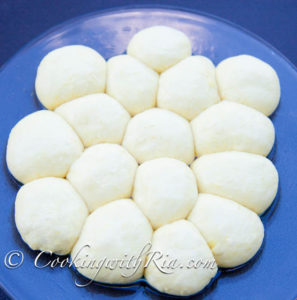
- Divide the dough into 16 balls. Cover and allow it to raise another hour or until doubled.

- Rub oil on a flat surface or plate. Place the dough on the oiled surface and flatten to a 6 inch round(oil hands as well) or almost transparent!! Make to your desired thickness and width–keeping in mind it puffs up as it cooks
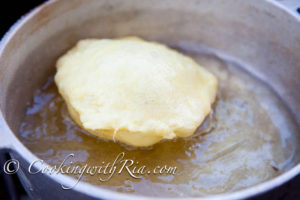
- Meanwhile heat oil in a small pot over medium-high heat. When the oil is very hot, gently place dough in hot oil and fry on each side until cooked and golden brown–takes seconds if the oil is hot enough. Drain on the side of the pot, using the spoon.

- Place the fried dough (bara) in paper towel or clean kitchen towel, stacking them on each other as they are done frying. This will allow them to flatten, steam and give them the soft, chewy texture we all love–just like the doubles man's! Repeat with the remaining dough. Serve hot with Doubles channa(recipe below).
Channa Instructions
- Soak chickpeas overnight with 1/2 teaspoon baking soda. Drain and rinse with several changes of water. Drain again.
- In a pot, add about 6 cups of water and place over medium heat. Add channa, 1 teaspoon of salt, 1/2 teaspoon baking soda and stir to combine. Bring to a boil and scoop out any impurities that rise to the top. Adding more baking soda than this will give it a weird metallic–bakign powder taste.
- When chickpeas are tender, about 1 hour, add minced bandhania, minced garlic and turmeric and mix well. You can also add minced hot pepper.
- Continue to cook for 15-20 minutes or longer if required. During this time, with a wooden spoon, stir, moving back and forth motion to bring it to the right consistency. This will take several minutes for the channa to thicken, so be patient. Doubles will be ready soon!
- Taste for salt and add more if required. To finish, mix in bandhania, amchar massala or ground roasted cumin or a combination. Enjoy with the baras! Can be made ahead–a day before. Can be easily doubled.

Chutney
- To make the cucumber chutney, mix all ingredients to combine. Taste and add salt and black pepper if required.
- To make the bandhania chutney, place all ingredients in a blender or food processor and pulse to combine. Add salt to your preference. You will need to add water if making it in a blender–just enough to combine,
Video
Notes
Nutrition
Did You Love This Recipe?
If you tried this Trinidad Doubles recipe, please leave a ⭐⭐⭐⭐⭐ rating on the recipe card — ratings help more readers discover my recipes and support the work I put into creating them.
You can also leave a review or share how you built your doubles — extra pepper, more tamarind, slight kuchela? I always enjoy hearing how you make it your own.
And when you share your photos, don’t forget to tag me @cookingwithria on Instagram or @trinicookingwithria on Facebook so I can see and celebrate your creations.
Questions, Concerns, or Recipe Requests—Write Me!
If you have any questions, or if there’s a dish you’ve been searching for and would love to see me make — please don’t hesitate to leave a comment below or reach out via email at [email protected].
Doubles takes a little practice — especially the bara — but once you get the feel for it, it becomes second nature. And that’s when the real joy begins.
A Final Note
Doubles is not just something you eat — it’s something you experience.
It’s early mornings, paper in hand, standing by a vendor while the bara is opened and filled right in front of you. It’s the balance of soft, spicy, sweet, and tangy in every bite. It’s simple ingredients, brought together with rhythm and care.
And now, you can bring that same experience into your own kitchen.
📩 Subscribe & Get My Free Green Seasoning Booklet
If you enjoy recipes like this and want more Caribbean-inspired dishes, practical cooking tips, and kitchen guidance, subscribe below and get my free Green Seasoning booklet.
👉 Subscribe & Get My Free Green Seasoning Booklet
❤️ Shop My Kitchen Favorites
These are the trusted tools and pantry staples I use in my own kitchen — the ones that make Caribbean cooking easier and more enjoyable.
❤️ Shop My Kitchen Favorites on Amazon
Other Popular Trini Foods You Will Love
- Aloo pie
- Pholourie
- Dhal Pholourie
- Saheena
- Kachori and raw mango chutney
- Baiganee – Eggplant Fritter
- Shrimp Pies
- Fish Pie
- Bake and Shark
Recent Posts
- Trinidad Salad – How I Make it at Home
- How to Build a Caribbean Pantry
- How to Make Salmon Pie using Canned Salmon | Salmon Stuffed Fried Bake
- Caribbean Sweet Potato Salad Recipe – Surprisingly Delicious
- How to Make Trinidad Dasheen Bush Bhagi
Explore More Trinidad & Caribbean Cooking
Learn more about Trinidad and Caribbean cooking with these guides, recipes, and essential techniques.
➡ What Is Trinidad Food – Understanding the Flavors and Essential Ingredients in Trinidad Cooking — learn how culture and history shape the cuisine.
➡ Top 25 Must-Try Foods in Trinidad and Tobago — discover the most loved dishes across the island.
➡ 10 Essential Ingredients in Trinidad Cooking — understand the herbs, spices, and pantry staples used every day.
➡ Essential Spices in Trinidad Cooking — explore curry powder, geera, amchar masala, and more.
➡ What Are Ground Provisions? A Complete Guide and How to Cook Them— learn how to prepare these important root vegetables.
➡ Curry vs Stew vs Soup — Understanding Trinidad Cooking Styles— see how different methods build flavor in Trinidad cooking.
➡ Browse My Trinidad Recipe Collection — view the full index of authentic Trini dishes.
➡ 52 Weeks of Sunday Lunch— experience how family meals bring everything together.

Loved the recipe for the bara & Channa & Aloo. Turned out perfect. We’re basically Trini now! 🤣❤️🇹🇹
I have never heard of baking soda in any doubles recipe . I tried your recipe and the bara turned red in the pot. It’s the carbon dioxide that is reacting to the turmeric. This was a horrible recipe. Honestly. I tried your other recipe also with just the turmeric and baking soda same reaction. You can’t have yeast, baking powder and baking soda .
My bara recipe does not have baking soda. Please check again. Also, I only have one recipe for doubles. You are mistaking me for someone else. Please review and update the one star. Thanks.
The bara doesn’t but the channa does. I liklve in the UK and I tried using baking soda in the channa and she’s right , the channa turned red. Might just be a difference in the way those ingredients are made in the UK. I’ve had to leave out the baking soda when making the channa
Terry, her bara only calls for baking powder. Nowhere does she say to add baking soda to the bara. My bara came out perfect I have used this recipe several times and my trini husband couldn’t be happier. Thank you Ria!
I have used this recipe many times and it always comes out perfect! I have tweaked the recipe for the Chana with a few more spices just for flavor but all in all, a very simple recipe to follow and the family is always asking for more! Thank you Ria!
Absolutely delicious. We have made your recipe many times always with great success. My question today is, can you substitute gluten free flour in this recipe?
Can you substitute gluten free flour for the bara?
I have never tested it with gluten free flour. Do try and let us know.
The Bara come out stiff and edges slight crunch, what did I do wrong?
Over kneading, not using enough liquid and overfrying can result in stiff bara. It is also important to stack, wrap and cover tightly to allow them to steam and soften. Hope you try again and let me know how it turns out. I am here if you encounter any more issues.
Great recipe! The Bara came out perfectly. I made the channa to my own liking but the condiments in this recipe are great. Try these out at least once, you’ll be surprised at how easy these are! Thanks Ria!
Hi Marley, Thanks for your response, and happy to hear that the components you tried came out great.
I have never made her recipes, however her recipes are perfect. All of them. I grew up cooking this food.
Good job Ria!
Thank you so much! I appreciate your endorsement!
Please can you let me know if I can substitute bandhania for anything? I’m not sure I can buy it near me!
Cilantro or scallion. Bandhania is also known as culantro.
Used this recipe for a dinner with 20 people. Everyone loved it. It was amazing
I tried my hand at doubles once a decade ago. It was so difficult (getting the dough thin enough. flour sticking all over everything), and the result was only passable. I pretty much swore it off until my son begged me to try again and show him. We followed your recipe and method and it came out PERFECT! Delicious, easy, and now it will be in regular rotation. Thank you!
I made doubles for the first time after studying this recipe for a couple weeks—they came out perfect. I was so proud. My Trini grandma gave me the best compliment too!
What I appreciate about Ria is that she explains the importance of method. Cooking is, after all, a science and method is SOOOO important. Thanks for another perfectly executed Trini meal, Ria!!
Thank you so much for sharing this with me! I’m especially happy to hear that your doubles came out perfectly — that is no small accomplishment. Doubles can take a little patience and practice, so you should absolutely feel proud of yourself.
And receiving a compliment from your Trini grandma? That’s the highest praise you could get! I’m sure she was delighted to see you carrying on the tradition.
You’re also exactly right about method. Cooking is very much a science, and understanding why we do things a certain way makes all the difference. Once you understand the method, the recipes become much easier and more enjoyable to make.
Thank you for cooking along with me and for taking the time to write such a thoughtful message. Comments like this truly make my day. Happy cooking, and I hope you continue exploring more Trini recipes in your kitchen!
Warmly,
Ria
I had doubles for the first time in New Orleans last summer and was in heaven. I have since made this recipe 3 times and it is amazing and blows everyone away every time! It is also pretty easy after the first time! I am so glad I found this recipe- I’m making it again this week!