
Salted mackerel with tomatoes is a simple Trinidad-style Caribbean dish where salted mackerel is boiled, cleaned, and simmered with tomatoes, garlic, herbs, and just enough coconut milk to create a light, flavorful sauce. This version is balanced rather than heavy, deeply rooted in home cooking, and especially good with boiled ground provisions, rice, fried bake, or coo-coo / cou cou.
Table of Contents
A Simple Dish, Rooted in Tradition
Salted mackerel with tomatoes is one of those dishes that doesn’t try to do too much. It is simple, steady cooking—salted mackerel, a few fresh ingredients, a little oil, a little liquid, and patience enough to let everything come together.
In my kitchen, this dish is tied to Good Friday and Easter. My Nana made it every Good Friday, usually alongside boiled ground provisions. He did not fuss over it. He knew the fish, knew the seasoning, and knew when the pot was ready. That kind of cooking stays with you.
There was always a quiet understanding around his food. It was never explained directly, but it reflected something older. He was rumored to be part Carib—one of the Indigenous peoples of Trinidad—the way he ate felt connected to that way of life. Boiled ground provisions—cassava, yam, dasheen, green fig—formed the base of many of his meals. Simple preparations. Food that sustained rather than impressed.
The Caribs, among the earliest peoples of the Caribbean, lived closely with the land and sea. Their diet was built on what was available—root vegetables, fruits, and fish—prepared in ways that were practical, direct, and nourishing. When I think about the way my Nana cooked, especially meals like this, it feels like a continuation of that pattern, whether by lineage, habit, or memory carried forward.
That is the spirit of this recipe.
The version I’m sharing here reflects the way I learned it—flavorful, light, and balanced, with just a little coconut milk so it supports the fish rather than overtaking it. The mackerel should still taste like mackerel. The tomatoes soften into the sauce. The herbs round everything out. Nothing feels excessive.
Make It Your Own
At the same time, this is the kind of dish that leaves room for personal taste. If you want it creamier, you can add more coconut milk and make a richer, saucier version. The color will become lighter and the flavor softer, so adjust based on how forward you want the fish to taste.
If you want to lean more Jamaican in style, you can add allspice or pimento berries. The roots are similar and the preparation is close, but each island handles these dishes in its own way.
I also like a bit of hot pepper here. It does not need to be aggressive, but it gives a welcome contrast to the richness of the fish. Still, you can make it as mild or as spicy as you like.
How I Handle the Fish
Salted mackerel is not delicate. It is a firm fish, and even after boiling it generally holds together, especially if the skin is left on. My Nana sometimes cooked the fish whole and simply broke off pieces to serve. That is a beautiful, traditional way to do it, and it can make an impression at the table.
I usually take a different approach. I remove the bones and break the fish into chunks before returning it to the pot. It makes the dish easier to eat and easier to serve, especially for anyone who does not want to pick through bones at the table. It also allows the sauce and seasoning to coat the fish more evenly, so every bite carries more flavor.
If you are wondering whether this works with traditional saltfish, the answer is yes. The result will be softer and more delicate. For something similar, you can also refer to my tomatoes and saltfish recipe on the blog.
How to Cook Salted Mackerel (Step-by-Step Overview)
Learning how to cook salted mackerel starts with one essential step: boiling the fish to remove excess salt. Once that is done, the rest of the process is straightforward.
Salted mackerel with tomatoes is made by boiling the fish, cleaning it, and then cooking it with onion, garlic, tomatoes, herbs, hot pepper, and a small amount of liquid to create a light sauce.
Some versions use more coconut milk and lean richer. This version uses only enough to round out the dish without dulling the flavor of the fish.
It is often served with boiled ground provisions, rice, or coo-coo for a complete meal.
How Long Should You Boil Salted Mackerel?
Boil salted mackerel for 15 to 20 minutes, then taste a small piece to check the salt level. If it is still too salty, drain the water and boil again in fresh water for another 5 to 10 minutes.
The goal is to remove excess salt while keeping the fish firm. Avoid overboiling, as it can soften the texture too much.
Do You Have to Boil Salted Mackerel First?
Yes. Boiling is essential when learning how to cook salted mackerel. The fish is preserved with salt, and boiling removes the excess so the final dish is balanced and enjoyable.
Skipping this step will result in a dish that is too salty to eat.
Is Salted Mackerel the Same as Saltfish?
No. This matters, especially in Caribbean cooking.
In Trinidad and in many Caribbean homes, when we say saltfish, we usually mean salted cod or salted pollock. Salted mackerel is also a salted fish, but it is not the same thing as what we traditionally call saltfish.
Saltfish tends to soften and flake easily after boiling. Salted mackerel is firmer, richer, and holds its shape better. That is one reason this dish has a heartier texture and a more pronounced presence on the plate.
Why You’ll Love This Recipe

- It is simple but deeply satisfying. This is not a complicated dish, yet it delivers a great deal of flavor from a short ingredient list.
- The fish remains the focus. The coconut milk, tomatoes, herbs, and aromatics support the salted mackerel instead of covering it up.
- It is flexible. You can make your salted mackerel rundown lighter or creamier, mild or spicy, chunky or more broken up depending on how you like it.
- It is rooted in tradition. For many of us, dishes like this are tied to family, season, and memory, especially around Good Friday and Easter.
- It reheats beautifully. Salted mackerel rundown is excellent the next day once the flavors have had more time to settle and meld.
Ingredients You Will Need
- Salted mackerel – This is the heart of the dish. It is a firm, salt-cured fish with a rich, savory flavor that holds together well after boiling.
- Extra-virgin olive oil – The oil helps carry the flavor of the aromatics and creates the base for the sauce. You can also use another neutral cooking oil if preferred.
- Onion – Sliced onion adds sweetness and body and gives the dish its first layer of flavor.
- Hot pepper – This brings contrast and brightness against the strong flavor of the fish. Use as much or as little as you like.
- Garlic – Crushed garlic adds depth and aroma and helps round out the tomato base.
- Tomatoes – Chopped tomatoes soften into the pot and help create a light, fresh sauce with a gentle acidity.
- Scallions – Scallions add freshness and a clean savory note toward the end of cooking.
- Thyme leaves – Thyme gives this dish a familiar Caribbean warmth and earthy depth.
- Green seasoning (optional) – A little green seasoning adds another layer of Caribbean flavor and ties the aromatics together nicely.
- Coconut milk (optional) – Use this for a slightly richer, smoother sauce. A small amount keeps the dish balanced. A larger amount will make it creamier and paler.
- Salt and black pepper – Use these only after tasting at the end, since the fish already brings salt to the dish.
Equipment
- Large pot – For boiling the salted mackerel and reducing the saltiness.
- Wide saucepan or sauté pan – A wider pan gives the fish space and makes it easier to combine everything gently without breaking it up too much.
- Knife and cutting board – For prepping the vegetables and cleaning the fish.
- Slotted spoon, spoon, or fork – For lifting the fish from the pot and helping remove bones.
- Bowl or plate – Useful for holding the fish while you clean and separate it into chunks.
Where to Buy Ingredients
Salted mackerel is usually available in Caribbean groceries, Latin American markets, and some Asian supermarkets, often near the salted beef, salted pigtail, or preserved fish section.
Coconut milk, thyme, scallions, and hot pepper are also easy to find in most supermarkets, but if you shop at a Caribbean market you may have more choices that feel closer to home.
If you want to use canned mackerel instead, I recommend using my canned mackerel with tomatoes recipe rather than trying to force canned fish into this exact method.
How to Buy the Best Ingredients
- Choose salted mackerel pieces that look well preserved and meaty rather than overly dry or ragged. If the pieces look especially thin or brittle, they may not give you the best texture after boiling.
- Use ripe tomatoes for the best natural flavor. They should feel full and heavy, not shriveled or pale.
- Choose scallions that are fresh and crisp, with bright green tops and no sliminess.
- If using coconut milk, use fresh for best results —or choose one with a short ingredient list (only one ingredient) and good richness. That will give you better flavor and a cleaner finish.
- Hot pepper is a matter of taste, so buy what you enjoy and adjust the amount to suit your household.
Variations & Ways to Make It Your Own
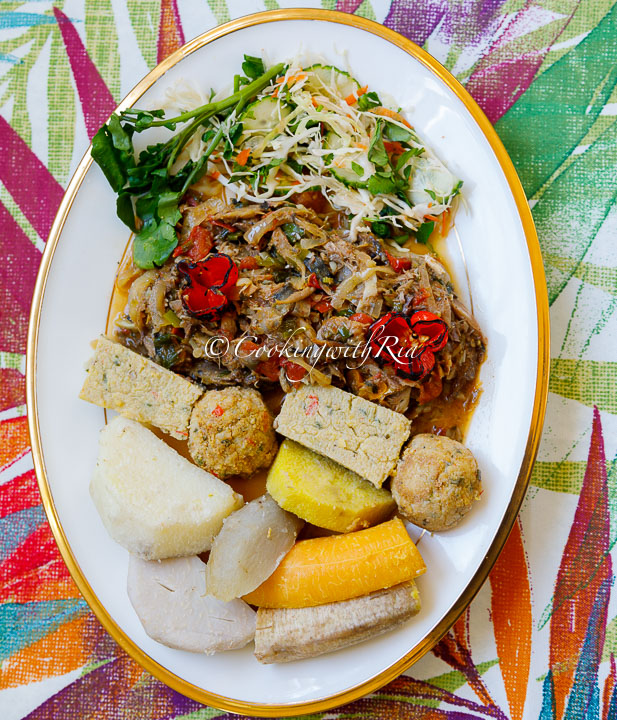
- For a Creamier Sauce: Add more coconut milk if you prefer a richer version; the sauce will be creamier, lighter in color, and a bit softer in flavor, so adjust based on how forward you want the fish to taste.
- For a Jamaican-Style Direction: Add pimento berries (allspice) to bring a deeper, warmer note that leans more toward a Jamaican-style profile while still keeping the base of the dish intact.
- To Adjust the Heat: Use as much or as little hot pepper as you like; a little adds contrast and lifts the dish, but it can easily be made mild.
- Whole vs. Chunked Fish: Cook the fish whole for a more traditional presentation, or break it into chunks beforehand for easier serving and more even seasoning.
- Using Saltfish Instead: Substitute salted cod or pollock for a softer, more delicate result; for a similar approach, refer to my tomatoes and saltfish recipe here.
- Prefer to use Easier Canned Mackerel: See my canned mackerel with tomatoes recipe here.
Working With Salted Mackerel
Salted mackerel is a firm fish, so do not expect it to fall apart the way cod often does.
The skin helps keep it intact. You can leave it on if you like, especially since it helps the fish hold together and contains nutrients, including omega-3s.
When you break the fish apart, keep the pieces a little chunky. They will continue to break up slightly in the pan, and larger pieces make the finished salted mackerel rundown look more substantial and appealing.
If you prefer, you can leave the fish whole and break off pieces at the table. My Nana did that sometimes. I usually break it up ahead of time because it makes for easier eating and allows the seasoning to coat the fish more evenly.
How to Serve Salted Mackerel with Tomatoes

Salted mackerel with tomatoes is especially good with boiled ground provisions such as cassava, sweet potato, yam, dasheen, or green fig. If you’re new to preparing provisions or want a deeper understanding of how we use them in Caribbean cooking, be sure to check out my ground provisions guide on the blog.
It is also delicious with a side of callallo and coo-coo / cou cou, fried bake, coconut pot bake, or served over rice if you want something simple and practical.
Because the fish is flavorful and the sauce is light, the best pairings are usually plain, starchy sides that can catch the sauce and balance the saltiness.
Make Ahead, Storage and Reheating
This is a very good make-ahead dish. In fact, salted mackerel rundown often tastes even better the next day after the flavors have had time to meld.
- Store leftovers in an airtight container in the refrigerator for up to 3 days.
- I do not recommend freezing it, since the texture can change in a way that is not as pleasant once thawed and reheated.
- To reheat, place it in a pan over medium heat with a splash of water if needed. Warm it gently until hot, then taste and adjust the seasoning. A small scatter of fresh scallions or herbs at the end can freshen it nicely.
Health and Nutrition Information
Salted mackerel is rich and satisfying, and it also offers nutritional value. Mackerel is known for its omega-3 fatty acids and its strong, meaty texture makes this dish feel substantial without needing many ingredients.
Because salted mackerel is preserved with salt, the sodium level can be high. That is why boiling and tasting the fish before finishing the dish is so important. Once properly prepared, salted mackerel rundown can be part of a balanced meal, especially when paired with ground provisions or other simple sides.
This recipe is naturally dairy-free and can fit well into many traditional Caribbean meal patterns.
Frequently Asked Questions
No, coconut milk is optional. It softens the dish and creates a light sauce, but you can leave it out for a more direct, fish-forward flavor.
How much coconut milk should I use?
About ½ cup gives a light, balanced sauce. Add more if you prefer a creamier version, keeping in mind the flavor will become softer.
Can I use fresh mackerel instead?
You can, but it will be a different dish. Fresh mackerel is not cured, so the flavor will be lighter and less traditional. Skip the boiling step and season the fish before cooking.
Is this the same as Jamaican mackerel rundown?
Not exactly. Jamaican versions typically use more coconut milk and often include allspice (pimento berries), creating a richer and more pronounced flavor. This Trinidad-style version is lighter and more balanced.
Is salted mackerel the same as saltfish?
No. In Caribbean cooking, “saltfish” usually refers to salted cod or pollock. Salted mackerel is firmer, richer, and holds its shape more during cooking.
Do I need to soak salted mackerel overnight?
Not always. Boiling is usually enough, but soaking overnight can help reduce the salt further if the fish is heavily cured.
Why is my salted mackerel still too salty?
Boil it again in fresh water for another 5 to 10 minutes and taste before cooking.
Why does salted mackerel have a strong smell?
Salted mackerel naturally has a strong aroma because it is preserved fish. Rinsing with lime or lemon and boiling helps reduce it. Once cooked with aromatics, the flavor becomes balanced.
Can I use canned mackerel instead?
Yes, but it will be softer and more delicate. For best results, use a recipe designed specifically for canned mackerel. See my canned mackerel recipe- linked below.
Can I cook the fish whole?
Yes. Cooking it whole is traditional. Breaking it into chunks makes it easier to serve and allows the seasoning to coat it more evenly.
Can I make this dish ahead of time?
Yes. It often tastes even better the next day as the flavors settle.
Can I freeze salted mackerel with tomatoes?
It’s not recommended. Freezing can affect the texture, making the fish softer and less appealing when reheated.
Storage and Reheating
Store leftovers in an airtight container in the refrigerator for up to 3 days. Reheat gently over medium heat with a splash of water if needed. Freezing is not recommended because the texture can change.
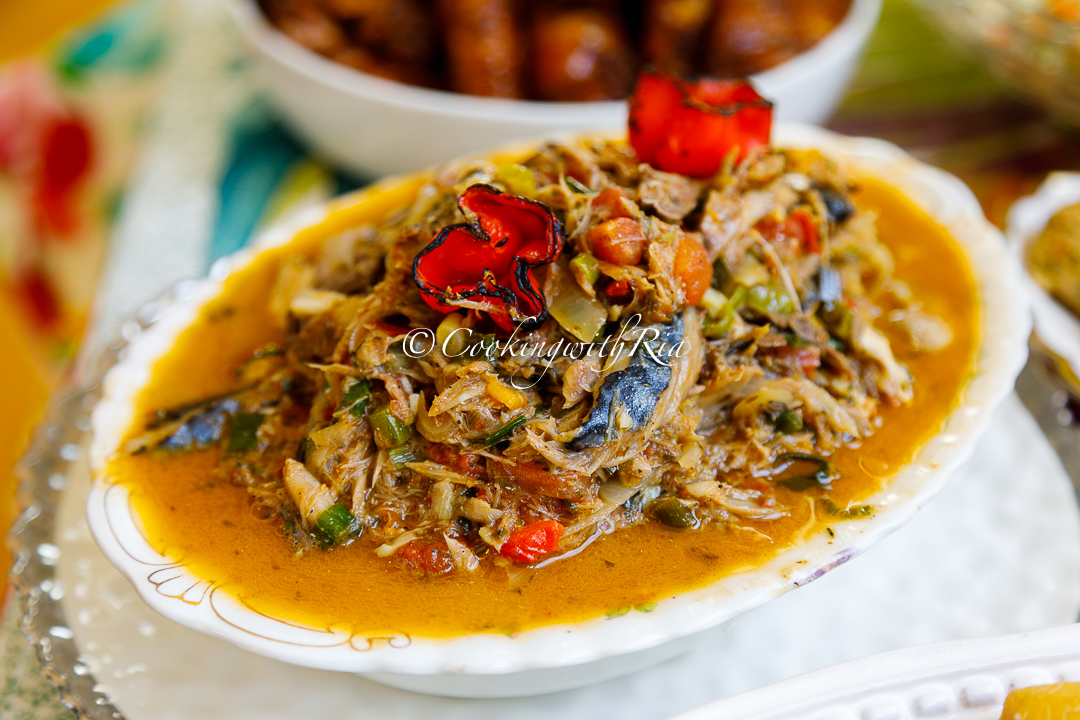
How to Cook Trinidad Salted Mackerel with Tomatoes (Simple Caribbean Classic)
Equipment
- 1 large pot
- 1 wide saucepan or sauté pan
- 1 knife
- 1 Cutting board
- 1 slotted spoon, spoon, or fork
- 1 bowl or plate for cleaned fish
Ingredients
- 2½ lbs salted mackerel
- ½ cup extra-virgin olive oil
- 1 onion sliced
- Hot pepper to taste, sliced
- 1 head garlic peeled and crushed
- 4 tomatoes chopped
- 4 scallions chopped
- 1 teaspoon thyme leaves
- 2 tablespoons green seasoning optional
- ½ cup coconut milk optional
- 1 to 2 cups hot water optional, for a light sauce
- Salt and black pepper to taste
- Lime or lemon for rinsing the fish
Instructions
- Step 1: Rinse the Fish – Rinse the salted mackerel with lime or lemon under running water to remove any visible salt on the surface. This helps clean the fish before boiling and removes excess salt from the outside.
- Step 2: Boil the Fish – Place the salted mackerel in a large pot and fill the pot about three-quarters of the way with water. Set it over high heat and bring it to a full boil. Boil for 15 to 20 minutes.
- Step 3: Check the Saltiness – After the first boil, remove a small piece and taste it carefully. If it is still too salty for your liking, drain the pot, refill it with fresh water, and boil the fish again for another 5 to 10 minutes. Do not overcook it.
- Step 4: Clean and Break Up the Fish – Drain the fish and rinse lightly. Remove the head and any large bones. Using your fingers, separate the flesh into medium chunks. Do not break it up too fine. Keep it slightly chunky for better texture and appearance, since it will continue to break apart slightly during cooking. You may leave the skin on or remove it based on your preference.
- Step 5: Heat the Oil – Wipe out the same pot if you want to continue using it, or use a wide saucepan. Add the olive oil and set it over medium heat until warm.
- Step 6: Cook the Onion and Pepper – Add the sliced onion and hot pepper. Cook for about 1 minute, stirring, until the onion begins to soften. Do not let it brown.
- Step 7: Add the Aromatics – Add the chopped tomatoes, crushed garlic, thyme leaves, and optional green seasoning. Stir well and cook over medium heat for 2 to 3 minutes, allowing the tomatoes to soften and release their juices while the garlic and herbs become fragrant.
- Step 8: Add the Coconut Milk – If using coconut milk, pour it in now and stir to combine. Let it cook for about 1 minute so it blends into the tomato base.
- Step 9: Add the Fish and Scallions – Add the prepared salted mackerel along with the chopped scallions. Gently fold everything together so the fish is coated in the sauce without breaking it up too much.
- Step 10: Add Water for More Sauce (Optional) – If you want your salted mackerel with tomatoes a little saucier, add 1 to 2 cups of hot water at this stage. Stir gently to combine.
- Step 11: Simmer the Dish – Raise the heat to medium-high for about 1 minute to bring everything together, then reduce the heat to low. Simmer gently for 5 to 10 minutes so the fish absorbs the flavor of the sauce and the dish settles into a balanced consistency.
- Step 12: Taste and Finish – Taste and add black pepper as needed. Add extra salt only if necessary, since the fish already carries salt. Serve hot.
Notes
Nutrition
Did You Love This?
Did You Make This Recipe?
If you tried this recipe, please leave a ⭐⭐⭐⭐⭐ rating on the recipe card — ratings help more readers discover my recipes and support the work I put into creating them.
You can also leave a review or any questions or recipe requests in the comments below. I love hearing from you and I’m always happy to help.
And when you share your photos, don’t forget to tag me @cookingwithria on Instagram or @trinicookingwithria on Facebook so I can celebrate your beautiful creations!
Questions, Concerns, or Recipe Requests?
If you have a question about this salted mackerel with tomatoes, need help with substitutions, or want to request another recipe, leave a comment below. I am always glad to help where I can.
If you prefer to reach out privately, you can also email me at [email protected].
📩 Subscribe & Get My Free Green Seasoning Booklet
If you enjoy recipes like this salted mackerel rundown and want more Caribbean recipes, practical cooking tips, and Sunday Lunch stories delivered straight to your inbox, be sure to subscribe.
When you join, you’ll receive my free Green Seasoning Booklet — a true Caribbean kitchen essential that adds depth, flavor, and confidence to so many of our traditional dishes.
❤️ Shop My Kitchen Favorites
These are the trusted tools and pantry staples I use in my own kitchen — the ones that make Caribbean cooking easier and more enjoyable.
Recent Posts
- Caribbean Stewed Cannellini Beans
- Easy Spicy Chow Mein Recipe for Two (Ready in 20 Minutes)
- How to Cook Pumpkin with Mixed Seafood Recipe (Trinidad Pumpkin Talkarie)
- Trinidad Salad – How I Make it at Home
- How to Build a Caribbean Pantry (With Recipes)









Looking forward for more recipes