

Estimated reading time: 9 minutes
Table of Contents
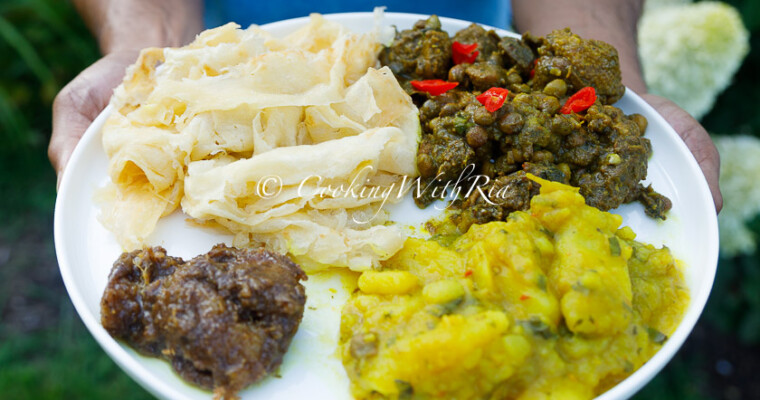
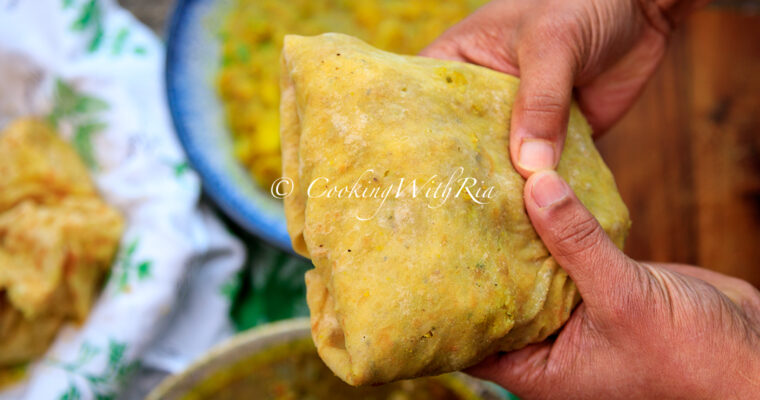
Soft, silky Guyanese Oil Roti made with traditional vegetable oil or my healthier extra-virgin olive oil variation. Easy, flaky, and perfect with curries, stews or vegetable talkaris.
A Soft, Silky Guyanese Classic
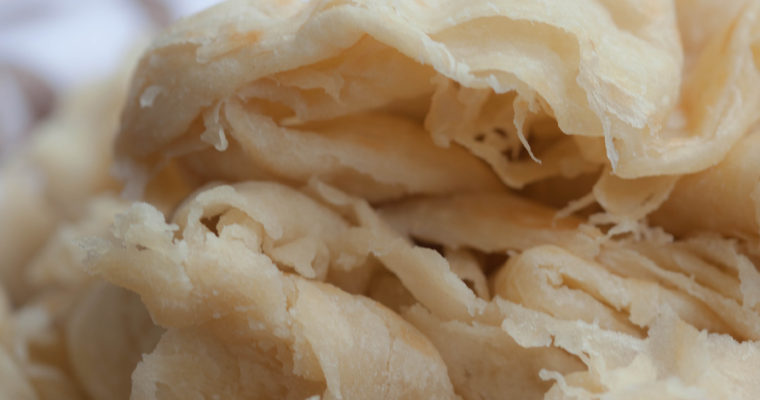
Guyanese Oil Roti—also known as Clap Roti—is beloved for its tender layers, warm aroma, and soft, pillowy texture. The method is similar to Trinidadian paratha, but instead of beating the roti with dablas, Guyanese cooks clap the roti between their hands (or shake it in a covered bowl) to open up the layers.
Traditionally, this roti is made with vegetable oil, but in my home, I often use extra-virgin olive oil or good-quality butter for a lighter, cleaner option with the same silky result.
Served with curry, stew or vegetarian talkaris(see options below under serving suggestions), this roti brings comfort and Caribbean warmth to any table.

Why You’ll Love This Recipe
- Authentically layered & soft: The cone-fold technique creates beautiful layers that open once clapped.
- Healthier fat options you can trust: I’ve tested this roti with vegetable oil, extra-virgin olive oil, and butter — all produce the same softness and silkiness. EVOO simply feels lighter and guilt-free.
- Beginner friendly: Straightforward steps, forgiving dough, and consistent results.
- Great for meal prep: Dough and cooked rotis freeze beautifully.
- Flexible ingredients: Sugar, salt, and milk powder can be adjusted to taste.
Ingredients You Will Need
| Ingredient | Purpose |
|---|---|
| All-purpose flour | Foundation of the dough. |
| Baking powder | Helps the roti puff lightly. |
| Salt | Enhances flavor. |
| Brown sugar | Creates a softer roti and adds warmth. |
| Milk powder (optional) | A Trinidadian-style addition for extra softness. |
| Lukewarm water | Hydrates the dough smoothly. |
| Vegetable oil (traditional) | Classic fat used in Guyanese kitchens. |
| Extra-virgin olive oil (my healthier variation) | Produces identical softness with a lighter feel. |
| Good-quality butter (optional) | A wholesome, single-ingredient alternative that adds rich flavor. |
❤️ Healthier Fat Options I Use & Recommend
For a lighter version of this roti, extra-virgin olive oil works beautifully. I’ve tested it side-by-side with traditional vegetable oil and found no difference in softness, layering, or flexibility. The roti tastes the same — but the overall dish feels cleaner and less heavy.
A high-quality, one-ingredient butter is another wholesome substitute. It adds gentle richness without the preservatives found in many blended table butters. These simple swaps allow you to enjoy roti more often while feeling good about your choices.
How to Make Guyanese Oil Roti (Summary)
Make a soft dough using flour, baking powder, salt, sugar, and oil, then let it rest. Each portion is rolled into a circle, brushed with oil, sprinkled with flour, and folded into a cone to build layers. After resting again, the dough is rolled thin and cooked on a lightly oiled tawa until soft and golden. While still warm, the roti is clapped or gently shaken to open the layers, then stacked in a towel-lined bowl with parchment to stay silky and tender.
(Full step-by-step instructions and measurements are in the Recipe Card below.)
Paratha Roti vs. Guyanese Oil Roti (Clap Roti)
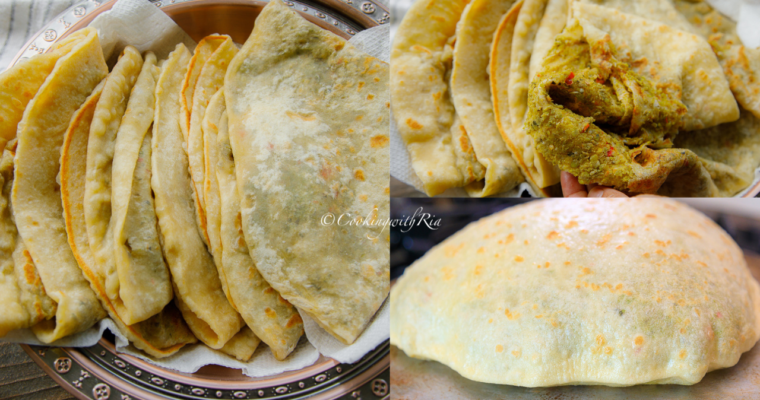
These two beloved Caribbean rotis share nearly identical ingredients, dough preparation, and layering techniques — but the finishing step sets them apart. Trinidadian paratha roti (see recipe here-just as good, soft & silky-either recipe will deliver amazing results) is “buss up” by beating it with dablas (flat wooden tool) on the tawa to separate the layers, while Guyanese oil roti is clapped between the hands or shaken in a covered bowl or mug to separate the layers.
Some Guyanese home cooks make their rotis smaller, while Trinidadian versions are often larger and may include milk powder for softness. Many Guyanese households omit sugar or salt entirely, but these can be adjusted to taste. At their core, both rotis are cultural cousins with far more similarities than differences.
⭐ A Faster Wrapping Method Many Guyanese Cooks Use
Another beautiful and efficient Guyanese technique involves rolling out one large piece of dough, brushing it with butter or oil, then rolling it into a long log and slicing it horizontally into individual rounds. Each round is tucked at the ends, flattened, rested, and rolled out as usual.
This shortcut produces soft, layered roti with less handling and saves time on busy cooking days. With social media, many of these long-standing home-cook methods are now being shared widely — and this is a technique I also use when cooking for my family.
For larger gatherings, I still return to the traditional cone-fold method, which creates more layers and gives the flakiest, most delicate roti.
Flavor & Texture
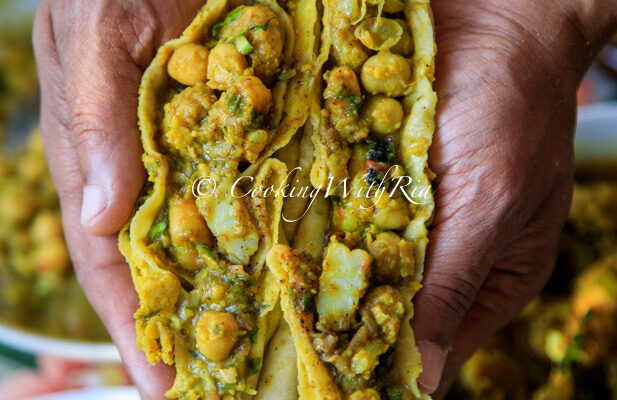
Soft, silky, warm, and layered with just enough richness from the oil or butter. Once clapped or shaken, the layers open beautifully. The roti stays pliable and tender, perfect for scooping up curries, gravies, or dhal.
Tips for Success
- Rest dough for softness and elasticity.
- Make sure water is lukewarm — not hot.
- Roll evenly for good puff and layers.
- Clap or shake while warm.
- Stack in a towel + parchment-lined bowl to trap steam and stay silky.
Variations
Alternative Wrapping Method: You can use the traditional cone-fold technique, or try a quicker method that many Guyanese home cooks use: rolling out one large dough, brushing it with butter or oil, forming a long log, and slicing it horizontally into rounds. Each round is tucked, rested, and rolled as usual. I use this faster method when cooking for my family, but for larger gatherings I always return to the traditional cone-fold because it naturally creates more layers and a flakier, more delicate roti.
Fats You Can Use: Traditional recipes use vegetable oil, but I often use extra-virgin olive oil for a lighter, healthier variation that produces the same silky, soft results. A good-quality, one-ingredient butter is another excellent option and adds rich flavor. Any of these choices work beautifully, depending on what you prefer.
Ingredient Variations: Milk powder is optional and more commonly seen in Trinidadian versions, but it does contribute to a softer roti. Sugar can be added for extra tenderness, and salt is essential for flavor—though some Guyanese home cooks omit both. Adjust each of these ingredients to suit your taste and the texture you prefer.
Equipment You Will Need
- Mixing bowl
- Rolling pin
- Tawa, skillet, or griddle
- Clean kitchen towel
- Parchment paper
- Airtight container (for dough resting)
Storage & Reheating
Storing the Dough: The dough keeps well in the refrigerator for up to three days. Lightly brush each wrapped cone with oil, place them on a tray or in an airtight container, and keep covered to prevent drying. For longer storage, wrap each cone in wax paper, transfer to a resealable freezer bag, and freeze for several months. Thaw overnight in the refrigerator before rolling out.
Storing Cooked Roti: Once the roti is completely cool, wrap each piece in wax paper, then in foil, and place in a resealable freezer bag. This double wrapping protects the layers and prevents freezer burn. Cooked rotis freeze beautifully and stay soft when reheated properly.
Reheating: Warm the roti on a tawa over medium heat for the best texture. You can also reheat it in the microwave by covering it with a slightly damp towel—this helps restore softness without drying the roti.
Health & Nutrition
- Vegetarian
- Dairy-free if using oil
- EVOO provides heart-healthy fats
- Butter is a natural, single-ingredient alternative
- Whole-wheat option possible with water adjustment
How to Serve Guyanese Oil Roti / Clap Roti

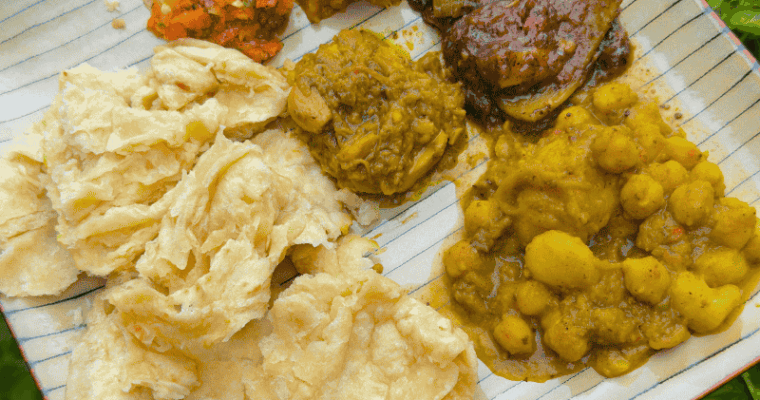
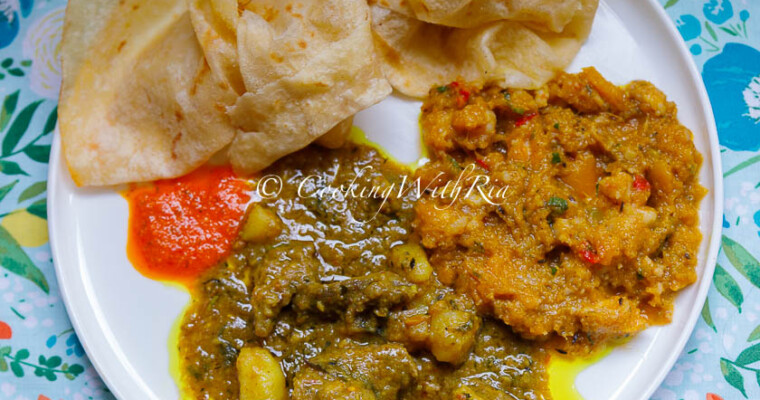
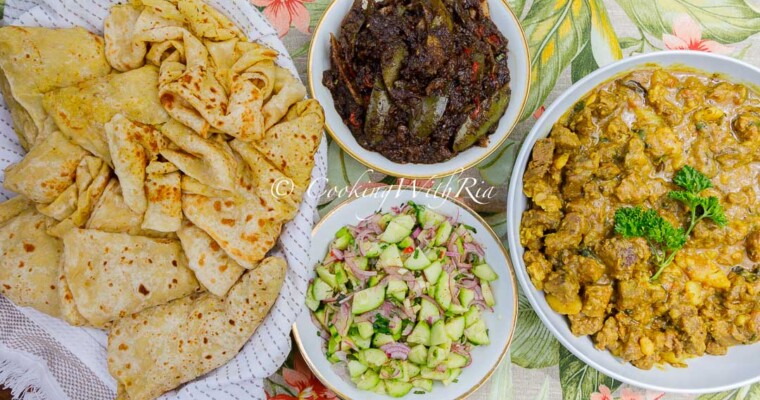
Guyanese Oil Roti / Clap Roti is soft, flaky and pairs well with a wide range of vegetarian dishes, curries, stews, and meats.
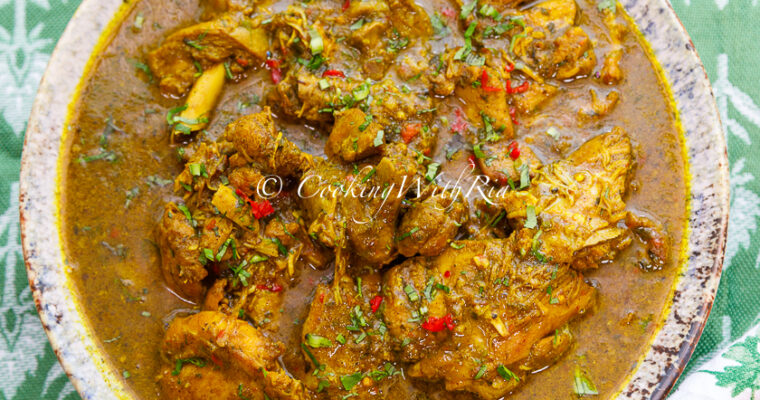
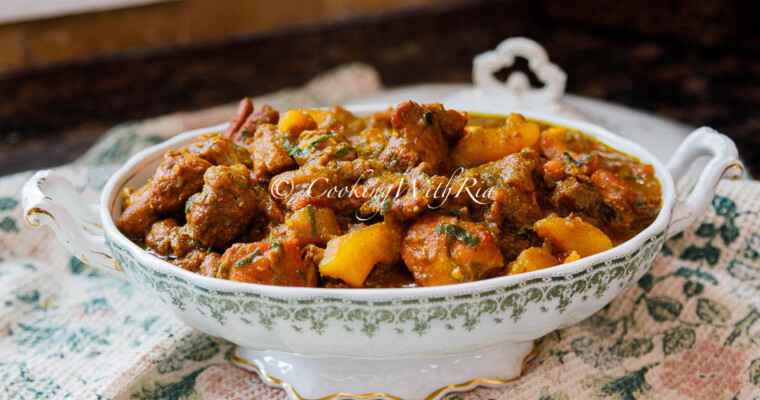
Enjoy with some of my other recipes on this site including curry channa and aloo, fry bodi, curried chicken, stewed chicken, saltfish and tomatoes, baigan choka, as part of a Diwlali feast, click here for these recipes, sauteed patchoi, tomatoes choka, pumpkin talkari, curry goat, dhal, curry aloo, curry chicken with pigeon peas , pumpkin talkarie with shrimp, patchoi with shrimp, curry baigan and aloo, curry channa with eggplant(no pre-boiling channa), curry canned channa with baigan, curry beef and aloo, curry bodi and aloo.
For more recipes, check out the following:
7 Curry Chicken Recipes Your Family and Friends Will Love
Frequently Asked Questions
Can I use extra-virgin olive oil instead of vegetable oil?
Yes. I’ve tested this recipe with vegetable oil, extra-virgin olive oil, and butter, and there is no difference in softness or flakiness. EVOO simply feels lighter and cleaner to use. Butter or a butter–oil blend adds richness if you prefer a more indulgent roti.
Do I need to add sugar or salt?
Many Guyanese homes make oil roti without either, but salt adds flavor, and a small amount of sugar produces a softer roti. Both ingredients are optional and can be adjusted based on your taste.
How do I make my roti extra flaky?
Roll a large even circle before brushing with oil or butter and dusting with flour, wrap into a cone, rest well, and clap while warm. Larger circles create more layers, and proper resting allows the dough to relax.
Why does my roti come out stiff?
Stiff roti usually comes from insufficient resting, rolling too thick or too thin, a tawa that is too hot, not brushing with enough oil, or not wrapping the roti immediately after cooking. Adjusting these steps ensures a soft, pliable roti.
Can I freeze the dough or cooked rotis?
Yes. Dough cones freeze beautifully when wrapped in wax paper and stored in a resealable bag. Cooked rotis should cool fully, then be wrapped in wax paper and foil before freezing. Reheat on a tawa or with a damp towel in the microwave.
Is Guyanese Oil Roti the same as Trinidadian Paratha?
They are nearly identical in technique and ingredients. The main difference is the finishing step: Guyanese roti is clapped, while Trinidadian paratha is beaten with dablas (“buss up”). Trinidadian versions may include milk powder, while some Guyanese home cooks omit salt and sugar.
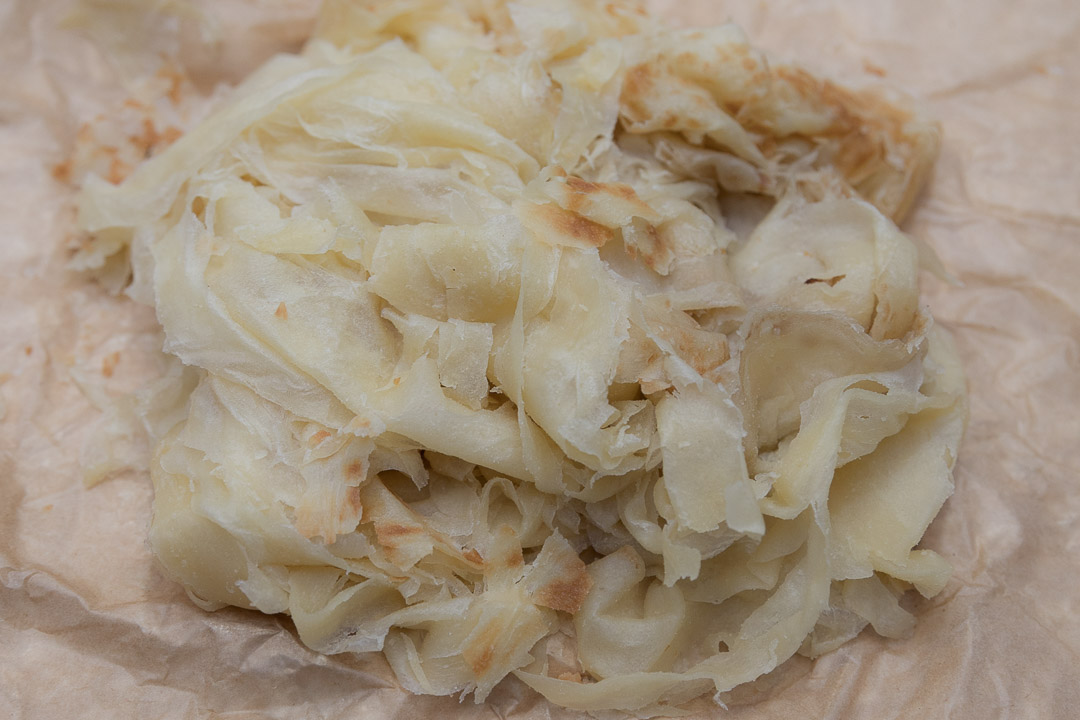
📌 RECIPE CARD — GUYANESE OIL ROTI (CLAP ROTI)
Ingredients
- 3 cups all-purpose flour
- 1 tsp baking powder
- 1 tsp salt adjust to taste
- 1 tsp brown sugar optional for softness
- 1 tbsp milk powder optional
- 1¼ cups lukewarm water
- 5 tsp oil for kneading
- 6 tbs fat 3 tbs butter and 3 tbs oil, combined, for brushing dough and cooking (use both or either or)
Instructions
Make the dough:
- Combine flour, baking powder, salt, sugar, and milk powder (if using). Gradually add lukewarm water while mixing to form a soft, shaggy dough. Add 2 tsp oil and knead until the dough is smooth, soft, and slightly elastic, 3–5 minutes. Rub another 1 tbsp oil over the dough, cover, and rest for 15–30 minutes (or 5–10 minutes if the dough is very soft).
Wrap the dough:
- Divide into 3 pieces for large rotis or 5 for smaller. Roll each into a smooth ball, then roll evenly into a large thin circle.

- Brush the surface with oil or butter, sprinkle lightly with flour.
- Cut from the center of the circle to 4 o’clock (or 12 to the center).
- Roll the dough clockwise into a cone, tucking the end inside the base of the cone to cover and seal the layers.
- Place the base of the cone on the counter and then press the pointed tip down into the center to seal and flatten.

- Brush wrapped dough lightly with oil, place on a tray or in a container with a tight fitting lid, cover, and rest 30 minutes.


Roll out:
- Lightly flour the counter. Flatten each cone with the palm of your hand, then roll into a thin(but not too thin), even circle using a rolling pin, rotating and flipping to maintain even thickness.

Cook the roti:
- Heat and lightly oil a tawa or frying pan over medium-high heat. Place the rolled dough onto the hot surface and cook only until bubbles begin to appear (do not let the surface fully dry). Brush with oil or butter, flip, brush the other side, and continue cooking—flipping as needed—until the roti is fully cooked, soft, and has light golden spots.
Clap the roti:
- Remove the roti from the tawa and clap it between your hands—or shake gently in a covered bowl—to open the layers. Fold into a square and stack in a bowl lined with a dry towel and parchment to keep warm and silky.
Nutrition
Did You Make This Recipe?
If you tried this recipe, please leave a ⭐⭐⭐⭐⭐ rating on the recipe card — ratings help more readers discover my recipes and support the work I pour into creating them.
You can also leave a review, questions, or any recipe requests in the comments below — I love hearing from you and I’m always happy to help!
When you share your photos, don’t forget to tag me @cookingwithria on Instagram or @trinicookingwithria on Facebook so I can celebrate your beautiful creations!
If you prefer, you can also reach me anytime at [email protected].
Subscribe & Get My Free Green Seasoning Booklet
Stay connected with me and never miss a new recipe, Sunday Lunch idea, or holiday guide!
By subscribing, you’ll get my FREE Green Seasoning Booklet, packed with tips to bring real Trinidad flavor to your kitchen.
Shop My Kitchen Favorites on Amazon
Curious about the tools, pots, and gadgets I use every day?
From my favorite non-stick pans to measuring cups and kitchen essentials, you can explore them all in one place in my curated Amazon storefront.
Recent Posts
- Easy Caribbean Curry Chicken for Beginners (Small-Batch Recipe)
- What to Eat and Do in Sint Maarten and Saint Martin: Our Week in Paradise
- Caribbean Stewed Cannellini Beans
- Easy Spicy Chow Mein Recipe for Two (Ready in 20 Minutes)
- How to Cook Pumpkin with Mixed Seafood Recipe (Trinidad Pumpkin Talkarie)
Explore More Roti Recipes
-

The Softest Chapati Recipe (Whole Wheat Flatbread)
-

Soft & Silky Guyanese Oil Roti (Clap Roti)
-
Sunday Lunch Week 42: Preparing for Diwali — Our Feast & Traditions
-
Sunday Lunch Week 41 – Vegan Curry Channa with Eggplant and Curry Bodi and Aloo
-
Sunday Lunch Week 37: Trinidad Chicken Roti – Finding Joy in the Chaos
-
Sunday Lunch Week 34: Pumpkin with Shrimp, Curry Lamb, Dosti Roti & Paratha
-
Sunday Lunch Week 32: Curry duck with pigeon peas, curry aloo, and paratha
-
Sunday Lunch Week 28: Outdoor Trinidad Beef Roti with Mango Talkari, Dhalpuri & Salad
-
Trinidad Curry Shrimp Roti
-
Mastering the Art of Making Trinidad Roti
-
Trinidad Chicken Roti
-
Pigeon Peas Puri | Pigeon Peas Roti | Peas Paratha






This oil roti recipe was amazing. Thank you Ria!