
Estimated reading time: 10 minutes
Table of Contents
Chapati has always fascinated me because it proves one simple truth: roti is not just food — it’s memory, comfort, and survival. Across the world, this humble flatbread shows up on everyday tables, shaped by culture, climate, and necessity. Yet at its core, chapati remains simple, honest, and deeply nourishing.
This version was born out of a very personal need. As I’ve moved into my 50s, I wanted a way to keep roti in my daily life — without the heaviness, oversized portions, or carb load that comes with richer, celebratory rotis. I wasn’t willing to give up roti. What is life without roti anyway?
So I created a lighter, smaller, whole-wheat chapati — inspired by Indian roti techniques, shaped by my Caribbean kitchen, and designed for real weekday living. This is the roti I reach for when I want balance: something that supports weight management, blood sugar control, and overall wellness, while still delivering the comfort I grew up loving.
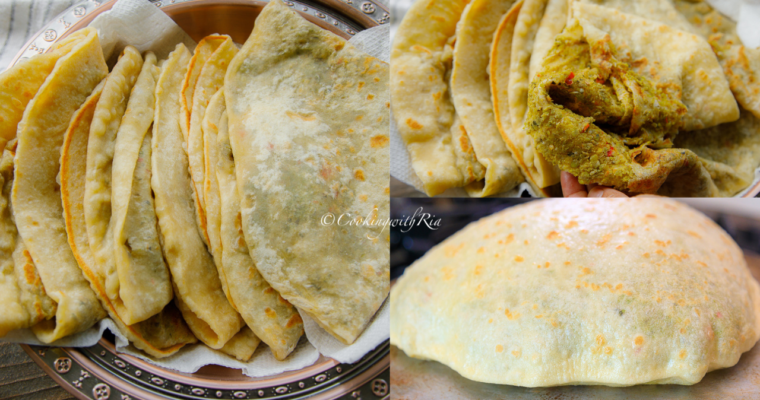
What I love most is that this chapati is flexible. It can be cooked plain and puffed, brushed lightly with butter for softness, or layered into my own two-piece variation inspired by the technique behind Trinidad dosti roti — all starting from the same simple dough.
Why You’ll Love This Chapati Recipe

- Everyday roti: Light, smaller portions that fit naturally into weekday meals.
- Whole wheat goodness: Made with atta flour for fiber and sustained energy.
- Flexible technique: One dough, three ways to cook depending on your needs.
- Comfort without guilt: Keeps roti on your plate without sacrificing health.
Health and Nutrition Information
This chapati is made with whole wheat atta, providing fiber and complex carbohydrates that digest more slowly and help support steady energy levels. Because it can be cooked oil-free or with minimal fat, it’s a practical choice for those mindful of blood sugar, portion control, and overall balance. Paired with vegetables, legumes, or protein, it becomes part of a nourishing, sustainable meal.
Ingredients You Will Need
- Atta flour (whole wheat flour): Forms the structure and gives chapati its signature softness and elasticity. Click here for the high quality brand that I use.
- Lukewarm water: Hydrates the flour and helps develop a smooth dough.
- Salt (optional): Enhances flavor without overpowering the bread.
- Extra Virgin Olive Oil: Helps keep the dough soft and prevents drying during resting. Use your favorite oil.
Equipment Needed
- Mixing bowl – See this set with tight fitting lid – Easy knead, cover and rest the dough.
- Rolling pin
- Tawa, griddle, or frying pan
- Clean kitchen towel – Click to see my favorite flour sack towels, perfect for wrapping your roti
A Note on Puffing (and Letting Go of Perfection)
While puffing is often seen as the gold standard for chapati, it’s important to remember that puffing is not the goal — softness and good texture are. A chapati that doesn’t puff can still be delicious, flexible, and perfectly suited for everyday meals.
Puffing happens when conditions are just right, but it’s not something to stress over. Uneven puffing, partial puffing, or no puffing at all doesn’t mean you’ve failed. The focus should be on even cooking, proper hydration, and a relaxed approach in the kitchen.
Tips for Puffing Chapati (If It Happens, Great)
- Roll evenly to prevent weak spots.
- Heat the pan fully before cooking.
- Press gently around the edges during the final stage.
- Let steam do the work — avoid pressing the center.
Chapati Around the World
Chapati originated in India and traveled across continents through migration and trade. Along the way, it adapted to local ingredients and lifestyles.
- India: Oil-free chapati, puffed over open flame
- East Africa: Chapati made richer and sometimes layered
- Caribbean kitchens: Indian roti traditions evolved into larger, celebratory breads like sada roti, dosti roti and paratha
This chapati lives comfortably within that global story — rooted in tradition, adapted for modern, everyday living.
Serving Suggestions
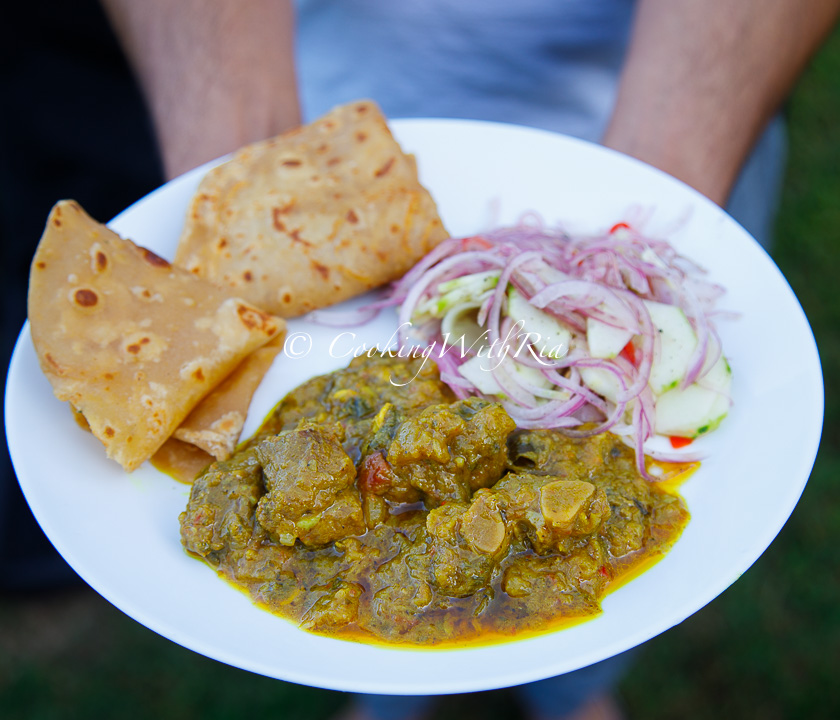
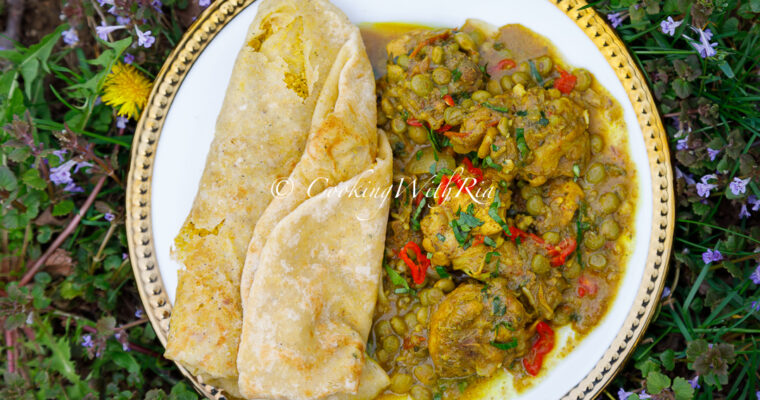
- Pair with curries or stews
- Or with stewed beans, instant pot stewed beans, lentils or dhal
- Or traditional vegetarian sides/talkaries– including fry seim, fry seim and aloo, curry seim(coming soon), fry bodi, curry bodi and aloo, patchoi, pumpkin talkarie, baigan and tomatoes
- Trinidad Chokas
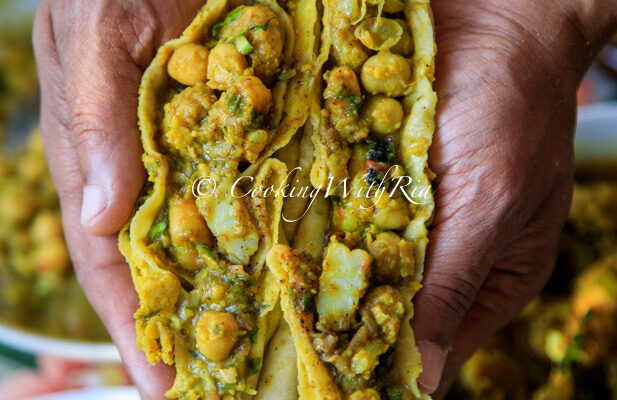
- Use as a wrap for quick lunches.

Variations at a Glance

- Oil-Free Puff-Up: Lightest and most traditional
- Buttered Chapati: Soft and flexible
- Two-Layer Chapati: Extra-soft, CookingWithRia original
FAQ: Chapati Variations & Technique
Why didn’t my chapati puff?
Uneven rolling or low heat can prevent puffing. Focus on even thickness, a properly heated pan, and gently pressing around the edges toward the end of cooking. Puffing is a bonus — not a requirement for good chapati.
Is puffing the goal when making chapati?
No. Puffing is nice when it happens, but softness and good texture matter more. A chapati that doesn’t puff can still be delicious and perfect for everyday meals. There’s no need to stress yourself out or aim for perfection.
How do I get my chapati round?
Start with evenly sized dough balls and make sure the dough has rested well. As you roll, rotate the chapati slightly instead of forcing it into a perfect circle. Small imperfections won’t affect the final result.
Can I eat chapati every day?
Yes. This lighter whole wheat chapati was created specifically for everyday eating, with portion control and balance in mind.
Is chapati good for blood sugar control?
When made with whole wheat atta and cooked with little or no added fat, chapati digests more slowly and can help support steadier blood sugar levels as part of a balanced meal.
What’s the difference between atta and all-purpose flour?
Atta is a finely milled whole wheat flour that includes the bran, germ, and endosperm. It produces a softer, more elastic chapati. All-purpose flour is refined and lacks the fiber and structure needed for traditional chapati.
Where can I buy atta flour?
Atta flour is widely available at Indian and Caribbean grocery stores, international markets, and online. Look for brands labeled “chakki-ground atta” for the best results.
Diet & portion guidance
Everyone’s nutritional needs are different. If you’re ever unsure about what portion size or type of roti fits best into your diet — especially for weight management, blood sugar control, or specific health goals — it’s always best to consult with your doctor or a registered nutritionist.
Storage & Reheating
Important: For the best texture and flavor, I recommend storing the chapati dough and cooking fresh flatbreads as you need them. Cooked chapati will never match the softness and taste of fresh ones, especially over several days.
Dough Storage (Best for Quality & Convenience)
- Refrigerator:
After kneading and resting, shape the dough into balls and place them in an airtight container or zip-top bag. Add a thin layer of oil on the surface to help keep the dough soft and prevent drying out. Stored this way, the dough can stay fresh for 12–36 hours. - Freezer:
Portion your dough balls and lay them flat or stand them upright in a freezer-safe bag. They can be frozen for up to 1–2 months if wrapped well. Thaw in the refrigerator overnight or at room temperature before rolling out to cook. - Food Safety Tip:
Dough left at room temperature for too long can ferment or spoil; refrigerate promptly, especially in warm weather.
Before using stored dough, let it sit at room temperature for at least 15–30 minutes and knead lightly before rolling — this relaxes the gluten and makes rolling easier.
Cooked Chapati Storage (Not Ideal — But Possible When Needed)
Chapati is always best eaten fresh, but if you must store cooked rotis:
- Short Term:
Keep warm and soft for a few hours by stacking them in a cotton cloth or a chapati box (roti dabba). This traps steam and keeps them pliable. - Refrigerator:
Place completely cooled chapatis in an airtight container with parchment or cloth between layers to prevent sticking. They can be refrigerated for 1–3 days.- Reheat Tip: Warm on a hot tawa for a few seconds per side, or wrap in a damp paper towel and microwave briefly until soft again.
- Freezer:
Stack cooled chapatis with parchment paper between each, then place in a freezer bag. Frozen chapatis can last up to 2–3 months. Thaw in the refrigerator or at room temperature before reheating on a tawa or microwave.
Pro Tips for Best Results
✅ Store dough, not cooked roti, when possible — the quality and softness are superior when you cook fresh.
✅ Add a light coating of oil or ghee on dough before refrigerating — this helps prevent drying and preserves flexibility.
✅ Do not stack hot chapatis without a cloth — trapped steam can make them soggy or tough.
✅ Thaw frozen dough slowly in the fridge rather than at room temperature for food safety and better texture.
More Roti Variations to Explore

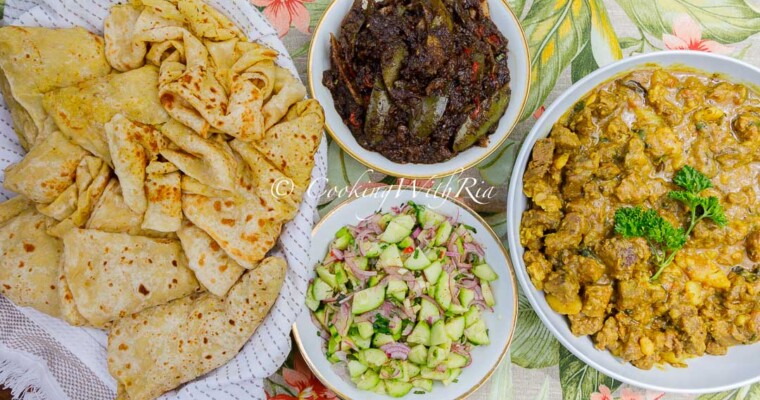
Roti in Trinidad is never just one thing. It shifts with the day, the meal, and the moment — sometimes simple and quick for a weekday dinner, other times rich, filled, and layered for Sunday lunch or a lime with family. Each variation reflects how roti has been adapted, stretched, and re-imagined in Trinidad kitchens, becoming both everyday sustenance and something worth slowing down for.
If roti is a regular part of your cooking, these Trinidad roti variations offer different textures, fillings, and levels of indulgence — each with its own place at the table.
See my full post on roti – Mastering the Art of Making Roti – Click Here
Sada Roti – A simple, everyday Trinidad roti cooked on a tawa, soft and comforting, often brushed lightly with butter and served with curry or stews.
Dhalpuri Roti – A beloved Trinidad classic filled with seasoned ground split peas, rolled thin, and cooked until tender and flavorful.
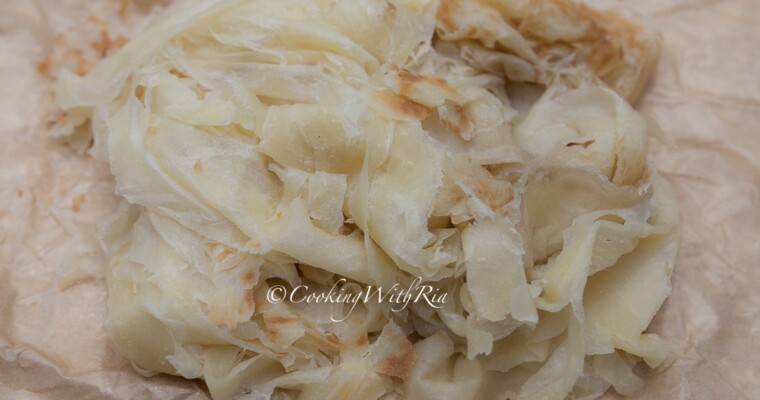
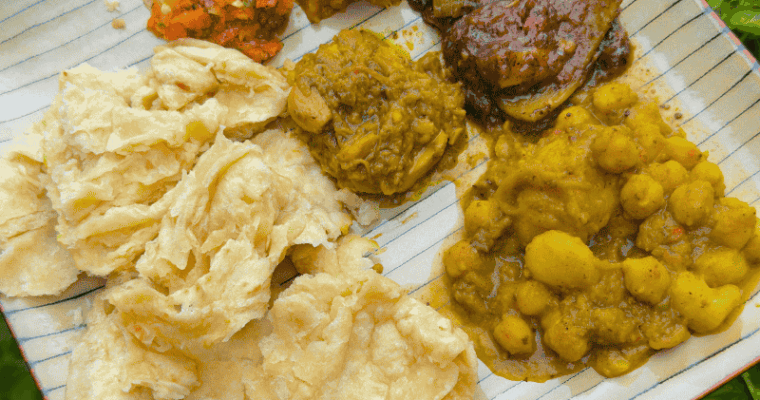
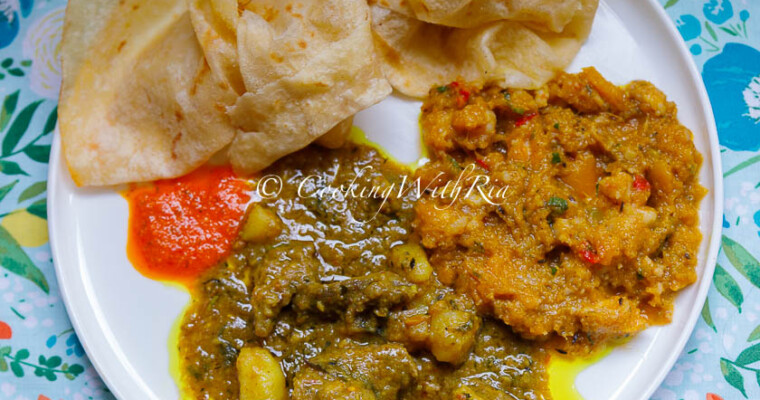
Dosti Roti – A soft, layered roti made by cooking two pieces of dough together, richer than sada roti and often reserved for Sunday lunch or special meals.
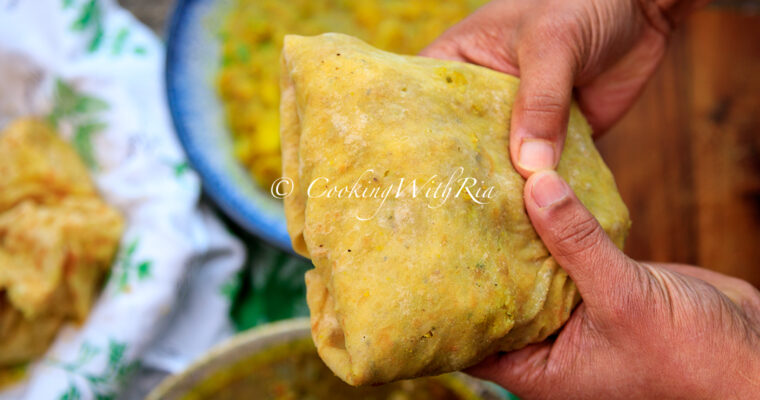
Aloo Roti – A hearty roti stuffed with seasoned mashed potatoes, filling enough to enjoy on its own or paired with chutney and vegetables.
Lentil Puri – A Trinidad-style puri made with lentils incorporated into the dough or filling, slightly richer and perfect with saucy curries.
Pepper Roti – A bold, spicy roti infused with hot pepper and seasoning, popular for those who enjoy heat and deeply flavored breads.
Pigeon Peas Roti – A flavorful roti made with pigeon peas, reflecting a staple ingredient in Trinidad cooking and offering a hearty, earthy taste.
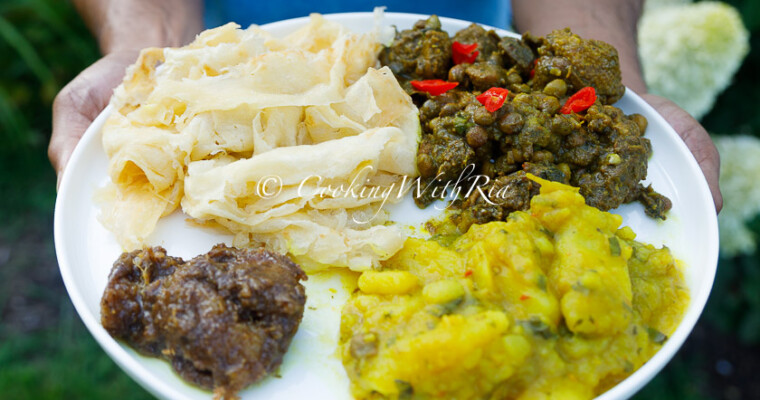
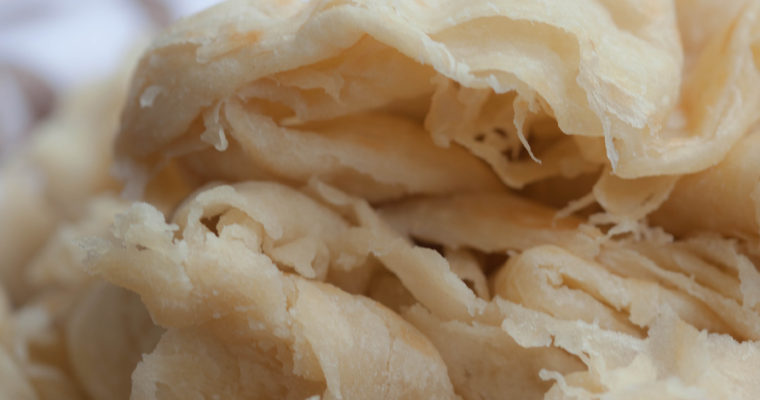
Soft & Silky Paratha or Guyanese Oil Roti / Clap Roti – A flaky, oil-rich roti stretched, folded, and cooked to create soft layers, ideal for soaking up gravies and sauces.
See also Mastering the Art of Making Roti, fried bakes, onion fry bakes, aloo puri(fried version)

Recipe Card: Chapati Recipe (Soft Whole Wheat Flatbread)
Ingredients
- 1 cup atta flour whole wheat flour
- ½ cup lukewarm water adjust as needed
- Salt to taste (optional)
- 1 teaspoon oil for kneading
- 1 teaspoon oil or butter for brushing, optional
Instructions
- Step 1: Make the dough – Place atta flour and salt in a bowl. Gradually add lukewarm water and mix to form a soft dough. Knead for 3–5 minutes until smooth.
- Step 2: Rest the dough – Knead in 1 teaspoon oil until absorbed. Lightly brush the surface with oil, cover tightly, and rest for 30 minutes.
- Step 3: Divide – Divide the rested dough into 4 equal balls. Choose one cooking variation below.
Cooking Variations
- Variation 1: Classic Puff-Up Chapati (Oil-Free): Roll one dough ball thin. Cook on a hot tawa with no oil. Flip when bubbles form and gently press around the edges. Finish briefly over an open flame if available to allow full puffing.
- Variation 2: Buttered Chapati (Soft Finish): Roll one dough ball thin. Cook on a hot tawa, brushing lightly with butter or oil on both sides as it cooks. Puffing is optional.
- Variation 3: Two-Layer Chapati (CookingWithRia Original | Dosti-Inspired): Take two small dough balls. Press each lightly. Brush butter on one and sprinkle lightly with flour. Top with the second piece, press to seal, roll out together, and cook on a hot tawa. Brush with butter, flip, brush the other side, and cook until fully done.
Notes
Nutrition
Did You Make This Recipe?
If you tried this recipe, please leave a ⭐⭐⭐⭐⭐ rating on the recipe card — ratings help more readers discover my recipes and support the work I put into creating them.
When you share your photos, tag me @cookingwithria on Instagram or @trinicookingwithria on Facebook — I love seeing your kitchens in action.
Questions, Concerns, or Recipe Requests—Write Me!
If you have questions or a recipe you’d love to see next, leave a comment below or email me at [email protected]. I’m always happy to help.
Subscribe & Get My Free Green Seasoning Booklet
Sign up to receive my favorite everyday Caribbean cooking tips, new recipes, and kitchen stories straight to your inbox.
Shop My Kitchen Favorites on Amazon
These are the tools, pans, and kitchen essentials I use regularly in my own Caribbean kitchen.
Recent Posts
- Instant Pot Curry Lima Beans (Caribbean Style)
- Easy Caribbean Curry Chicken for Beginners (Small-Batch Recipe)
- What to Eat and Do in Sint Maarten and Saint Martin: Our Week in Paradise
- Caribbean Stewed Cannellini Beans
- Easy Spicy Chow Mein Recipe for Two (Ready in 20 Minutes)
Explore More Roti Recipes & Inspiration
-

The Softest Chapati Recipe (Whole Wheat Flatbread)
-

Soft & Silky Guyanese Oil Roti (Clap Roti)
-
Sunday Lunch Week 42: Preparing for Diwali — Our Feast & Traditions
-
Sunday Lunch Week 41 – Vegan Curry Channa with Eggplant and Curry Bodi and Aloo
-
Sunday Lunch Week 37: Trinidad Chicken Roti – Finding Joy in the Chaos
-
Sunday Lunch Week 34: Pumpkin with Shrimp, Curry Lamb, Dosti Roti & Paratha
-
Sunday Lunch Week 32: Curry duck with pigeon peas, curry aloo, and paratha
-
Sunday Lunch Week 28: Outdoor Trinidad Beef Roti with Mango Talkari, Dhalpuri & Salad
-
Trinidad Curry Shrimp Roti
-
Mastering the Art of Making Trinidad Roti
-
Trinidad Chicken Roti
-
Pigeon Peas Puri | Pigeon Peas Roti | Peas Paratha