Essential Ingredients for Caribbean Cooking
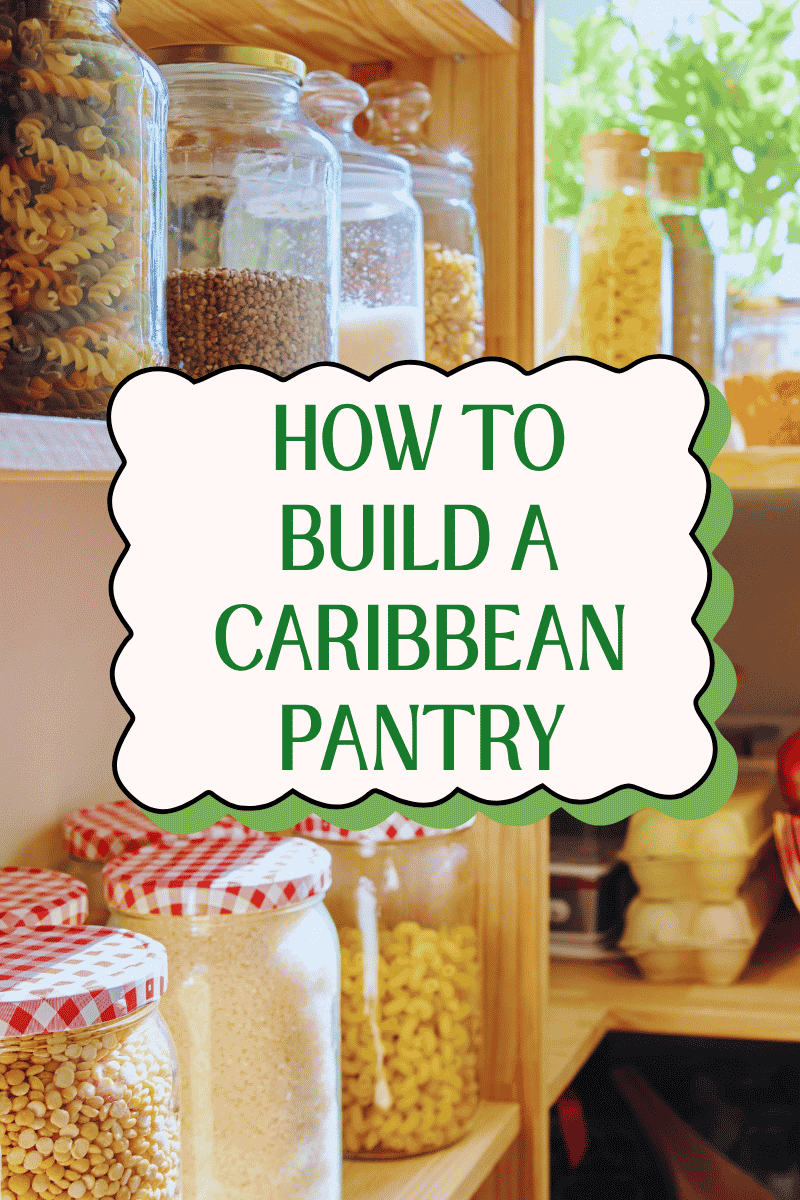
Every kitchen tells a story, and the Caribbean pantry is often where that story begins.
Table of Contents
My pantry did not appear overnight. It evolved gradually over time, just as my cooking skills evolved. We all begin with the basics—brown sugar, oil, salt, flour, sugar, baking powder, curry powder. First we learn to make a simple curry, stew chicken, boil rice, or perhaps a basic sada roti. Then little by little our confidence grows. We buy split peas to make dhal, whole geera or toasted ground cumin, dried beans to cook stews from scratch, and maybe one day we finally crack open a coconut ourselves to extract fresh coconut milk for callaloo or pelau.
That is how a Caribbean pantry develops. One recipe at a time.
In many Caribbean homes, the pantry is more than a storage space. It is the backbone of our culinary culture—the place that sparks ideas, solves dinner problems, preserves traditions, and gives us the freedom to cook the foods we crave whenever inspiration strikes.
When we feel energetic and inspired, a well-stocked Caribbean pantry allows us to prepare an entire Sunday lunch spread with curry, stews, rice, macaroni pie, dhal, dhalpuri, red beans, and boiled provisions. When we are exhausted, we may pull out a can of sardines to make sardine choka and eat it with crackers. When the family craves Chinese takeout, we may decide to make fried rice, lo mein, chow mein, or Chinese-style fried chicken at home instead.
The pantry adapts to every season of life.
For many of us living away from the Caribbean diaspora—in places far from Flatbush Avenue in Brooklyn or Liberty Avenue in Queens—a Caribbean pantry becomes even more important. Some ingredients are not always easy to find, so when we discover a Caribbean, Asian, or Hispanic grocery carrying the products we rely on, we stock up immediately so we do not have to make the long trip again anytime soon.
A Caribbean pantry is also deeply personal.
Some people cook to nourish their family. Others cook to save money, reduce stress, or avoid the disappointment of takeout that never tastes quite right. Some want cleaner ingredients with fewer preservatives, while others simply love the bold flavor of packaged seasonings, sauces, and spice blends. There is no single correct way to build a Caribbean pantry. It should reflect your life, your tastes, your memories, your traditions, and the foods you truly love to eat.
For me, cooking is about all of those things at once—nourishing my family, creating comforting Caribbean food, saving money, choosing the ingredients we put into our bodies, preserving tradition, and sharing the Caribbean recipes I grew up with and continue to love today.
This guide focuses mainly on pantry staples and shelf-stable ingredients commonly used in Caribbean cooking. Fresh herbs, produce, green seasoning, peppers, culantro (chadon beni), thyme, garlic, onions, and refrigerator staples deserve their own category entirely and will be covered separately in my upcoming guide to What’s in My Caribbean Fridge.
See Essential Ingredients in Trinidad Cooking
Below is a detailed look at the ingredients that form the backbone of my Caribbean pantry, along with examples of the Caribbean recipes and Caribbean food I prepare using them.
Everyday Cooking Foundations
These are the ingredients that form the backbone of daily Caribbean cooking and many traditional Caribbean recipes. Rice, beans, flour, oils, and pantry staples make it possible to prepare everything from quick weekday lunches to elaborate Sunday meals filled with curries, stews, soups, and side dishes.
Rice, Grains, Pasta, and Noodles
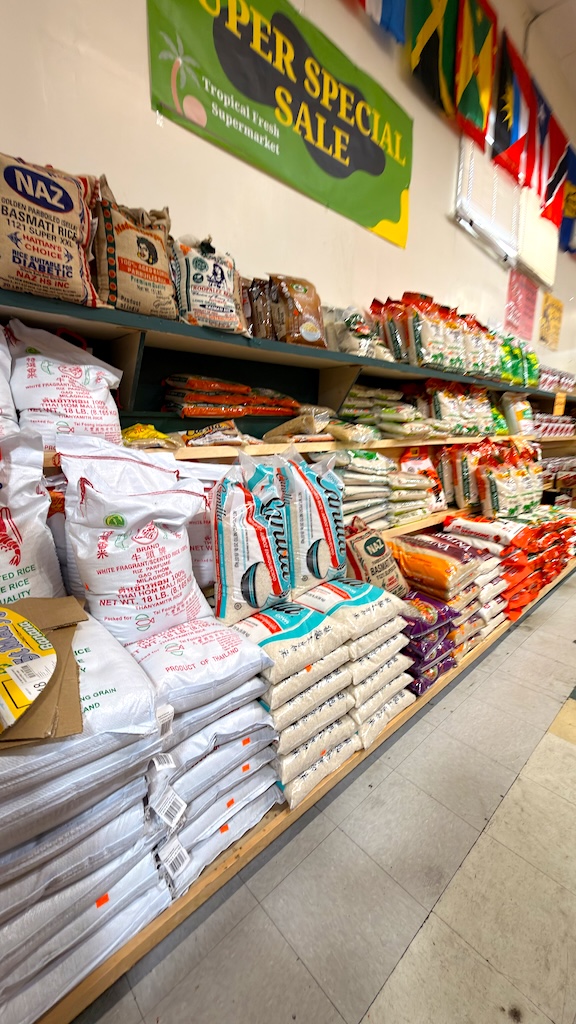
Rice is one of the foundations of Caribbean food and appears in countless Caribbean recipes throughout the region. A simple pot of rice transforms stews, curries, sautéed vegetables, and braised meats into complete and deeply satisfying meals.
Different rice varieties are used depending on the dish, texture, and flavor desired. In my Caribbean pantry, you’ll usually find white rice, jasmine rice, basmati rice, parboiled rice, and diabetic-friendly rice.
- white rice (see: How to Cook White Rice)
- basmati rice (see: How to Cook Perfect Basmati Rice)
Parboiled rice, sometimes referred to as “brown rice” in Trinidad, is especially popular because the grains hold their shape well and pair beautifully with saucy Caribbean dishes. It is also the rice of choice in many homes for dishes such as Trini Veggie Fried Rice.
Pasta and noodles reflect the Chinese and European influences found throughout Caribbean cuisine. Macaroni pie remains one of the most beloved Caribbean comfort foods, while chow mein and lo mein reflect the strong Chinese influence on Trinidadian cooking.
Common pantry staples include:
- macaroni (see: Trinidad Macaroni Pie)
- spaghetti (see: Spaghetti and Meatballs)
- bucatini and other pasta shapes – bucatini is traditionally used to make macaroni pie in many Caribbean homes (see: pasta recipes)
- chow mein noodles (see: Lo Mein Recipe)
- vermicelli (see sawine dessert)
Together, these staples make it possible to prepare everything from simple rice dishes and hearty pasta meals to Chinese-style Caribbean recipes, festive desserts, and comforting everyday Caribbean food enjoyed throughout the region.
Beans, Peas, and Legumes
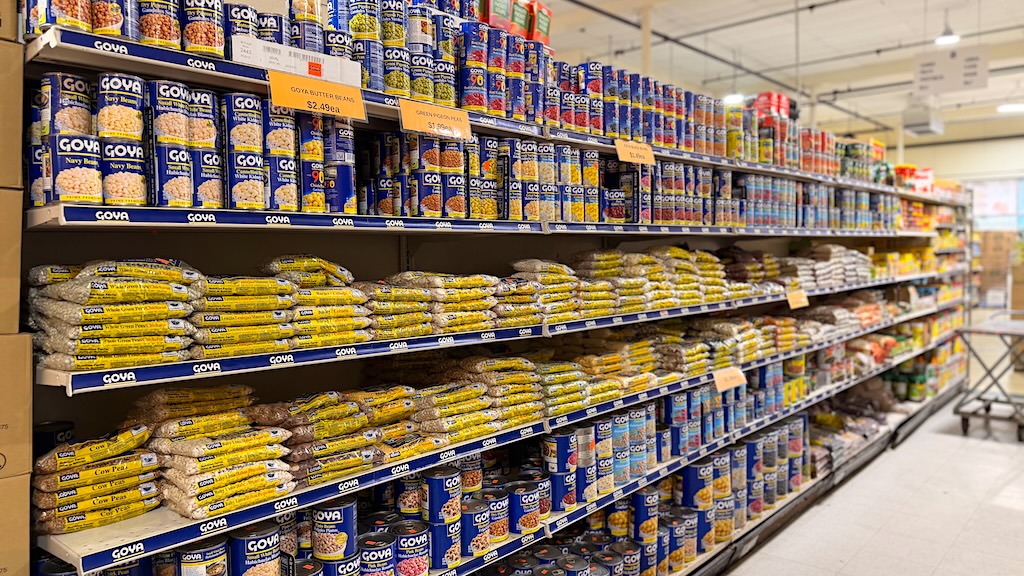
Beans and legumes have long been a cornerstone of Caribbean cooking. They provide nourishment, depth of flavor, and the kind of hearty comfort that defines many traditional Caribbean recipes.
Whether simmered slowly in a stew, folded into rice, or cooked into soups, these ingredients appear regularly in everyday Caribbean food across the region.
In my pantry, I typically keep dried staples such as(but not limited to):
- dried pink or red kidney beans (see: Stewed Red Beans or Mummy’s Stewed Red Beans)
- dried black-eyed peas (see: Stewed Black-Eyed Peas or Boil and Fry Blackeyed Peas or Beef & Blackeyes Peas Pelau)
- dried lentils (see: Stewed Lentils)
- dhal or split peas (see: Grandma’s Dhal, Instant Pot Dhal, Dhal and Dumpling Soup, Corn Soup, Corn Soup with Pigtails.)
- dried chickpeas (see: Chickpea Recipes)
- black beans (see: Black Bean Recipe)
Other staples commonly kept on hand include dried pink kidney beans and dried pigeon peas(see: simple rice and peas or yellow rice and peas).
Split peas, known as dhal in Trinidad, are especially important in Indo-Caribbean cooking and are used to prepare dhal, dhalpuri, dhal and dumpling soup, Mummy’s kitcherie(kitchri/kichadi), corn soup with dumplings and corn soup with salted pigtails(and dumplings).
For convenience, canned versions are also common in many Caribbean kitchens, including canned kidney beans, canned chickpeas, canned gungo peas, and canned butter beans.
- canned pink or red kidney beans (see: Stewed Canned Red Beans)
- canned chickpeas (used for quick curries such as Curry Canned Chickpeas and Potatoes or Chickpeas Pilaf)
- canned gungo peas (used for simple rice and peas or yellow rice and peas)
- canned butter beans (often added to Stewed Oxtail, Instant Pot Stewed Oxtail, or Curry Oxtail)
Butter beans are especially popular in rich Caribbean stews, while canned gungo peas make it easy to prepare rice and peas without soaking dried peas overnight.
Beans and legumes remain one of the most important foundations of traditional Caribbean food because they are filling, affordable, nutritious, and deeply woven into Caribbean cooking culture.
Flours, Cornmeal, and Porridge Staples
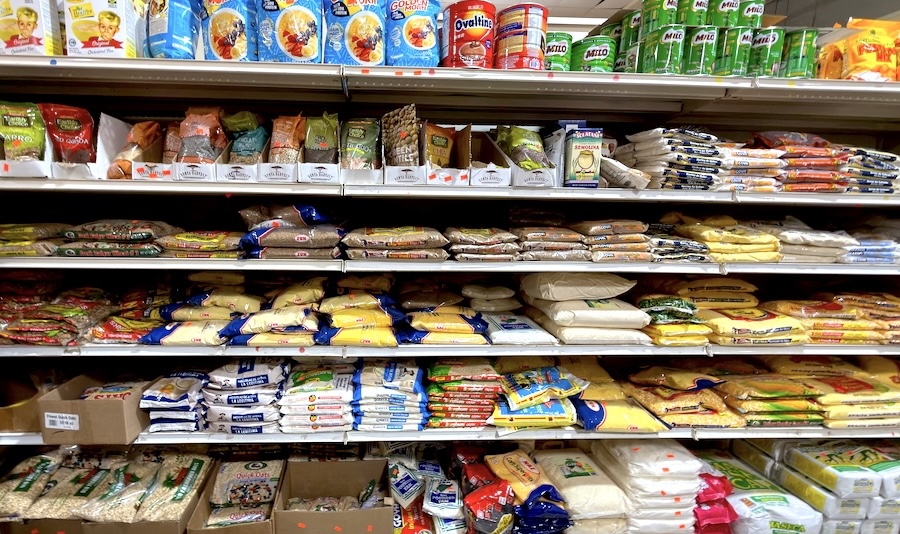
Flours and ground ingredients are essential in Caribbean kitchens and appear in everything from breads and dumplings to snacks, batters, porridges, and festive dishes.
Many traditional Caribbean recipes rely on these ingredients to create the textures and flavors that define Caribbean comfort food.
Common pantry staples include:
- all-purpose flour (see: Mastering the Art of Making Trinidad Roti)
- self-rising flour
- whole wheat flour ( I also use atta–see my chapati recipe)
- gluten-free all-purpose flour (I also tested the cassava dumplings below using this)
- cassava flour (see: Cassava Dumplings)
- plantain flour (used to make dumplings and porridge)
- oats (used for porridge and breakfast dishes)
- cream of wheat (used for porridge and parsad in some homes)
- fine cornmeal (used to make cornmeal dumplings and porridge)
- coarse cornmeal
- corn flour (used for pastelles)
- split pea flour, also called split peas powder – see below
All-purpose flour and baking powder are especially important pantry staples because they are used to prepare many types of Caribbean roti, fried bake, boil & fry dumplings, and dough-based recipes.
Cornmeal remains deeply woven into Caribbean food culture through porridges, dumplings, cornbread, cou-cou, and other traditional dishes.
Split pea flour is commonly used to make several beloved Indo-Caribbean snacks and dishes, including:
- dhal & flour pholourie – (appetizer or snack)
- baiganee – (appetizer or snack)
- kachori – (appetizer or snack)
- kurhi (carhee) – (vegan side dish)
- Cauliflower fritter – One of my oldest recipes. I used chickpea flour but you can also use split pea powder or flour
Cassava flour, plantain flour, and packaged gluten-free all-purpose flour blends have also become increasingly popular for gluten-free cooking and baking, allowing many people to continue enjoying Caribbean food and traditional recipes while reducing or avoiding wheat flour.
Oils, Sweeteners, and Everyday Kitchen Staples
Some ingredients are simply part of everyday Caribbean cooking and are rarely absent from a Caribbean kitchen. These staples are used constantly across many Caribbean recipes, from frying and sautéing to baking, seasoning, preserving, and everyday meal preparation.
Cooking oils commonly kept on hand include vegetable oil, canola oil, coconut oil, avocado oil, extra-virgin olive oil, and sesame oil. Different oils are often chosen depending on the dish, whether frying fish, preparing Chinese-style Caribbean food, baking, or making a curry or stew.
Sweeteners are also an important part of many Caribbean recipes and drinks. Common pantry staples include:
- brown sugar (used when caramelizing dishes such as Trinidad Stewed Chicken)
- white sugar
- honey
- molasses (I use it to sweeten my cocoa tea)
In many Caribbean kitchens, brown sugar is caramelized at the beginning of stews to create the deep color and rich flavor associated with traditional Caribbean food.
(Browse my selection of Caribbean stews.)
Other everyday essentials commonly found in Caribbean pantries include:
- baking powder
- baking soda
- Himalayan salt
- table salt
- vinegar (white vinegar and apple cider vinegar are commonly used for washing meat, making hot sauce, and preparing salad dressings)
These ingredients quietly support daily Caribbean cooking and baking and are often used so regularly that they become almost invisible parts of the kitchen until the pantry runs low.
Canned and Shelf-Stable Foods
Canned foods have long been a practical part of Caribbean kitchens because they are affordable, convenient, and store well. Many traditional Caribbean recipes rely on canned fish or preserved ingredients that can quickly be transformed into flavorful meals.
Common Caribbean pantry staples include:
- canned salmon (see: Canned Salmon with Tomatoes, Curried Canned Salmon or salmon pie(salmon stuffed fried bake)
- canned sardines (see: Sardine Choka, Fry or Sauteed Canned Sardine with Tomatoes, Curry Sardine with Potatoes)
- canned mackerel (see: Mackerel with Tomatoes)
- canned tuna
- canned corned beef (see: Corned Beef Recipe)
- canned pineapple slices (used for homemade pizza or holiday ham)
- canned peas and carrots for a quick potato salad
- canned corn
- tomato sauce
- tomato paste
- pasta sauce (used for Holiday Lasagna for a Party, Homemade Lasagna and pasta with meat sauce)
- condensed milk
- evaporated milk
- powdered milk
- Nestlé cream
- canned ackee (see: Ackee and Saltfish with Dumplings)
Canned fish such as salmon, sardines, and mackerel have long been dependable pantry proteins in Caribbean households and are often transformed into quick breakfasts, weeknight dinners, or comforting Saturday meals.
Condensed milk and evaporated milk are essential in many Caribbean desserts and drinks, including sawine, sweet bread, and cassava pone.
Powdered milk is commonly used to make hops bread, hot cross buns, barfi-a Diwali sweet, and even paratha roti in some homes.
Nestlé cream is especially popular in sweets such as barfi and other festive desserts.
Tomato sauce and pasta sauce are commonly used in Caribbean rice and pasta dishes such as lasagna and pasta with meat sauce.
On a nostalgic note, some households may also remember Vienna sausages, which were once a familiar pantry snack in many Caribbean homes.
Flavor Builders and Seasonings
While staples form the foundation of a meal, it is the seasonings, condiments, and spices that give Caribbean food its bold flavor, rich color, and distinctive character.
Many Caribbean recipes rely on ingredients that deepen flavor, add color, or balance sauces and stews.
Common pantry items include:
- cassareep (used for pepperpot)
- browning (used for black cake and Caribbean stews)
- jerk seasoning
- soy sauce
- dark mushroom soy sauce
- oyster sauce
- ketchup
- Angostura bitters
- vanilla essence or vanilla extract
- mixed essence
- almond essence
- dried tamarind
Cassareep is a thick, dark sauce made from cassava root and is most closely associated with Guyanese pepperpot. It adds deep color and a distinctive earthy richness to braised dishes and stews.
Browning, made from caramelized sugar, adds the dark color and subtle sweetness associated with many Caribbean stews and cakes.
Soy sauce, both light and dark, plays an important role in Chinese-style Caribbean cooking and is commonly used in fried rice, roasted duck, Chinese-style fried chicken, lo mein, shrimp wontons, shrimp wonton sticks(using whole shrimp), crispy fried ribs with Asian dipping sauce, chicken and broccoli with garlic sauce, beef and broccoli stir fry, garlic pork, and chow mein(optional ingredient).
Angostura bitters are widely used in Caribbean drinks, punches, and cocktails.
Mixed essence and almond essence are especially important in Caribbean desserts such as cassava pone, coconut cake, and holiday baked goods.

Dried tamarind is often used to make chutneys and is also added to some fish curries for its tangy flavor.
These ingredients help give Caribbean food the bold depth and layered flavor that make Caribbean recipes so memorable.
Spices and Dry Seasonings
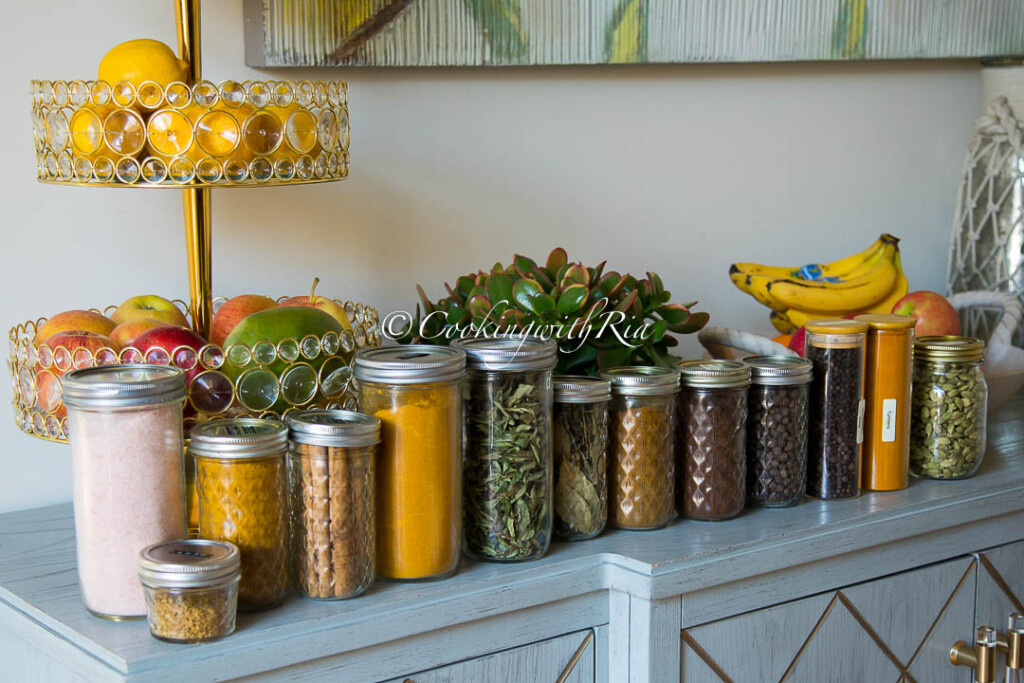
Spices are layered throughout Caribbean cooking to build flavor gradually and create the depth that defines many traditional Caribbean recipes.
Common pantry spices include:
- curry powder
- geera (ground cumin)
- turmeric
- bay leaves
- black pepper
- cinnamon
- nutmeg
- cloves
- allspice
- garam masala
- roucou (annatto)
Roucou, also known as annatto, is used in Caribbean cooking to add both color and subtle earthy flavor to certain dishes.
For a deeper look at the seasonings commonly used in Caribbean cooking, explore my guide to Essential Spices Used in Caribbean Cooking.
There are also many packaged seasoning blends, seasoning cubes, seasoning salts, flavor enhancers, and spice mixes commonly used throughout the Caribbean, including products such as Maggi, Sazón, and other prepared seasonings.
I have intentionally not focused heavily on those products here because I personally prefer building flavor using homemade spice blends, green seasoning, and individual spices combined during cooking. This approach helps me control flavor, reduce cost, and keep my Caribbean recipes healthier while still creating deeply flavorful Caribbean food.
Snacks, Drinks, and Special Ingredients
Not everything in the pantry is meant for cooking. Some ingredients are kept for quick snacks, breakfast drinks, or traditional beverages closely tied to Caribbean culture and family traditions.
Snacks
Simple pantry snacks are a big part of Caribbean food culture and are often enjoyed between meals, packed into school bags, shared during family gatherings, or eaten while liming with friends and family.
Common pantry snacks include:
- chips, including plantain chips and cassava chips
- water crackers
- fried channa
- fried split peas
- roasted peanuts
- caramel and chocolate in various forms
- biscuits and wafers, including Ovaltine biscuits, digestive biscuits, vanilla wafers, and Shirley biscuits
- preserved fruits such as plum, papaya, mango, cherry, and sour cherry
- tamarind balls
- sugar cake
- coconut drops
- kurma
- guava cheese
Fried channa and fried split peas are longtime favorites throughout Trinidad and the Caribbean and are often seasoned with garlic, pepper, and spices for extra flavor.
Water crackers are another pantry staple commonly enjoyed with butter, cheese, sardines, buljol, or a simple cup of tea, while snacks like caramel, digestive biscuits, and Ovaltine biscuits bring back memories of childhood lunches, after-school snacks, and quick treats shared at home.
Some households may also keep snacks such as tamarind balls, sugar cake, kurma, coconut drops, roasted peanuts, or preserved fruits, including soaked pommecythere, depending on family traditions, holidays, and personal taste.
Tea and Drinks
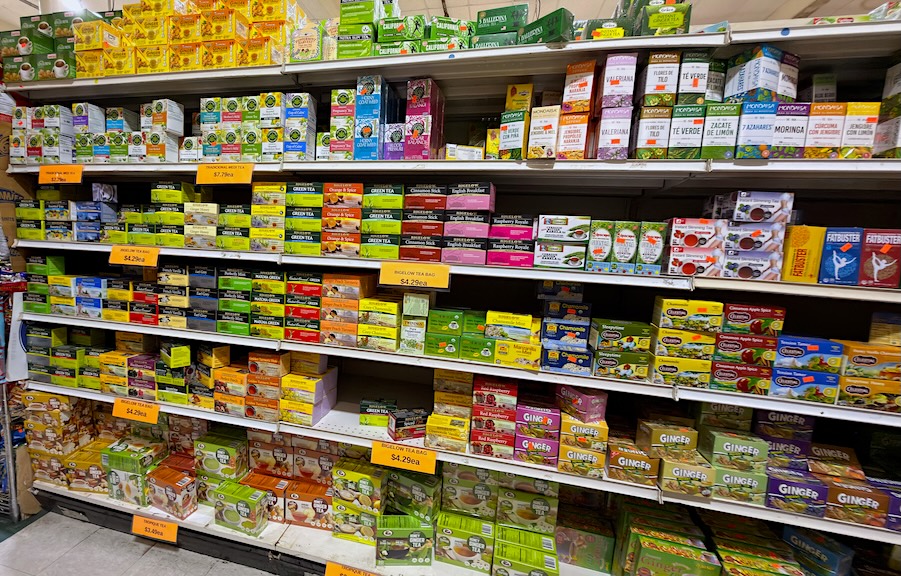
Many traditional Caribbean drinks begin with simple pantry ingredients that have been used in homes throughout the region for generations. Some are tied to breakfast traditions, while others are closely connected to holidays, family gatherings, bush medicine, or everyday comfort.
Common pantry staples include:
- black tea (such as Lipton tea). (See: Chai)
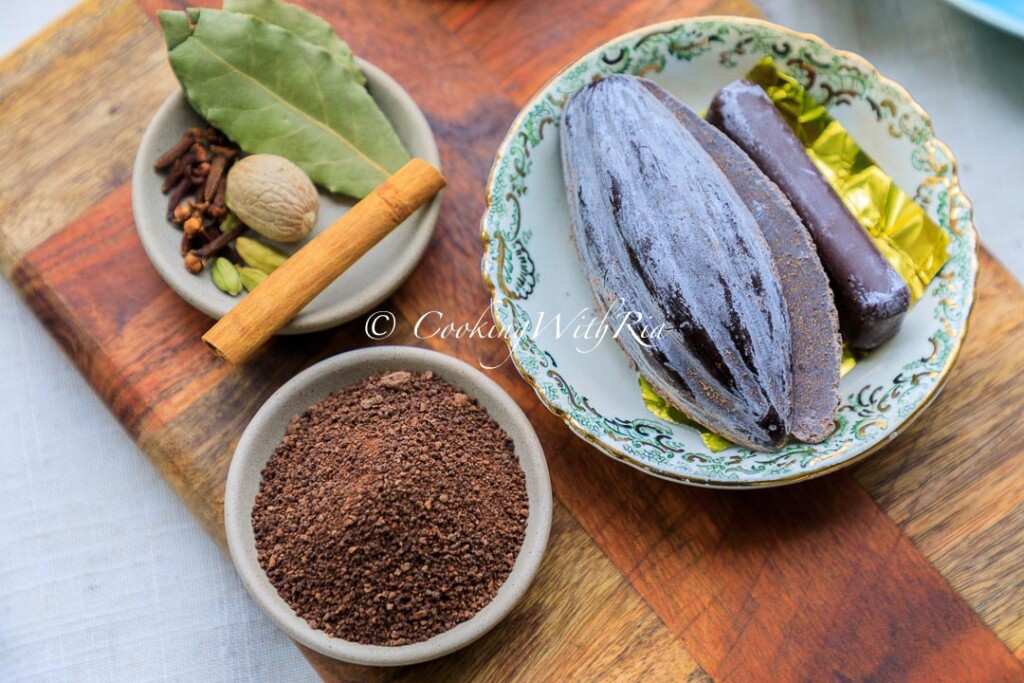
- cocoa blocks (see: Caribbean Cocoa Tea)
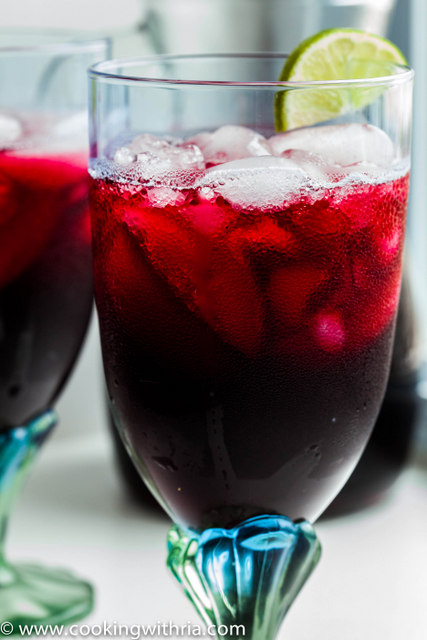
- dried sorrel leaves (see: Sorrel Drink)
- mauby bark or mauby drink mix
- Milo and Ovaltine
- powdered drink mixes
- peppermint tea
- ginger tea
- hibiscus tea
- dried orange peel for tea
- bush teas and herbal teas
- canned orange juice
- canned grapefruit juice
Cocoa blocks are made from ground cocoa beans that are formed and dried into solid pieces. When grated and simmered with spices and milk, they create the rich and comforting drink known as cocoa tea.
Dried sorrel leaves are used to make sorrel drink, a bright red beverage traditionally served during the Christmas season throughout the Caribbean. Sorrel may also be used to make tea, jams, syrups, and cakes.
Traditional drinks like cocoa tea, sorrel, mauby, and bush teas remain deeply woven into Caribbean food culture and are closely connected to breakfast, holidays, family gatherings, and everyday life throughout the Caribbean.
Building a Caribbean Pantry Over Time
A Caribbean pantry is rarely built all at once. Most kitchens grow gradually over time, shaped by family traditions, favorite recipes, holiday cooking, and the Caribbean food that appears most often at the table.
You do not need to go out and buy every ingredient at once. Start with one dish you love or one ingredient you are curious about. Learn to cook it well. Decide whether it belongs in your regular meal rotation. Then slowly build from there.
Over time, your pantry begins to reflect who you are as a cook and the foods that matter most to you.
Some people build their pantry around curry dishes. Others around soups, stews, baking, or Sunday lunches. Some focus on healthier ingredients while others prioritize convenience and flavor. There is room for all of it.
Food is deeply connected to memory, culture, family, migration, and identity. Sometimes an ingredient reminds us of childhood, a parent, a grandparent, a favorite vacation, or a meal shared with someone we love. Caribbean food has a way of carrying those memories forward.
The beauty of a well-stocked Caribbean pantry is that it allows you to prepare deeply flavorful Caribbean food and Caribbean recipes with confidence and flexibility, whether you are making a quick weeknight dinner or a full Sunday lunch for family and friends.
Explore More Trinidad and Caribbean Cooking Guides
If you’d like to continue exploring Trinidad food, Caribbean recipes, and the ingredients that shape Caribbean cooking, these guides will help you better understand the flavors, traditions, and everyday meals found throughout Trinidad and Tobago and the wider Caribbean.
➡ What Is Trinidad Food – explore the cultural influences, history, and flavors behind Trinidad cuisine
➡ Essential Ingredients in Trinidad Cooking – learn about the herbs, peppers, spices, and pantry staples used in everyday Caribbean recipes
➡ How to Build a Caribbean Pantry (this article)– discover the essential ingredients commonly stocked in Caribbean kitchens and how they are used in traditional Caribbean food
➡ What Are Ground Provisions? – learn about the root vegetables and starchy staples commonly served with soups, stews, fish, and Sunday lunch meals
➡ Top 25 Must-Try Foods in Trinidad and Tobago – a guide to some of the most iconic dishes and Caribbean recipes from the islands
➡ 52 Weeks of Sunday Lunches – see how these ingredients and flavors come together in real Caribbean meals shared around the family table
Together, these guides offer a deeper understanding of Trinidad cooking and Caribbean food, from pantry staples and spices to traditional techniques, comforting meals, and the cultural traditions that continue to shape Caribbean recipes today.
📩 Subscribe & Get My Free Green Seasoning Booklet
If you enjoy learning about the ingredients and techniques that shape Caribbean cooking, be sure to subscribe so you never miss a new recipe, guide, or Sunday Lunch story from my kitchen.
When you join, you’ll receive my free Green Seasoning Booklet — one of the most important foundations of Caribbean cooking. Green seasoning is used in countless dishes across Trinidad and the Caribbean, adding depth, freshness, and unmistakable flavor to meats, seafood, rice dishes, and stews.
Once you start using it in your kitchen, you’ll quickly understand why every Caribbean cook keeps a batch ready.
❤️ Shop My Kitchen Favorites
These are the trusted tools and pantry staples I use in my own kitchen — the ones that make Caribbean cooking easier and more enjoyable.
From spice grinders and cookware to some of the ingredients I rely on most often, these are items I personally use and recommend.